One project, six disciplines,
one game for lunch
Explore the journey
A real brief
We set the frame, not the solution. Just like with a client project.
Your own project
Not assisting, deciding. From the first sketch to the finished box.
A real handover
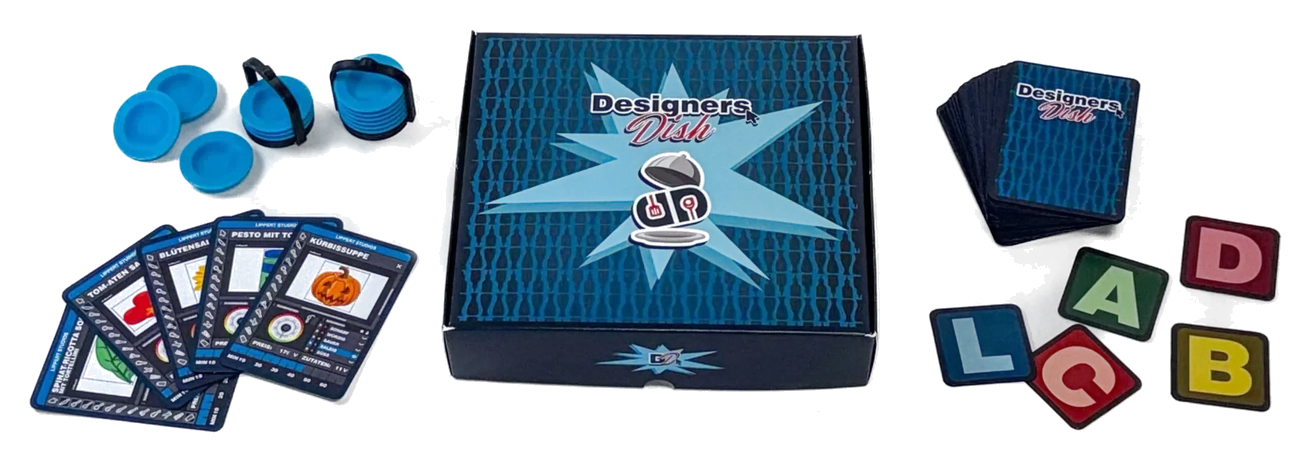
In the end, the studio actually uses the result. Day to day, every lunch break.
Six phases.
One project.
Designers Dish is just the example. Every self-led project runs through the same phases, whether it takes three weeks or eight months.
Phase 01
Brief & framework
It starts with a deliberately open brief. A rough scope, a topic, a target group, and nothing more. Everything else is room for decisions, and that is the first lesson. Without a tightly defined task, you have to learn to define one yourself. How far does the brief go? What is actually meant? Where is the room to move, and where is the line? Asking and answering these questions is a core skill you rarely practice in a classroom.
Phase 02
Ideation & game concept
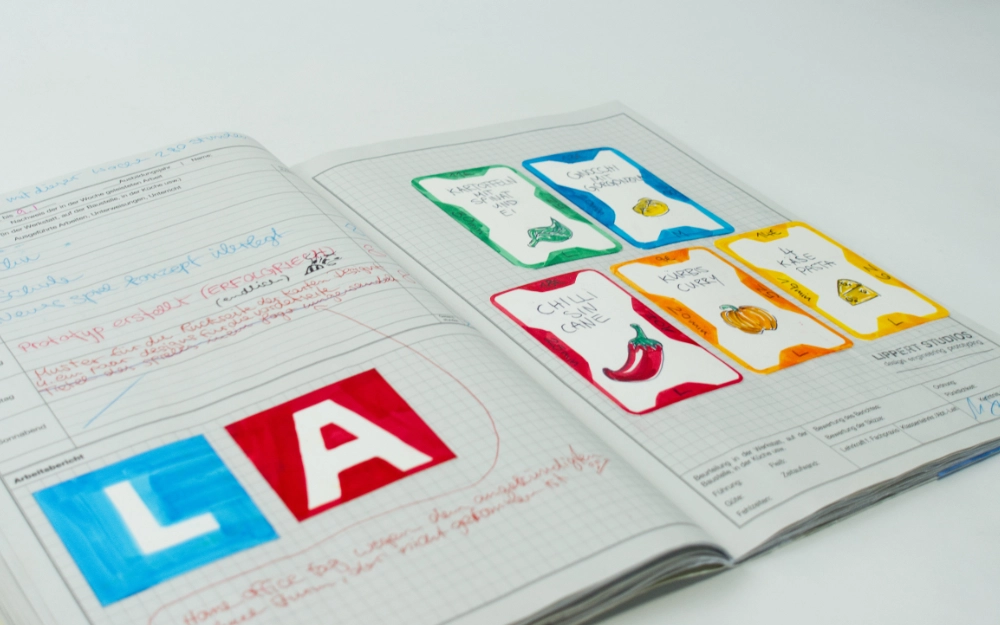
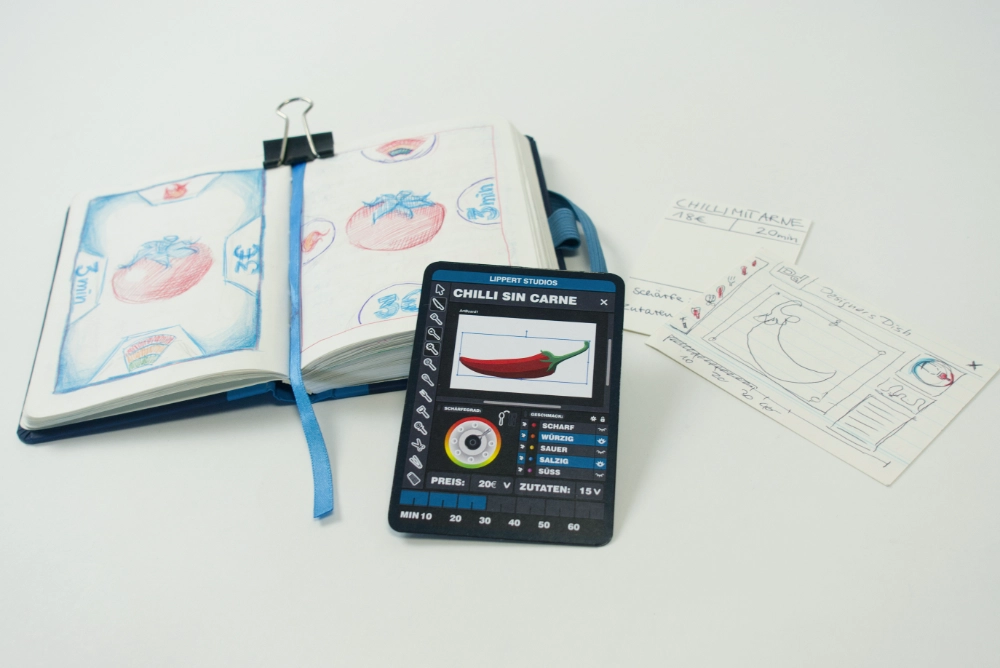
Many quick sketches instead of one perfect one. This phase is about getting ideas out before judging them. We sit down at one table, play through paper prototypes and test concepts long before anything goes digital. It trains thinking in variants, letting go of the first idea and trusting the process. Producing lots of bad ideas early is the fastest way to a good one.
Phase 03
Concept & look
A mood board, focused style research, a deliberate design reference. In this phase, you learn to justify visual decisions instead of just feeling them. What is the common thread? Why this color, why this shape? The answers have to be in place before the first files are opened. The result is not a finished design, but a foundation for every decision that follows.
Phase 04
Graphics & illustration
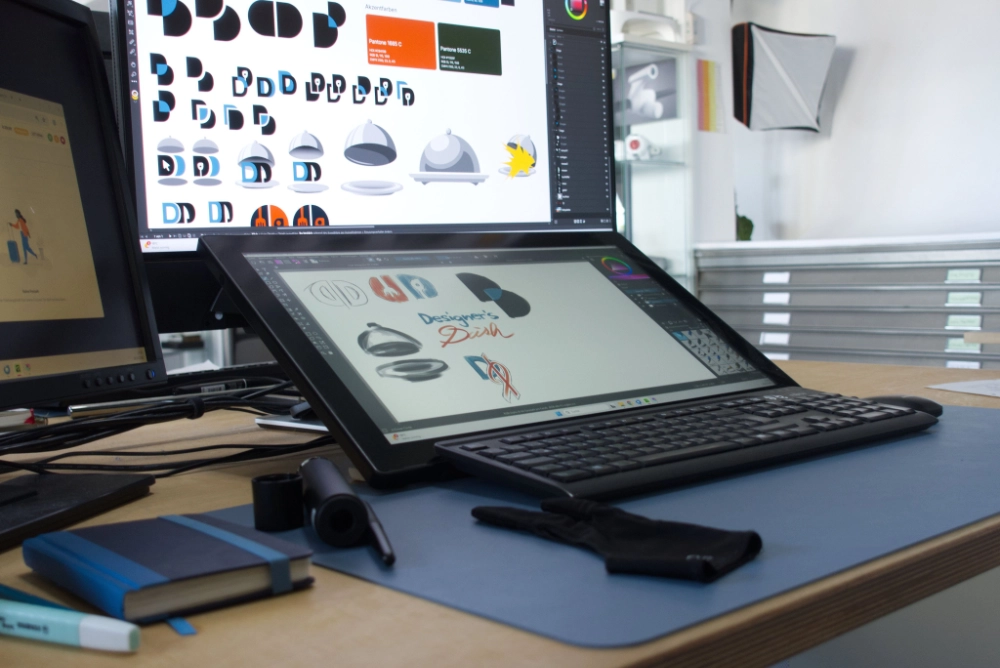
The first illustration series of your own, with real art direction. Not one element, but a whole system that works when the pieces sit side by side. Mentoring in this phase is occasional, not constant. We do not look over your shoulder, we give input and let you decide. The goal is not a result we like, but one the person understands and can stand behind.
Phase 05
Prototype & craft
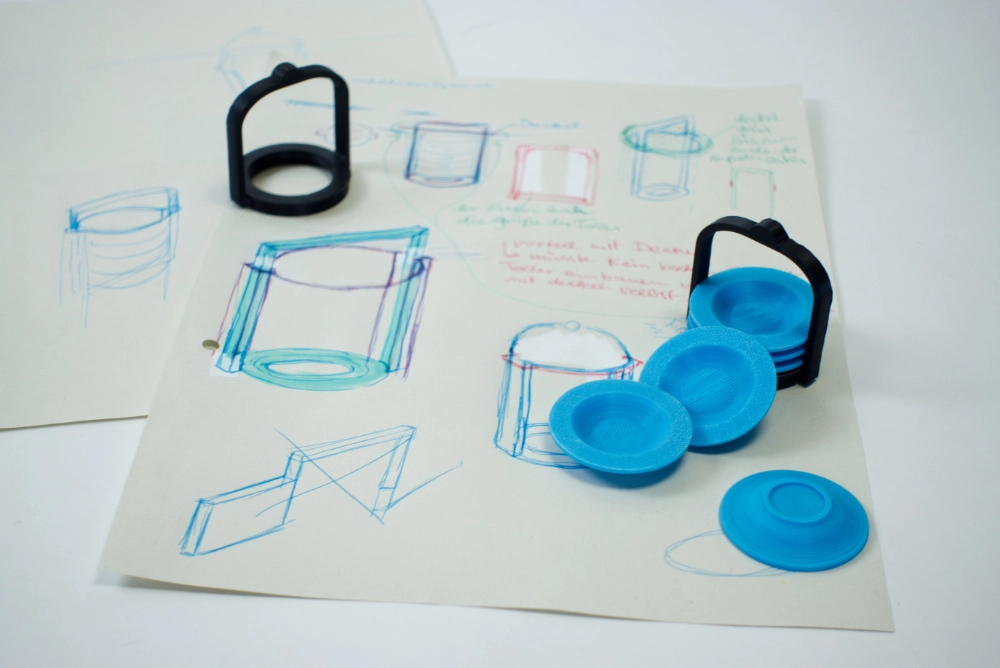
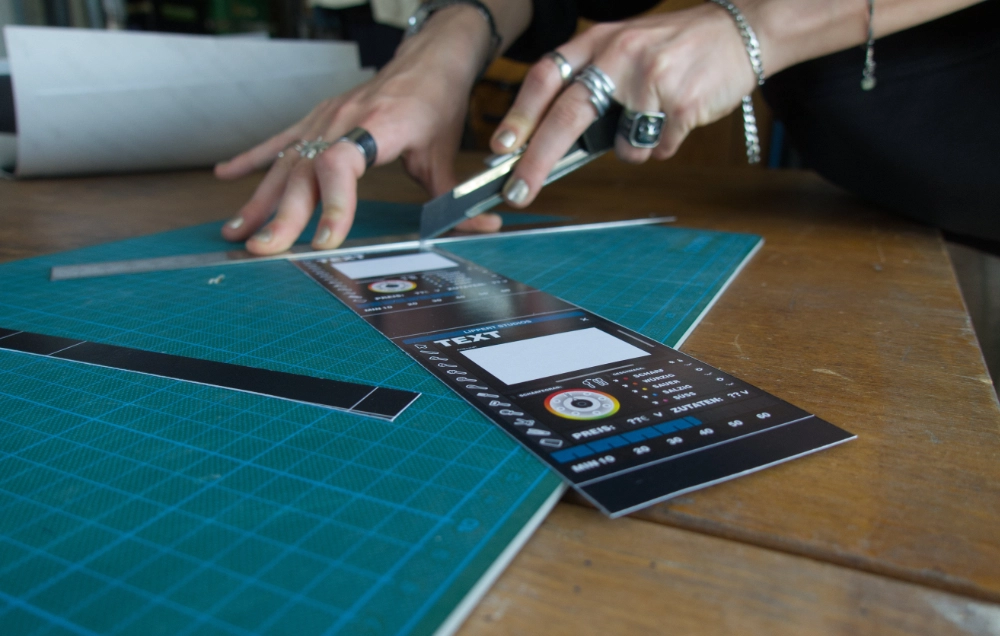
From the screen into your hands. Printing, cutting, assembling. Thinking about packaging. Realizing for the first time that what looked good digitally needs different decisions in physical form. The first handmade iterations come together in the workshop, with real materials, real corrections and the understanding that a prototype is not a finished product, but a question in object form.
Phase 06
Handover & playtest with the team
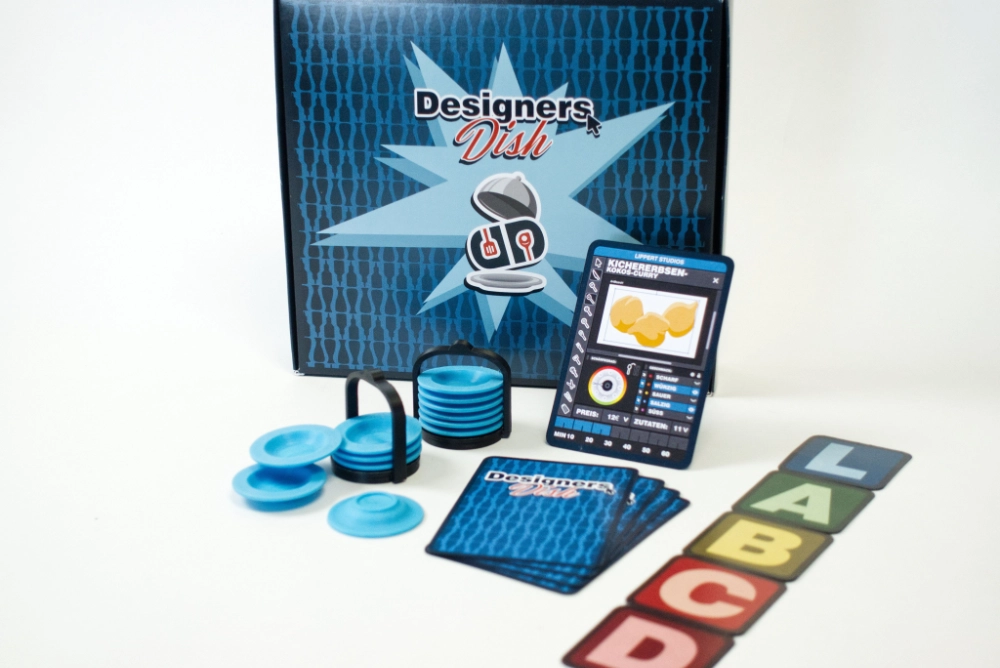
Presented to the whole studio. The project is not submitted, it is handed over, introduced live and played on the spot. Feedback comes in the same session in which the result is used for the first time. It is not a polished wrap-up, it is the most realistic moment of the whole process. Exactly how it works with a real client, too.
Glimpses from
the studio
Sketches, print sheets, material samples and the moments in between.
What remains when a project is finished.
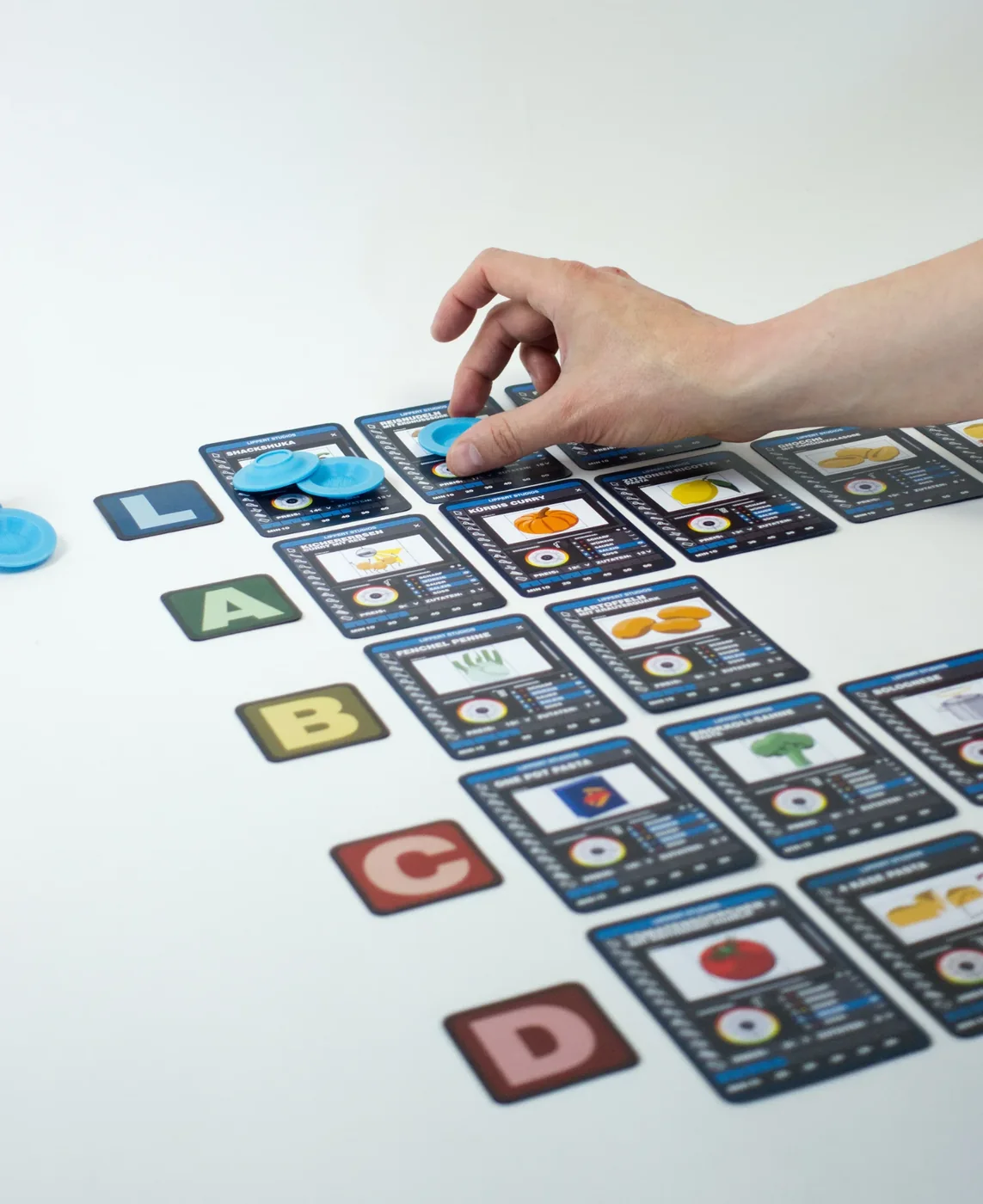
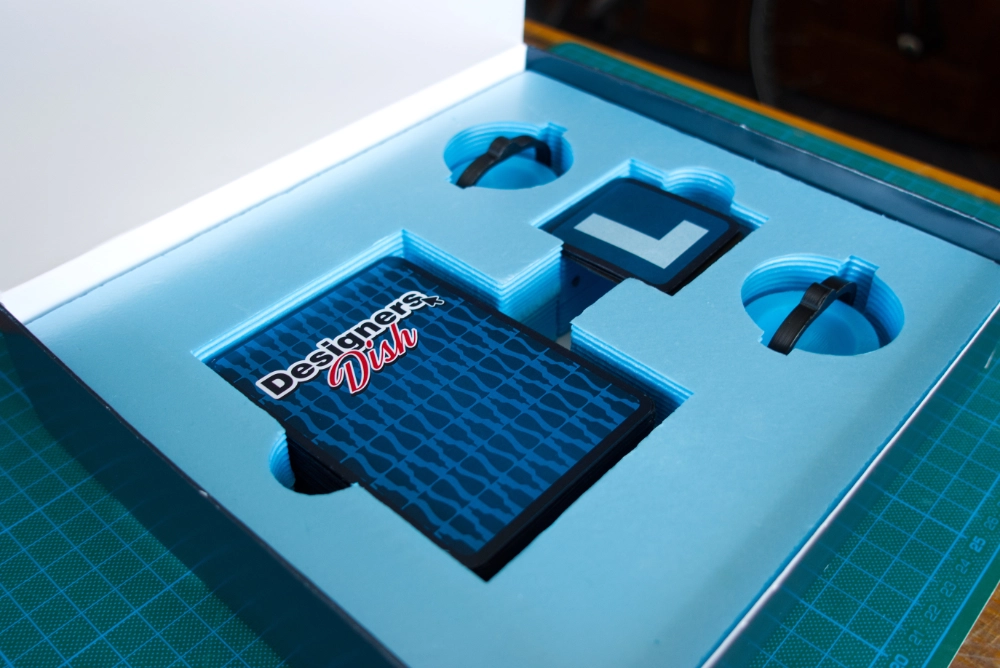
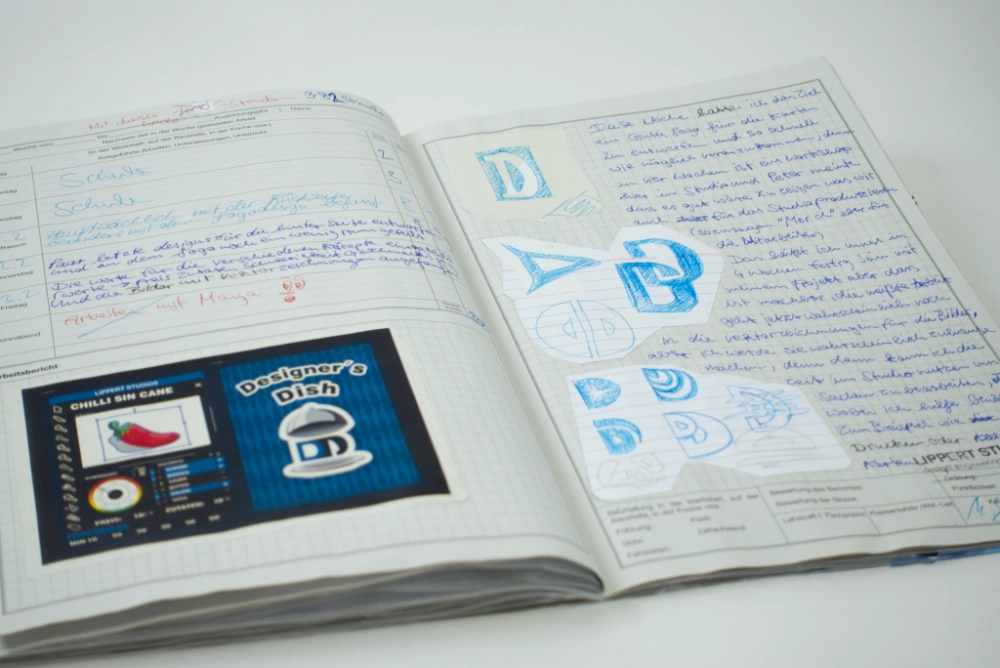
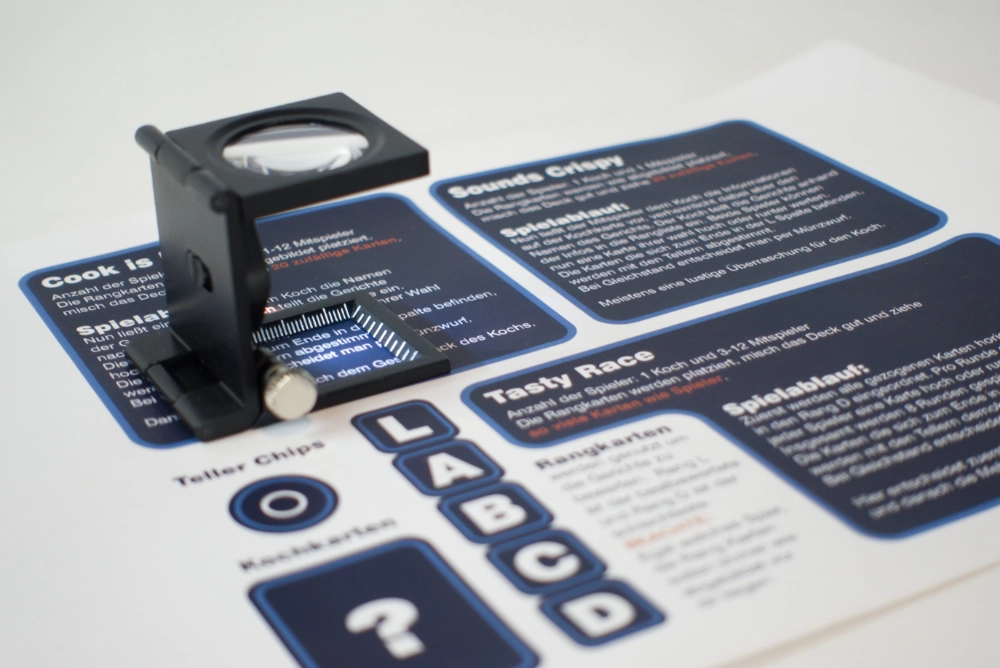
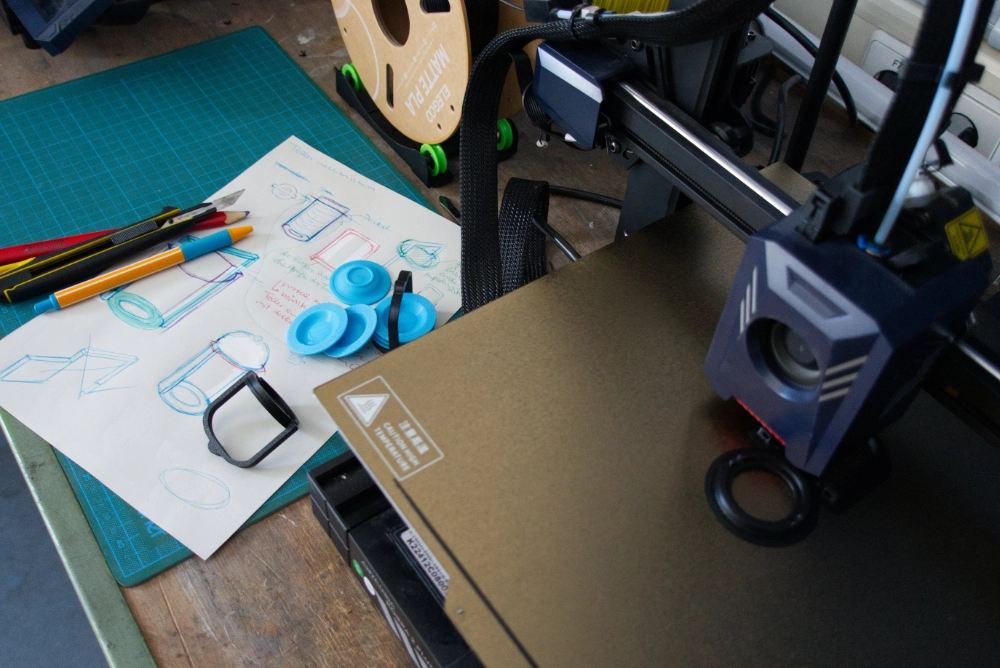
It was not just computer skills that mattered. Hands-on craft and openly sharing your own opinions and ideas counted just as much.
Have we caught your interest?
Send us an email. A short note with a few sentences is enough. What matters most is seeing your work.