Smart Material Hub
Elmia Subcontractor 2026
The lab. Archetype. Product.
New technologies don’t yet have a face. We give them one, long before they become a product.
The Idea
Industry doesn’t buy effects.
It buys products that pay off.
The materials from Kiel University work in the lab today. We show what they can become in production: fewer parts, less wear, less maintenance.
01 · Light
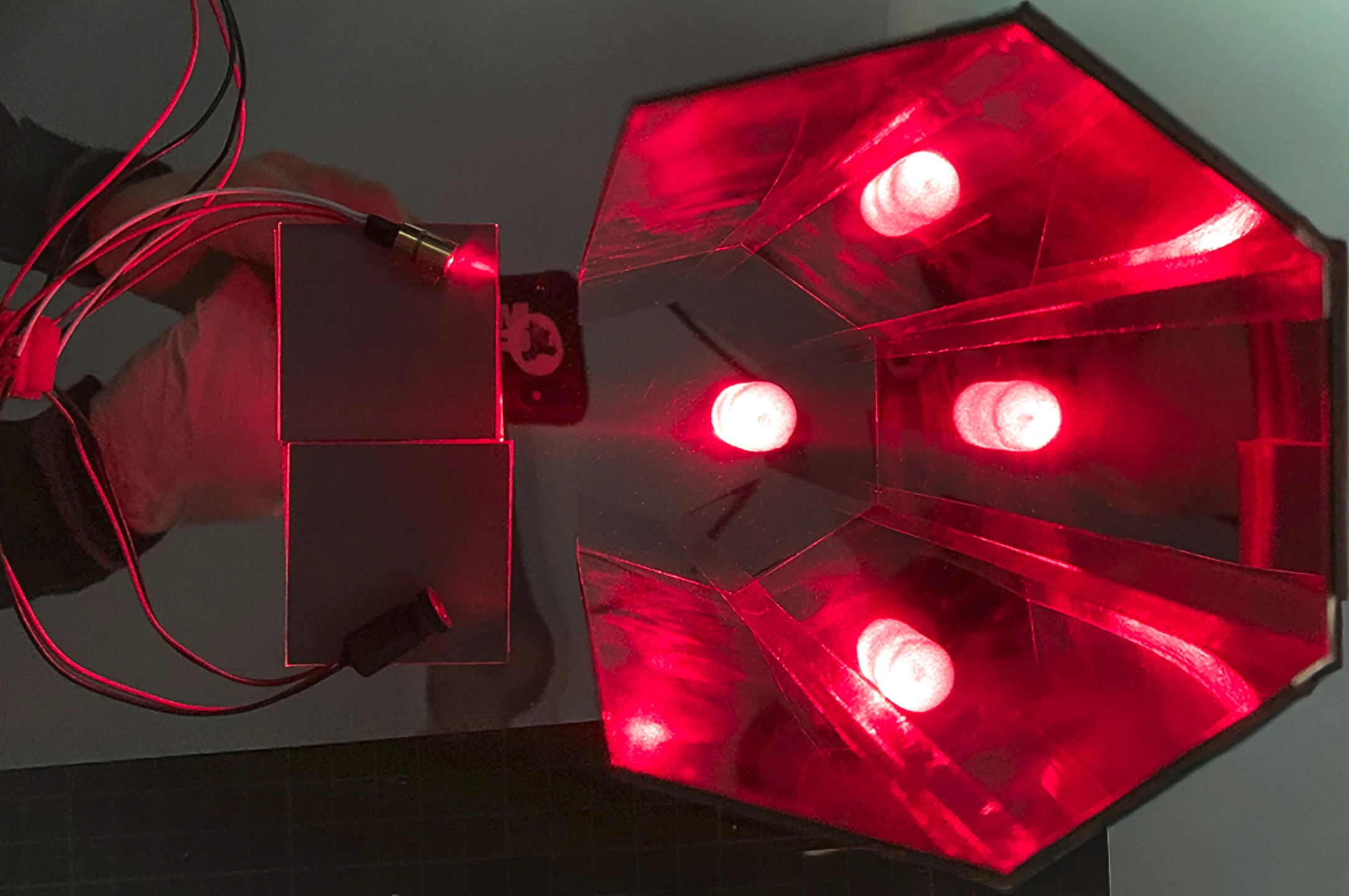
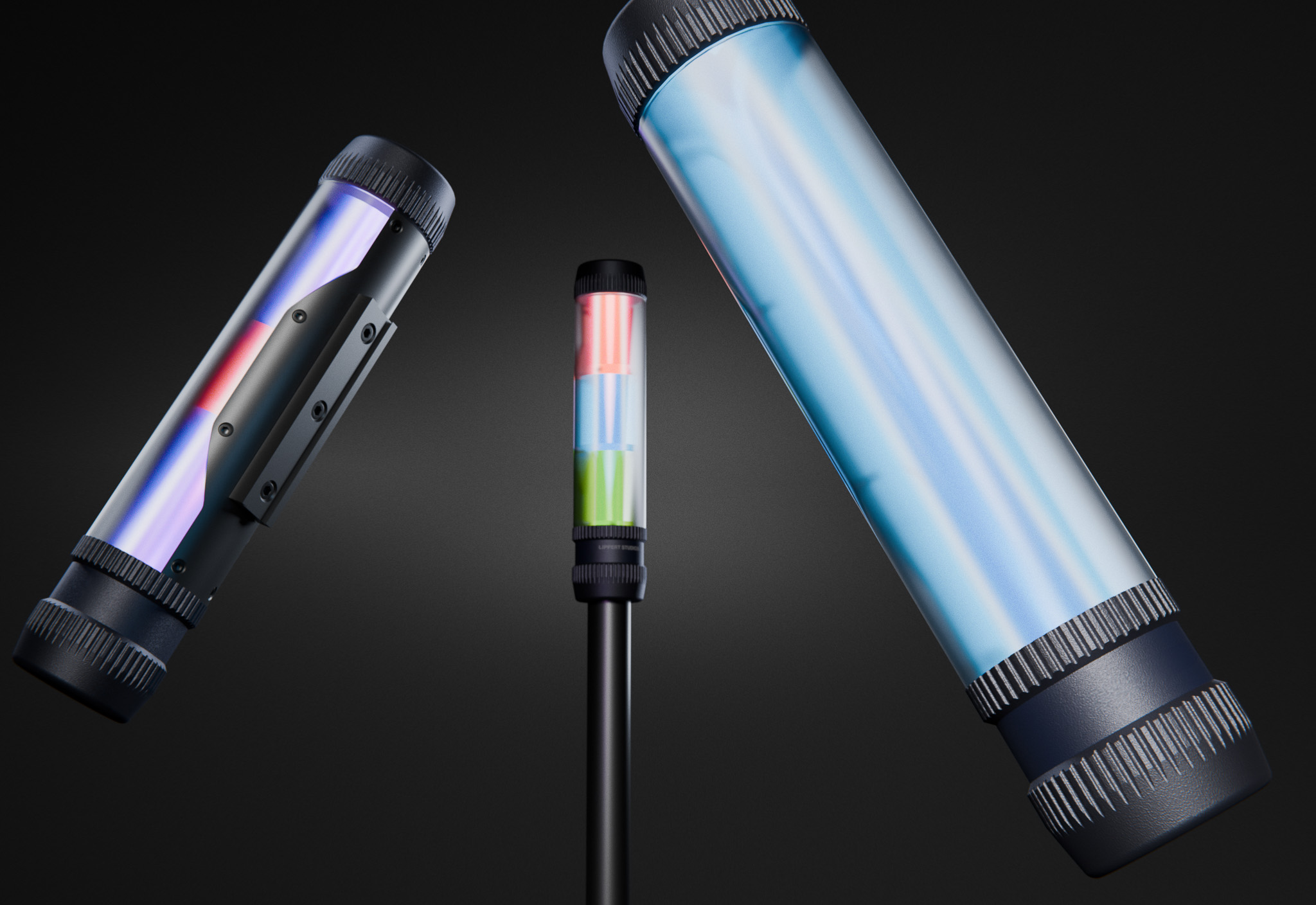
Fewer parts per light.
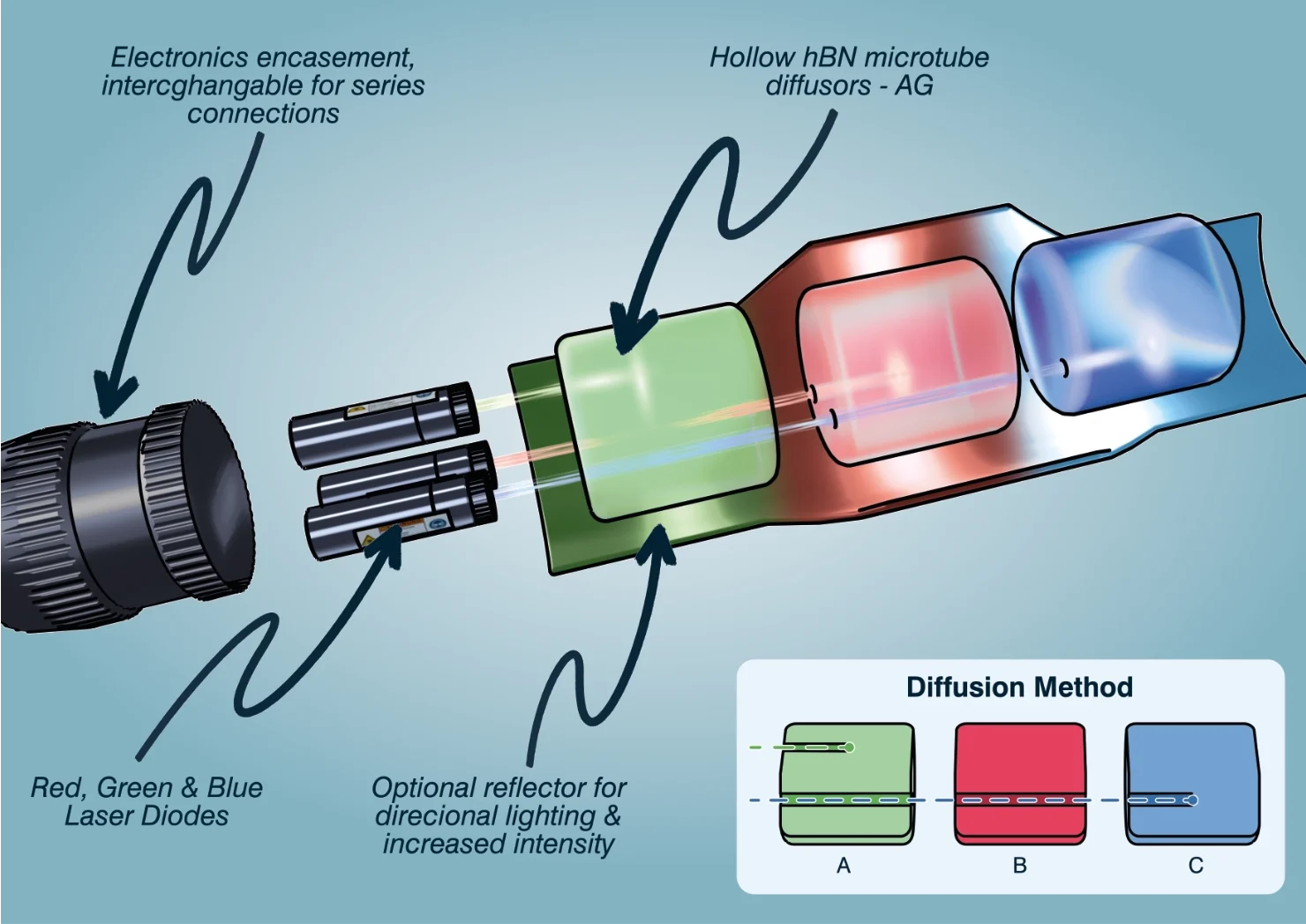
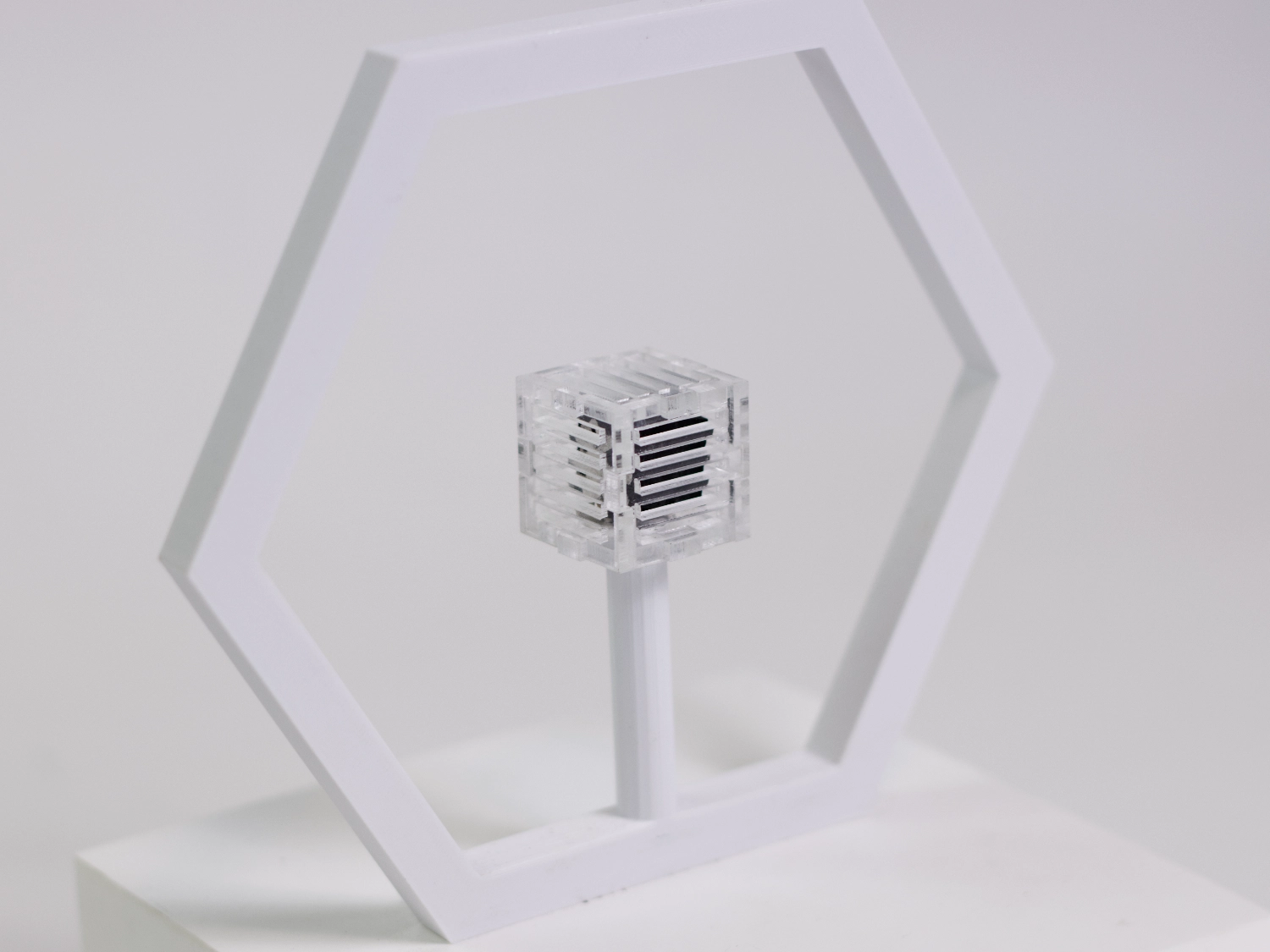
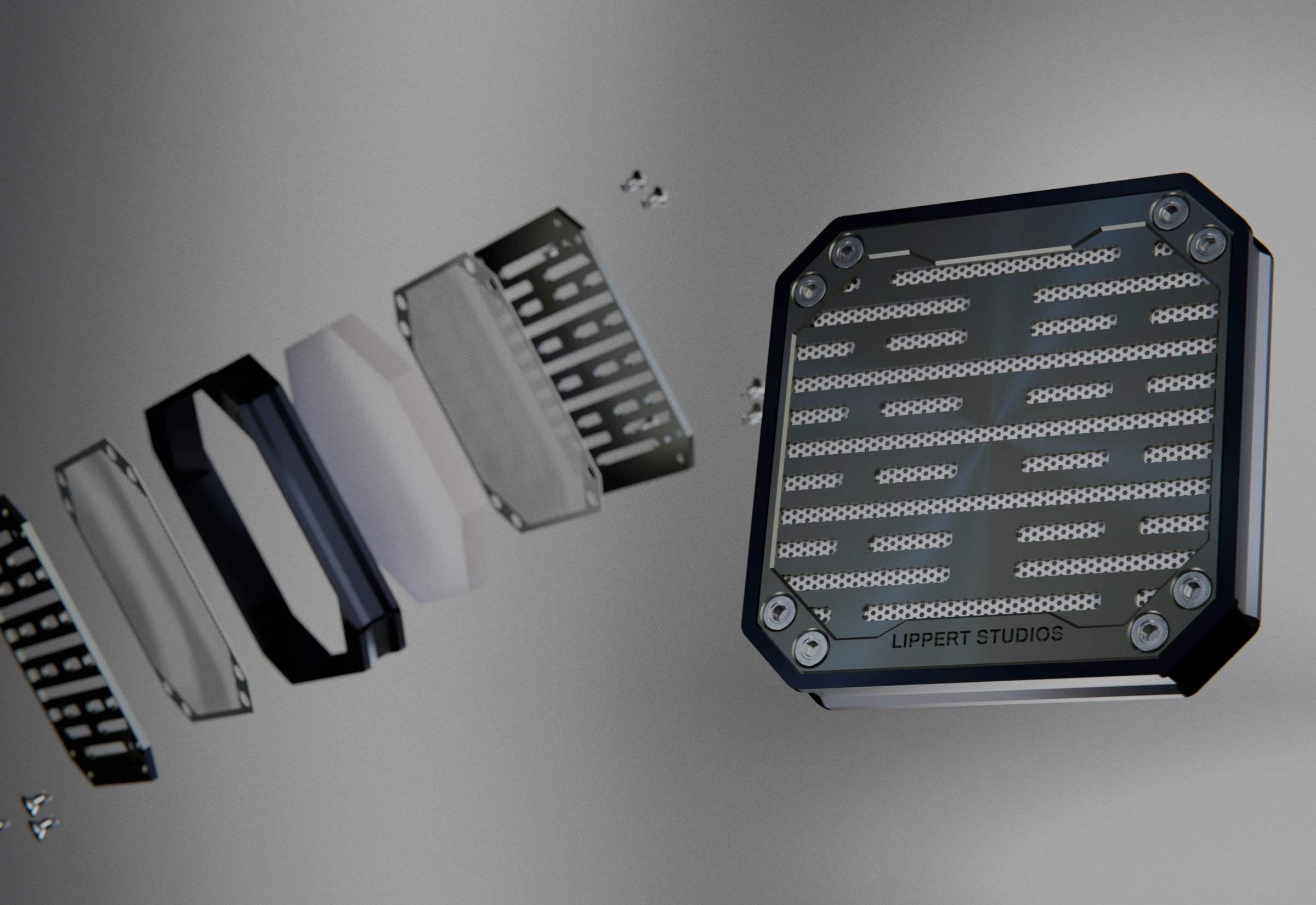
A single laser beam makes an entire Aeroglass segment glow evenly. Everything that sits in between in a conventional light is no longer needed.
Heute
7 part groups
Typical LED signal light
With Aeroglass
4 part groups
Laser diode, glass segment, housing, reflector
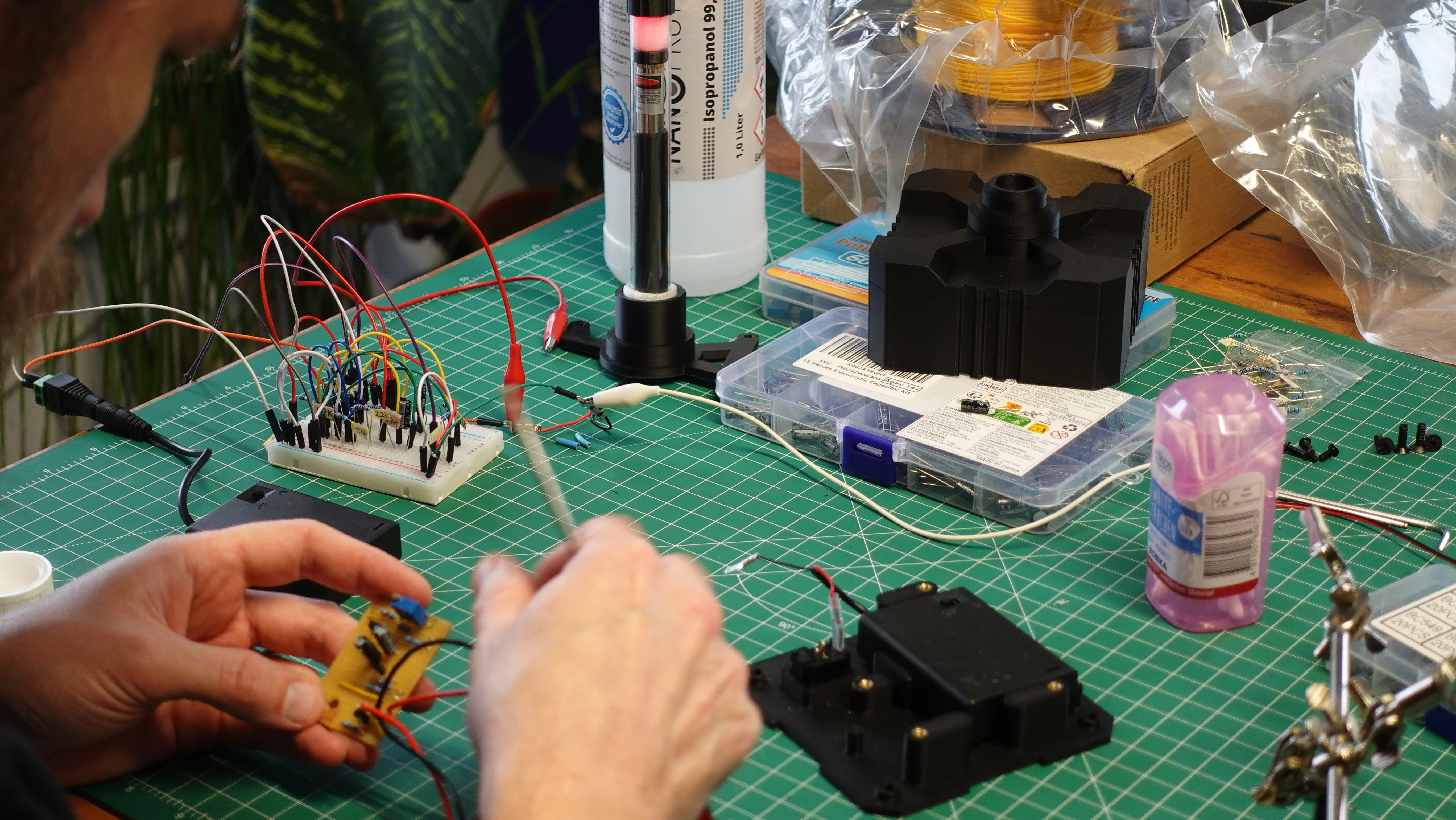
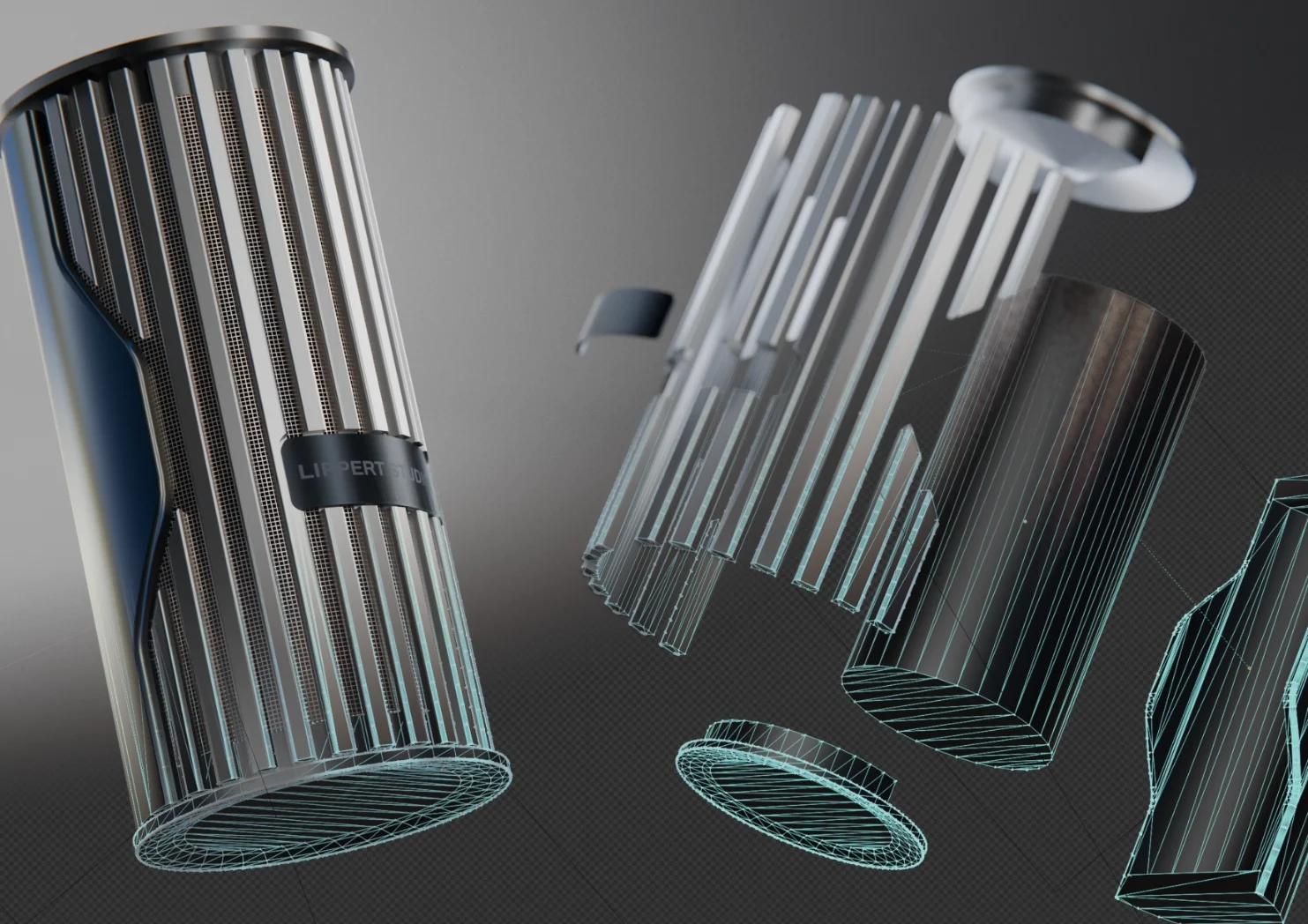
Our work: Module layout, exploded view and assembly instructions from the same 3D data.
Product development02 · Sound
Sound without moving parts.
A conductive nanomaterial makes the air itself vibrate. The housing follows the product, not the speaker.
Heute
Magnet, coil, membrane
Moving parts that age
With nanomaterial
Nothing moves
The material creates the sound
Our work: Housing design and renderings before any tooling is paid for.
Product design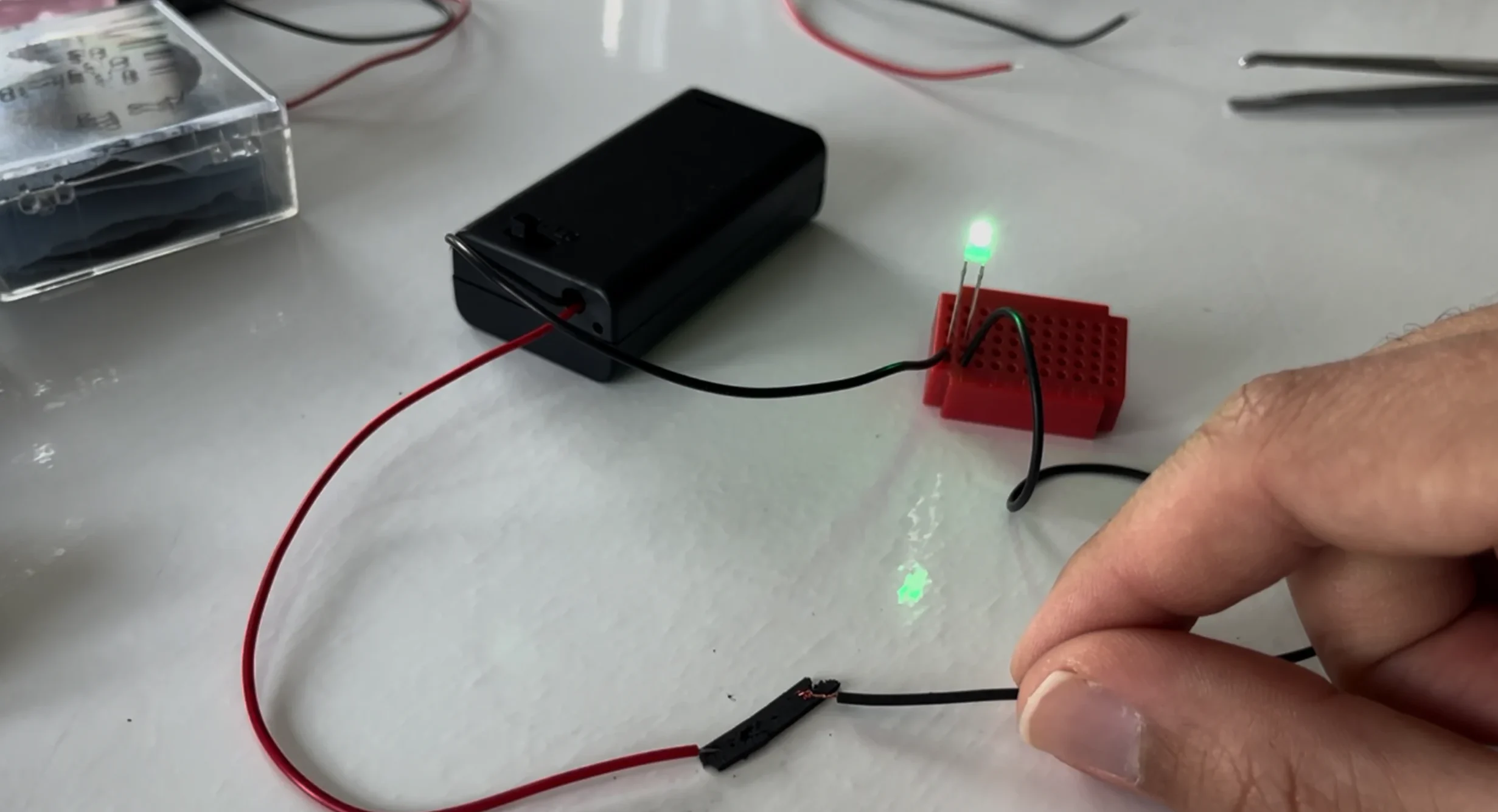
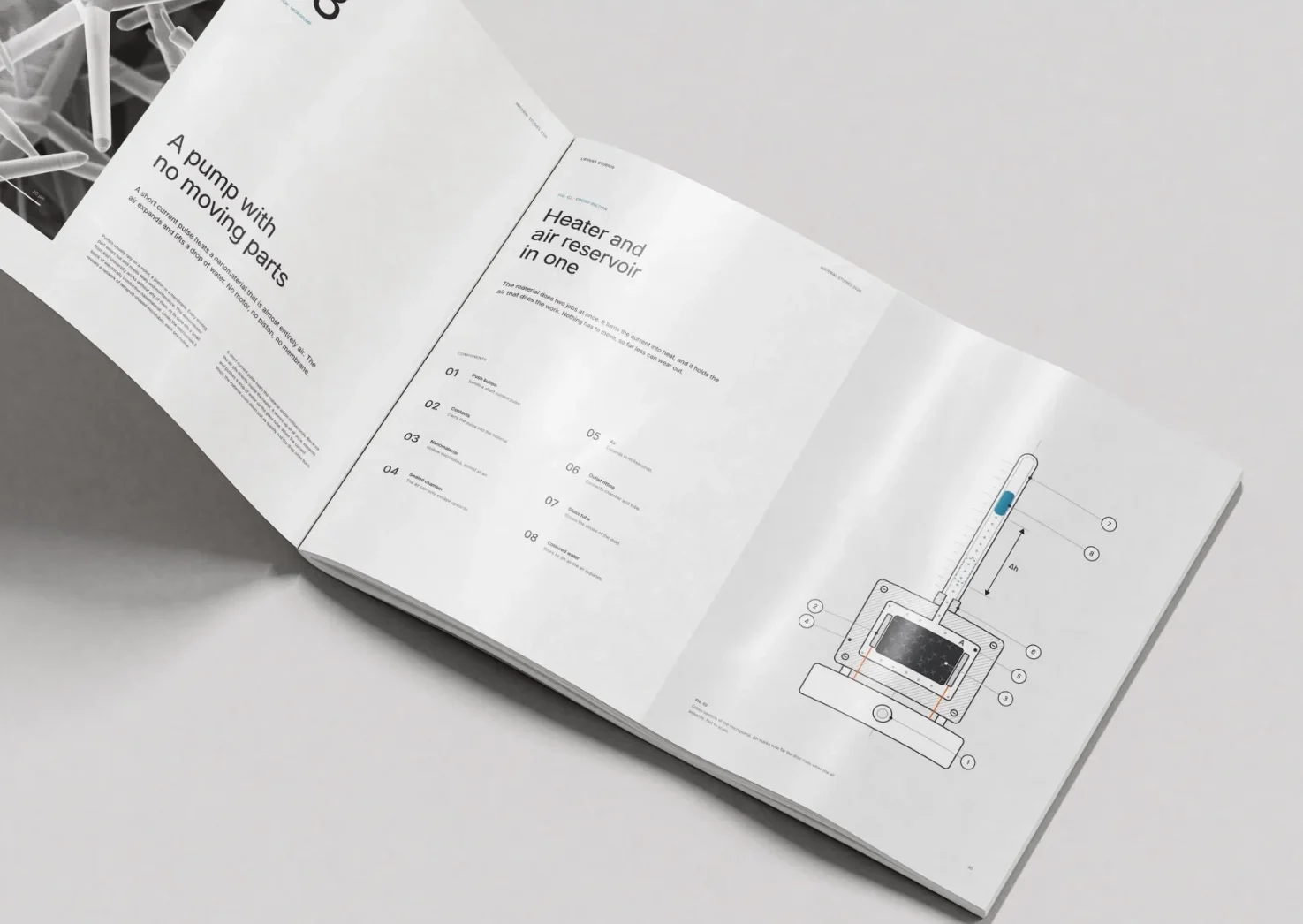
03 · Pump
Dosing without a motor.
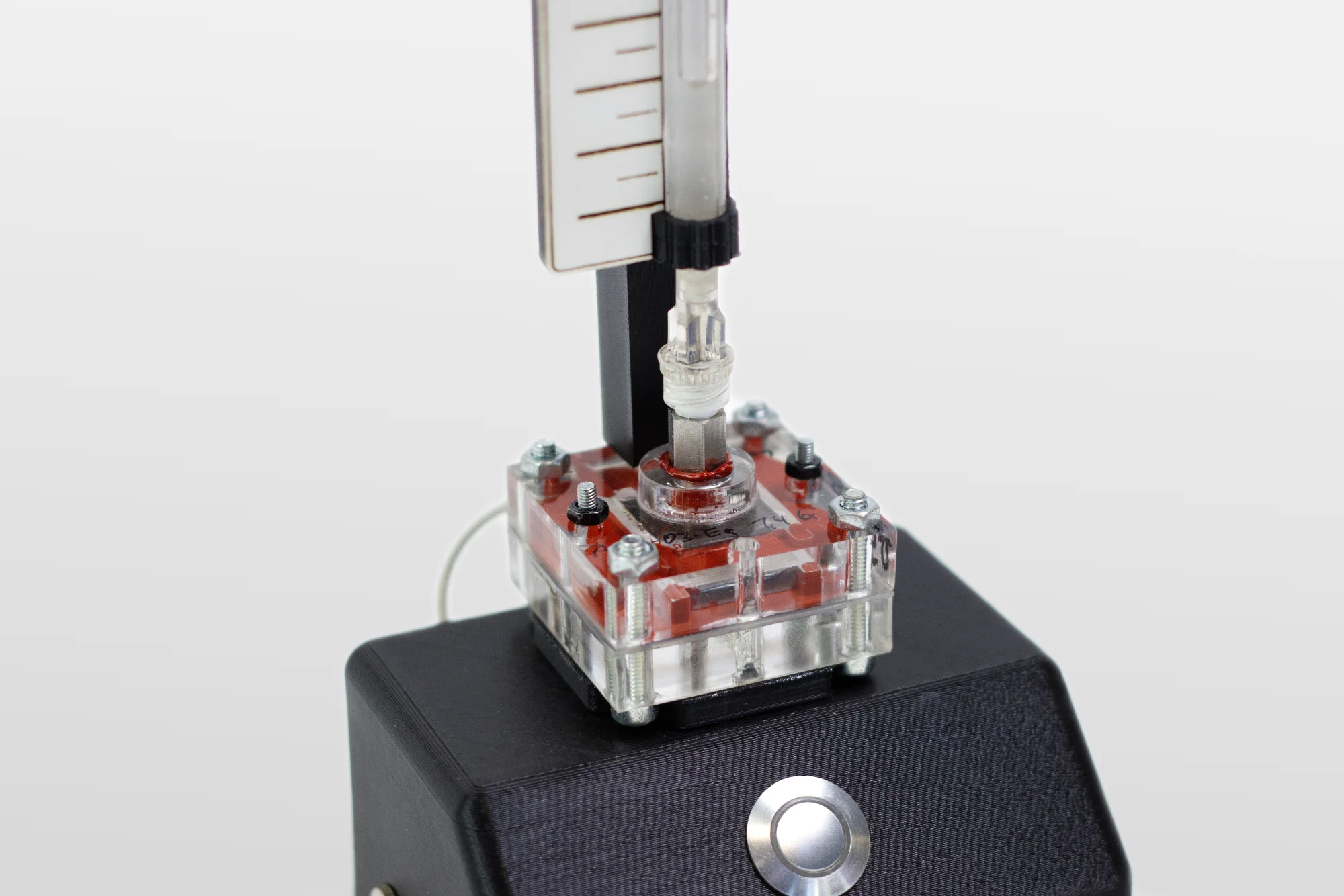
A short electrical pulse heats the material. The air inside expands and moves the liquid. Precise and efficient with significantly less wear.
Heute
Motor, bearings, seals
Wear out over time
With Aeroglass
One electrical pulse
No moving parts
Our work: A brochure that explains the invisible principle to customers and sales teams.
Marketing04 · Filter
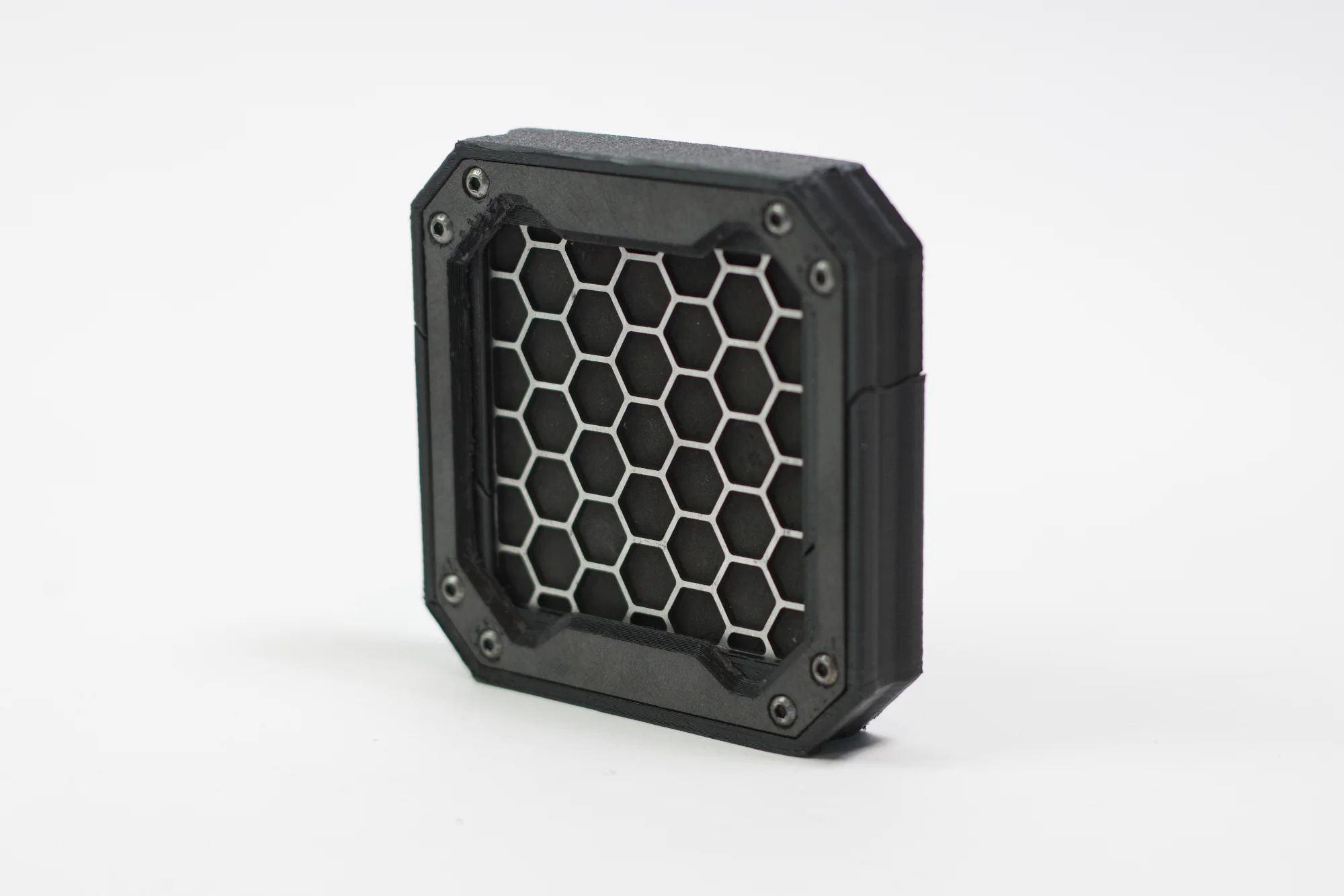
Clean, don’t replace.
The conductive filter material heats up within milliseconds and burns off germs and deposits. Developed in a project with Lufthansa Technik.
Heute
Replace and dispose
Once the filter clogs
With nanomaterial
Clean with a heat pulse
In milliseconds, inside the device
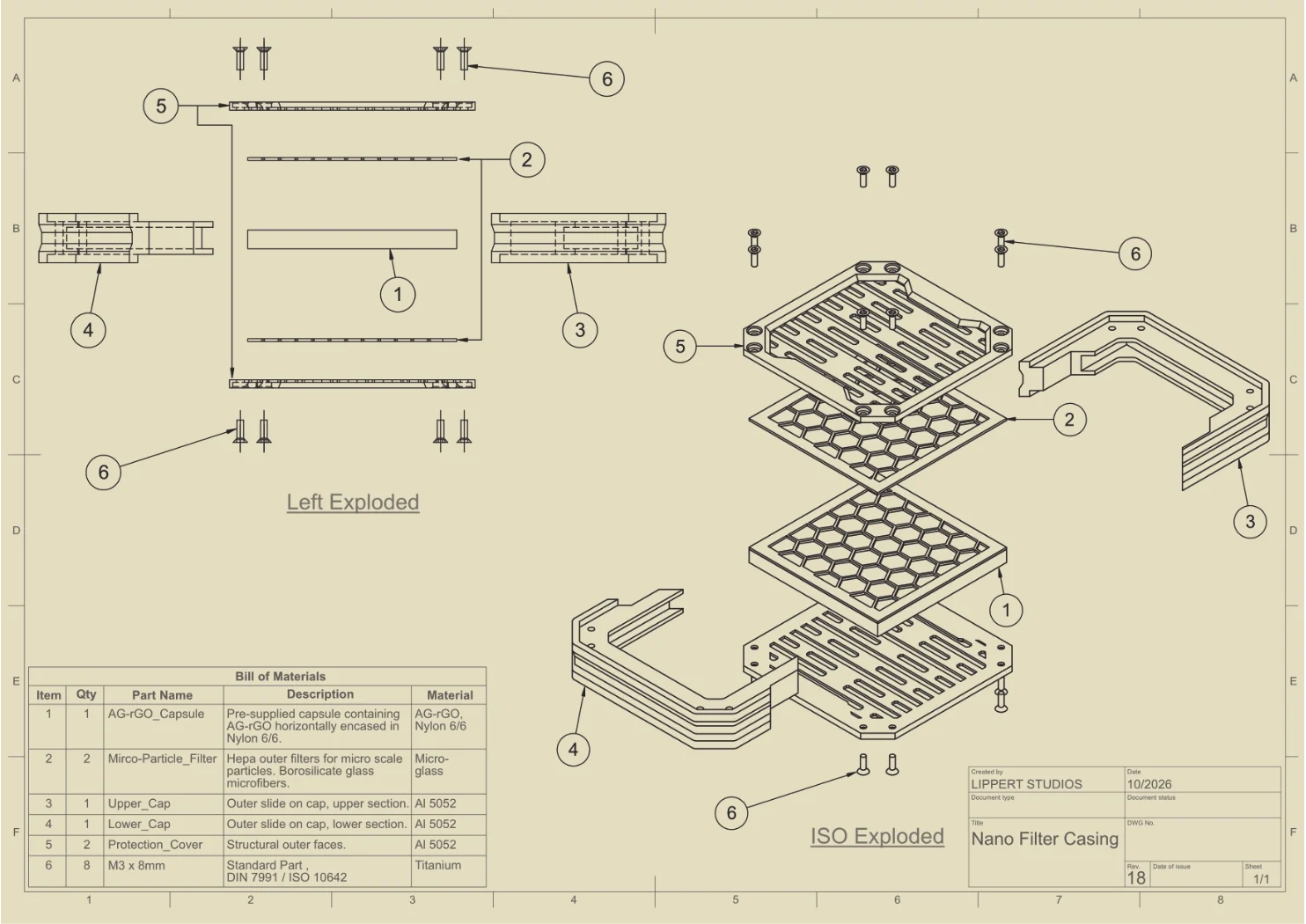
Our work: Housing engineering with a full parts list, from prototype to series production.
Engineering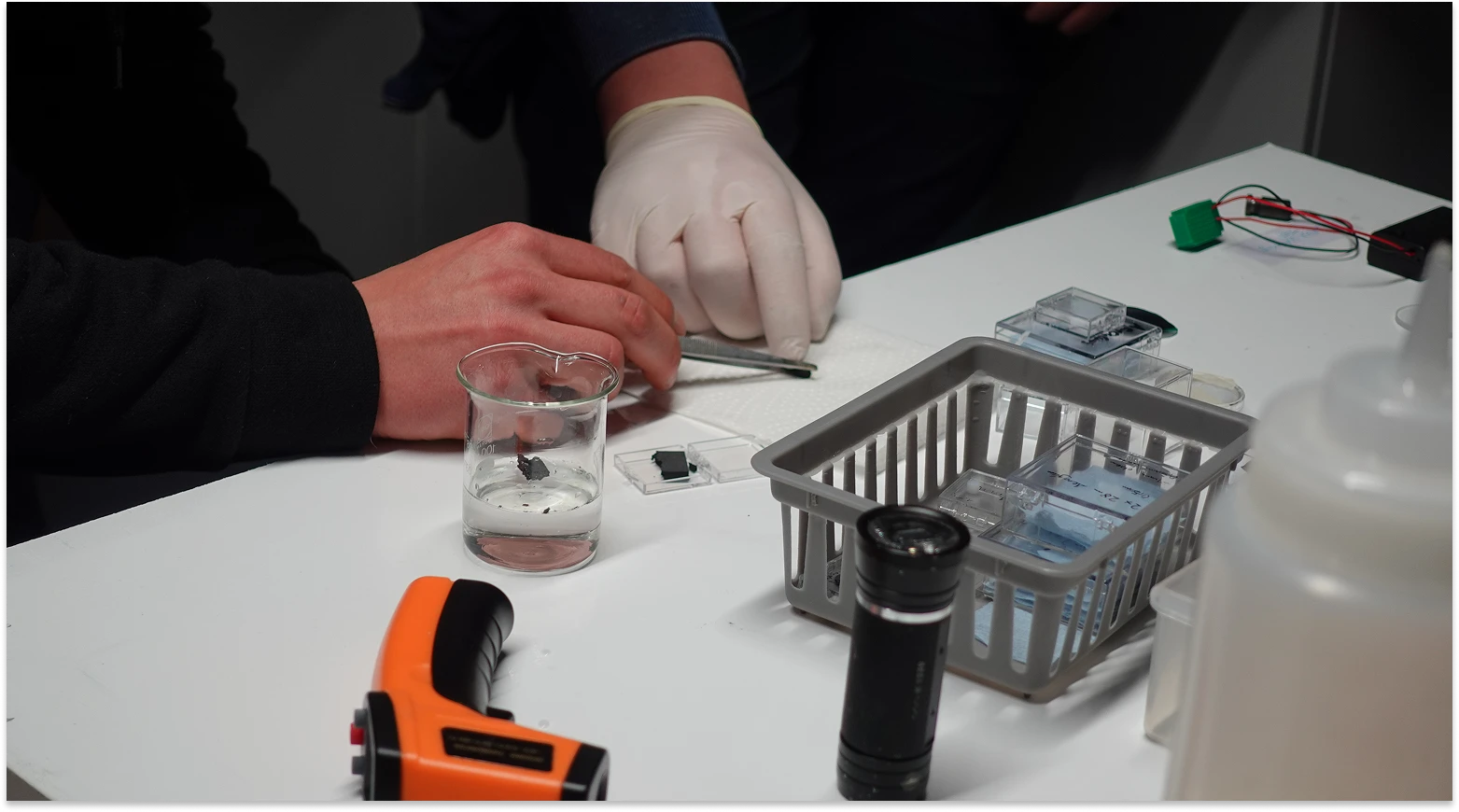
One material. From lighting to motion.
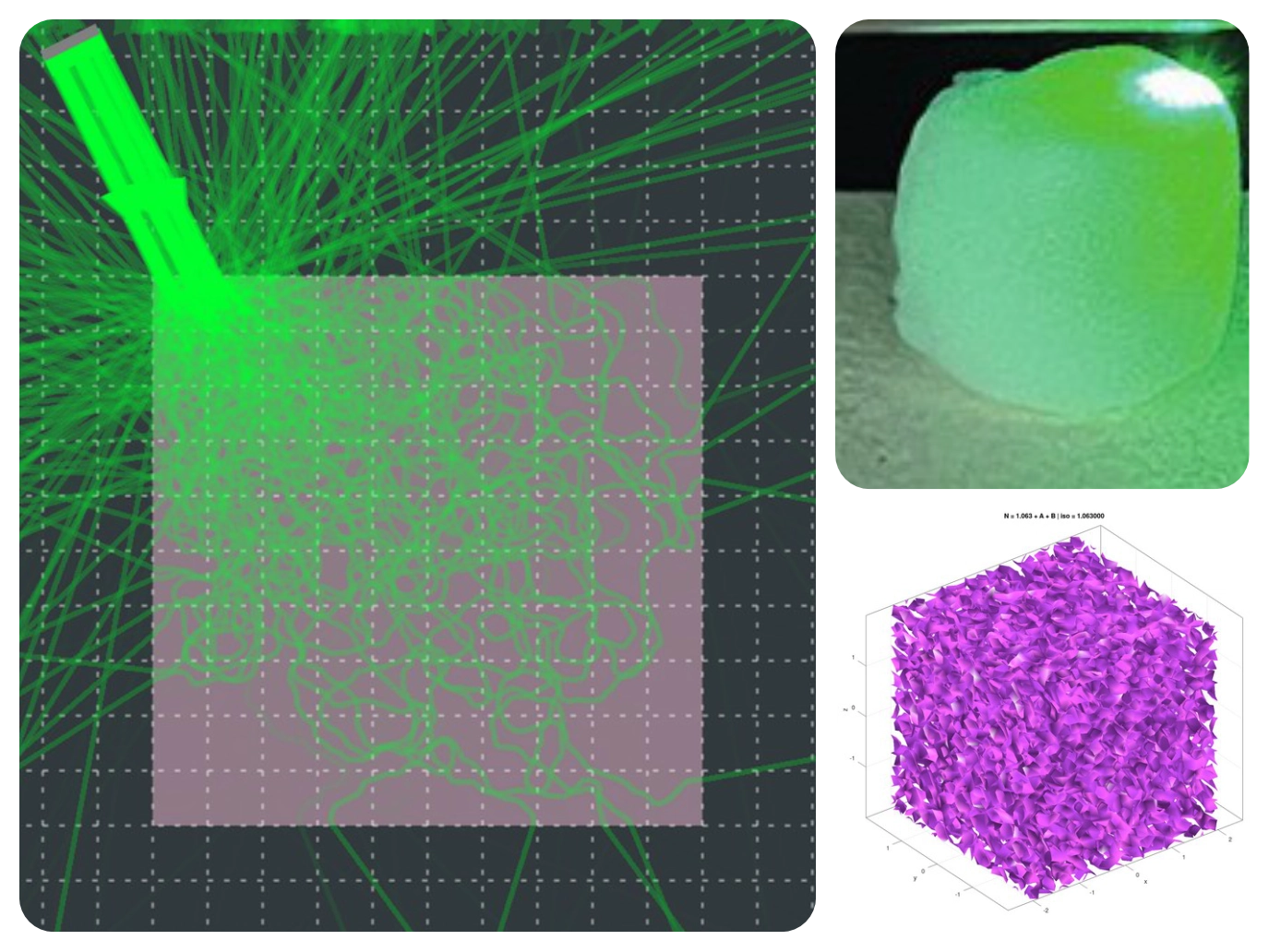
Aeroglas is a network of hollow glass microtubes. On its own, it scatters light in all directions. With just a few millionths of a gram of graphene oxide per cubic centimetre, it absorbs light and converts it into heat. The same structure can glow, pump or move.
99,9 %
Air
~3 mg/cm³
Density
0 %
Plastic
Heat
and radiation-resistant
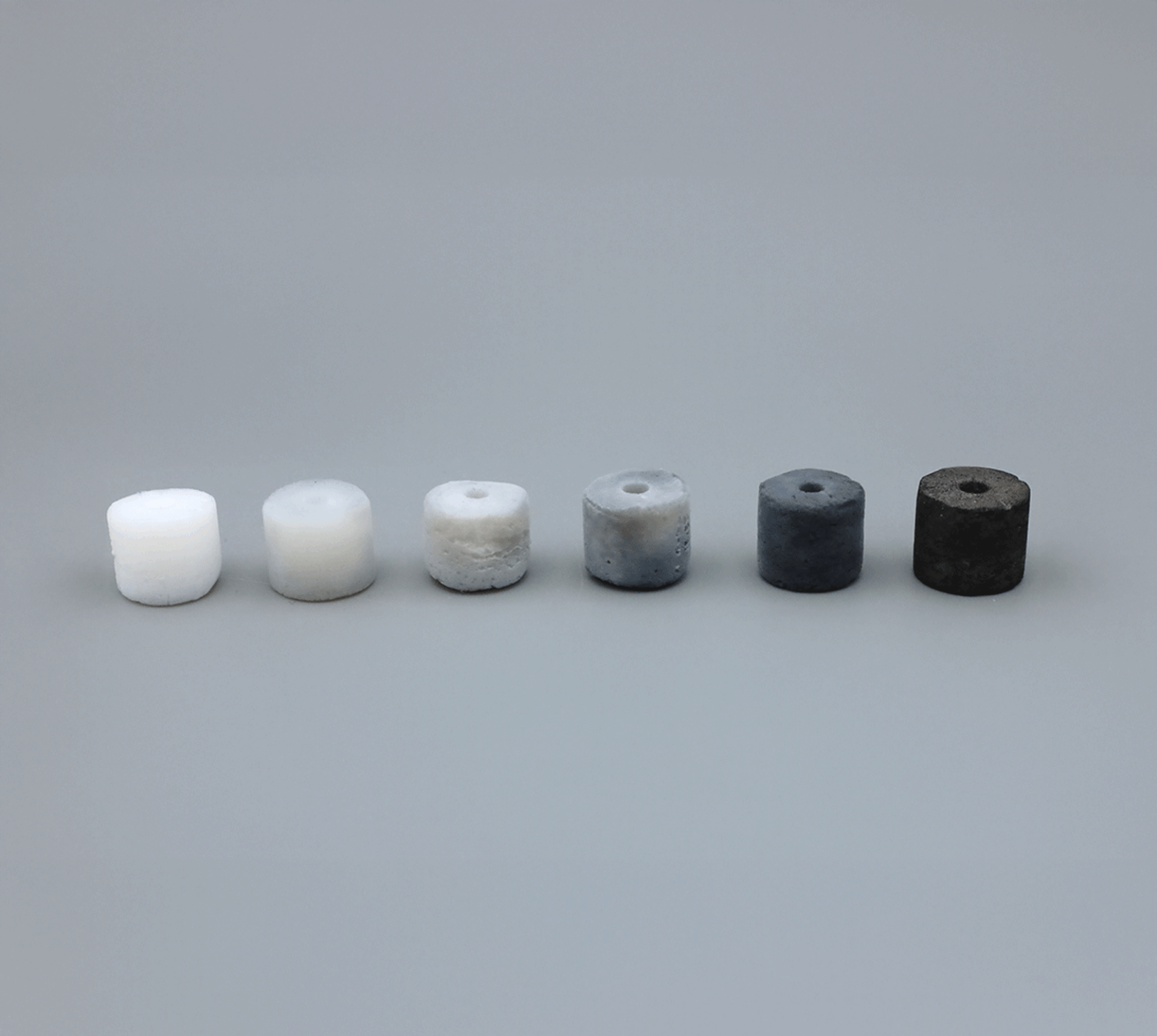
Scatters light
Pure Aeroglas: glows
Absorbs light
With graphene: heats, pumps, moves
You can find the current state of research here:
Visit Kiel UniversityThe Process
Our Design Process
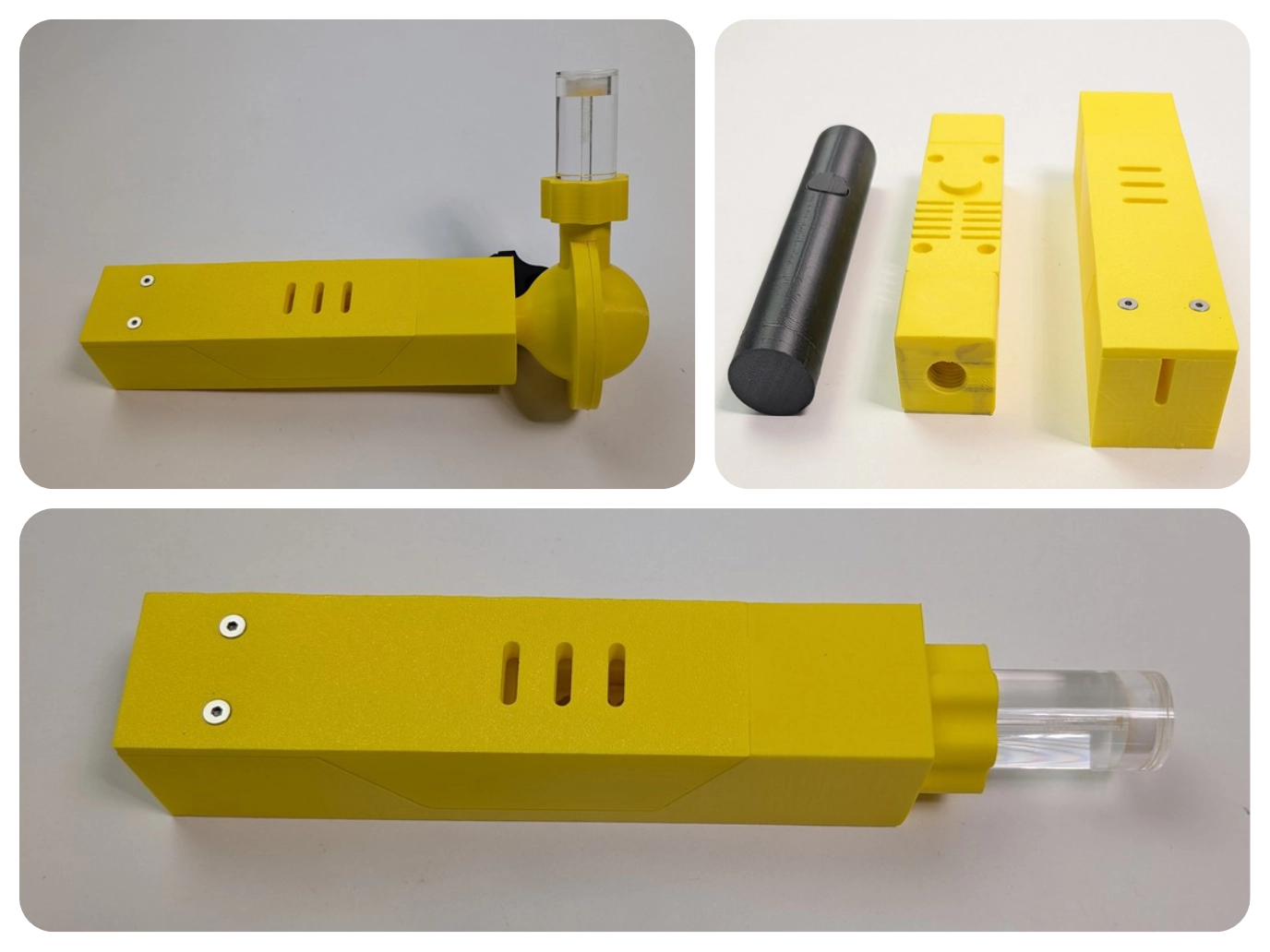
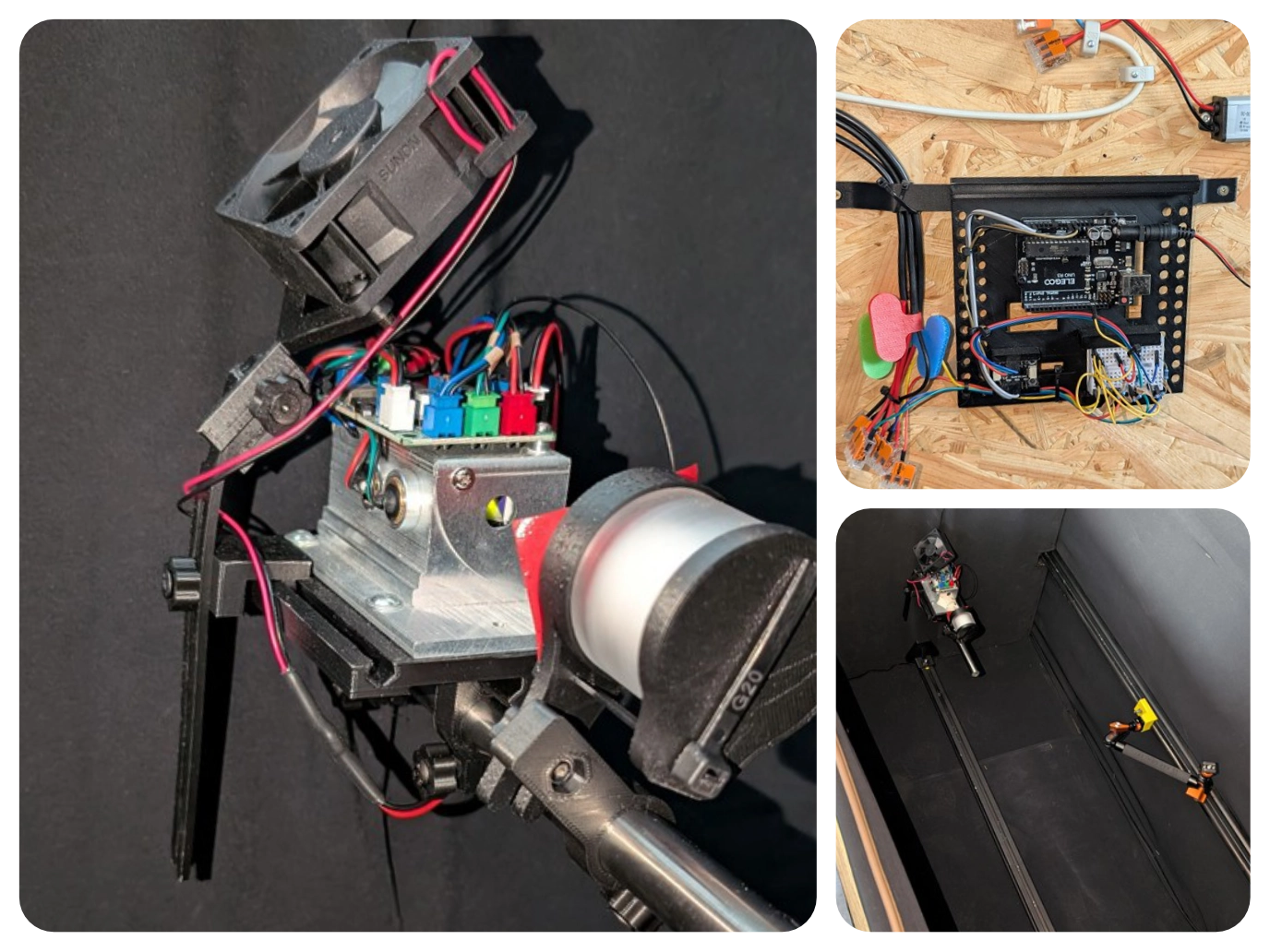
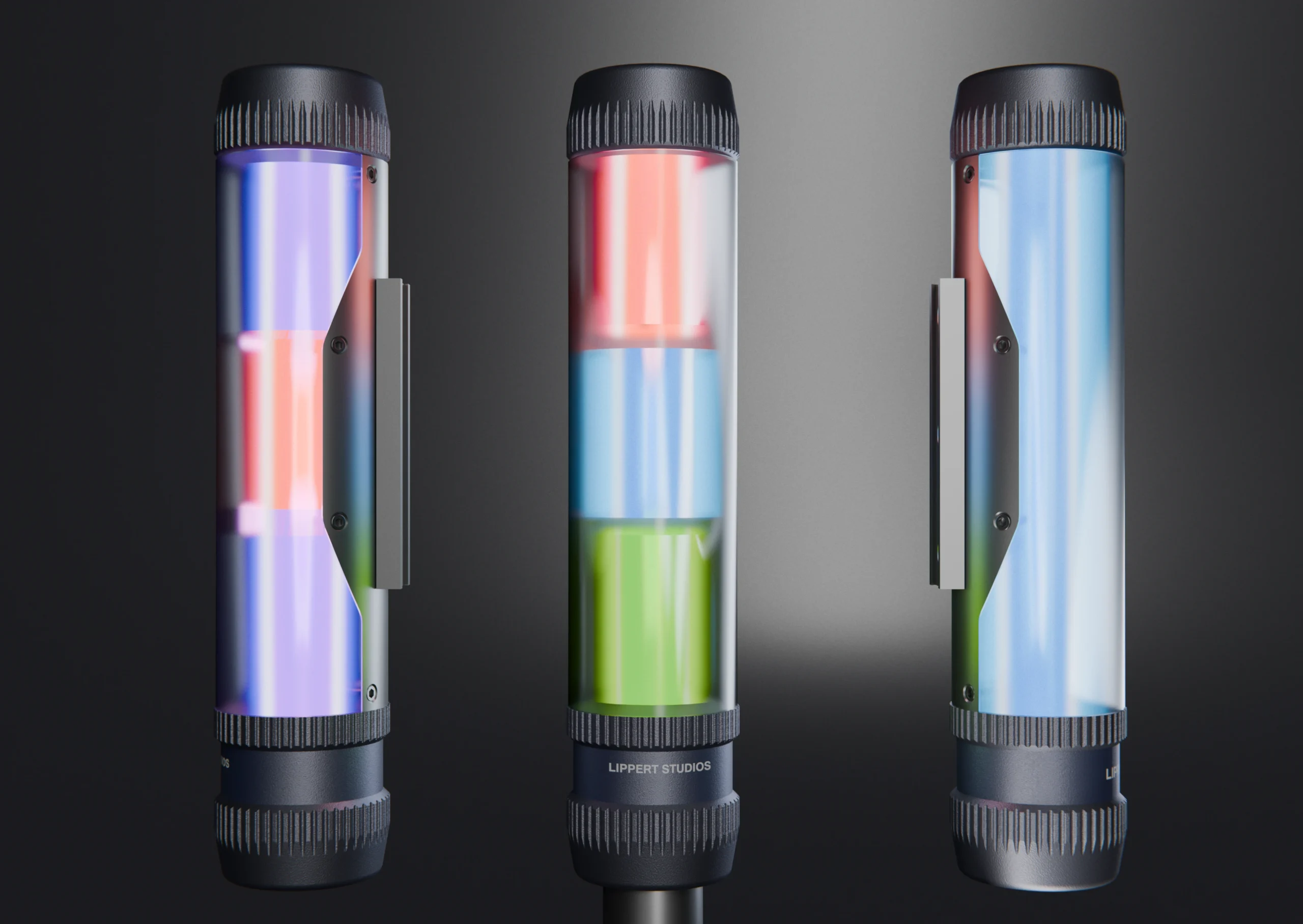
Finding the limitations of the work material, collecting market information, discovering methods of approaching the project.
Previous examples
A similar project workflow
Research
Based on the mechanical properties and the research concept
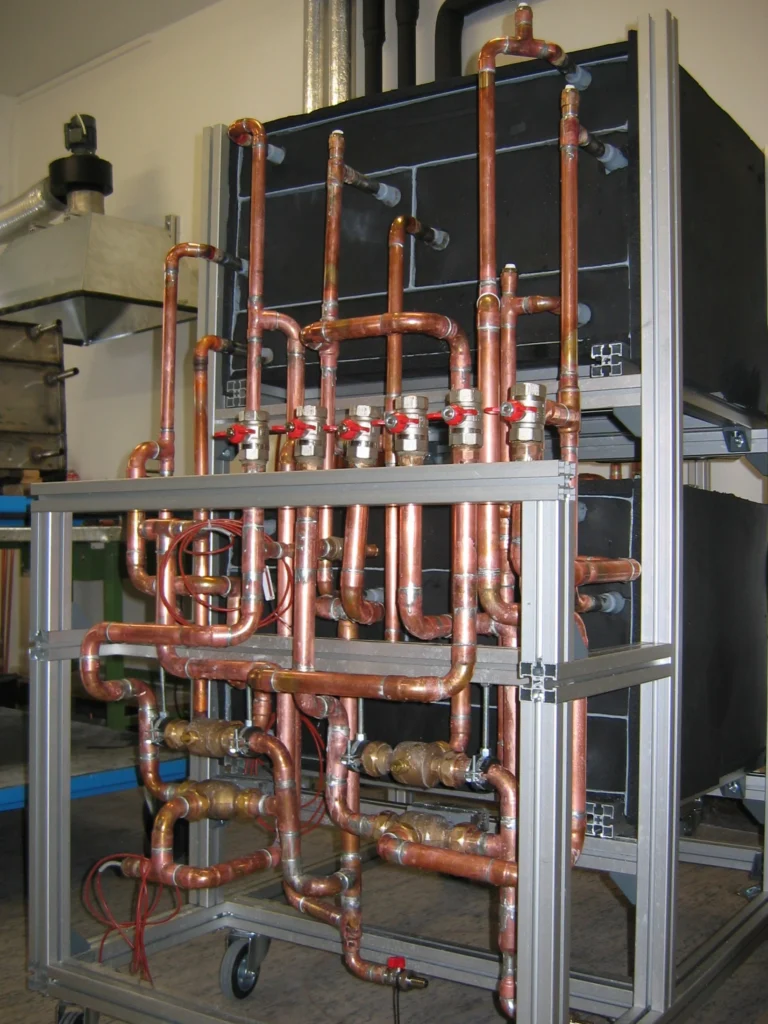
Design
Translating the features into a functional and logical use case
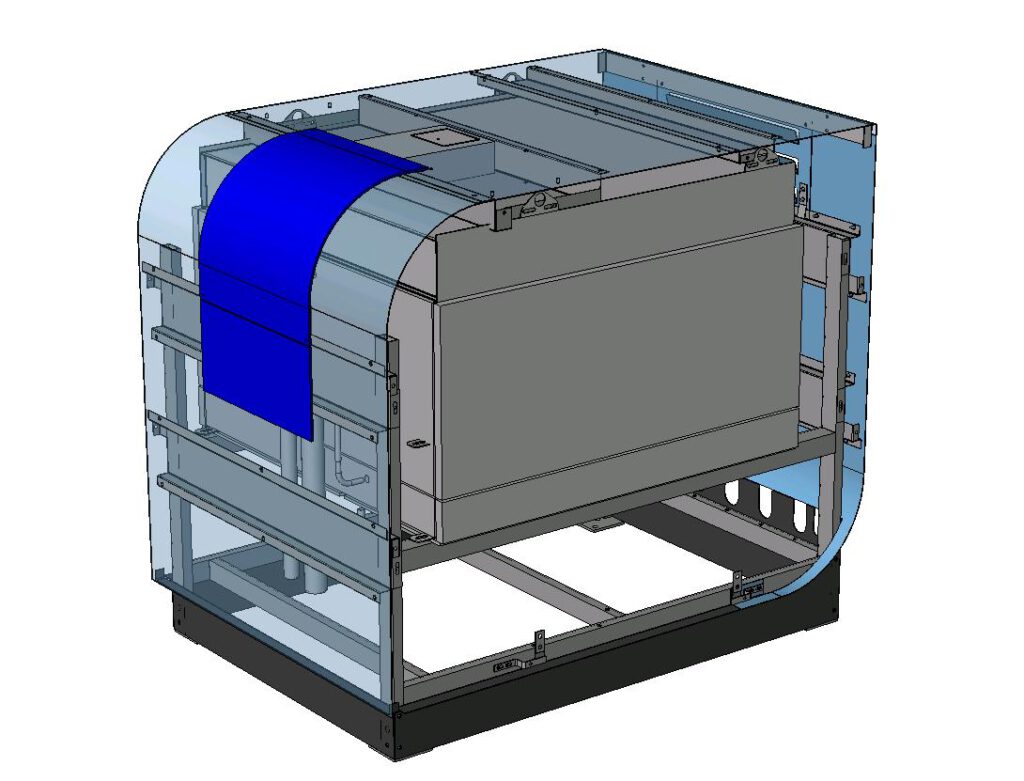
Product
Developed for manufacturing. Ready for customers, investors and production.
The definition of a functional product always follows a similar process, although variations arise from the nuances of the specific requirements. The design process is inherently iterative: each phase feeds into the next and shapes it, so that the product continues to evolve through continuous refinement.
View ACS 05Project · EnerKíte
How airborne wind energy got its archetype.
-
01 Product
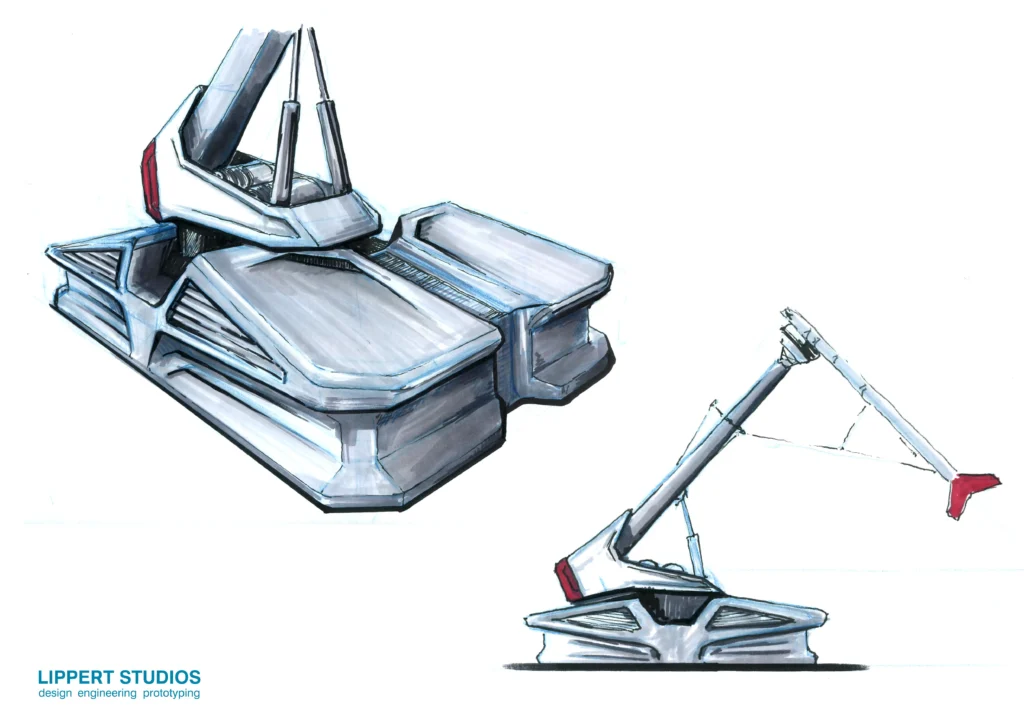
Define what it should be
Together with EnerKíte we worked out the product’s core functions and values and translated them into sketches. The benchmark was industrial reliability, not a lab experiment.
-
02 Product
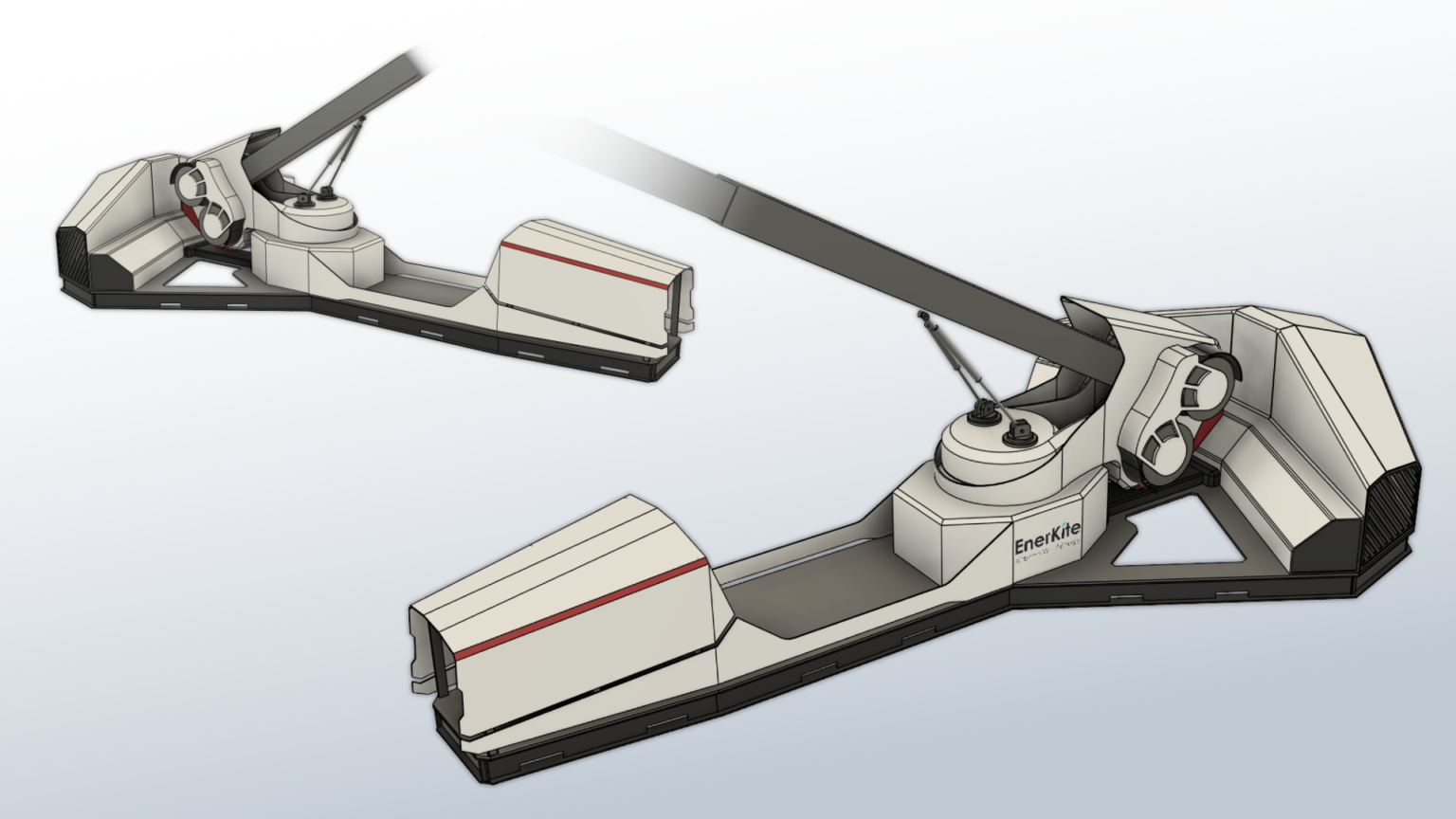
Engineer the form
In CAD we tested variants for manufacturing, assembly, transport and scalability. The result: a modular system with interchangeable units and a kite dock that centers the kite on every landing.
-
03 Product
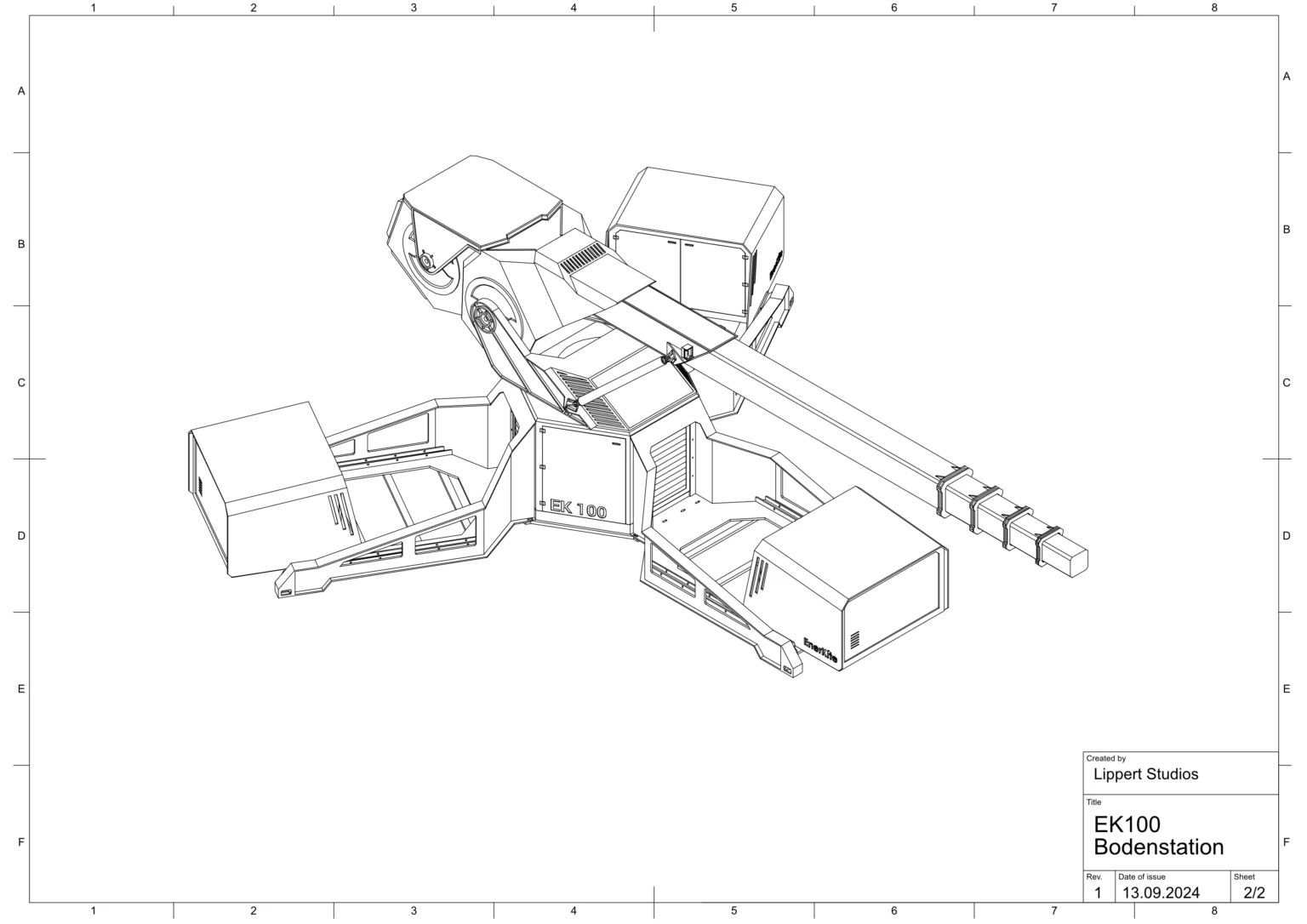
Ready for patent and production
We turned the final design into technical drawings for the patent filing, manufacturing proposals and a roadmap for prototypes.
-
04 Brand
Make it visible
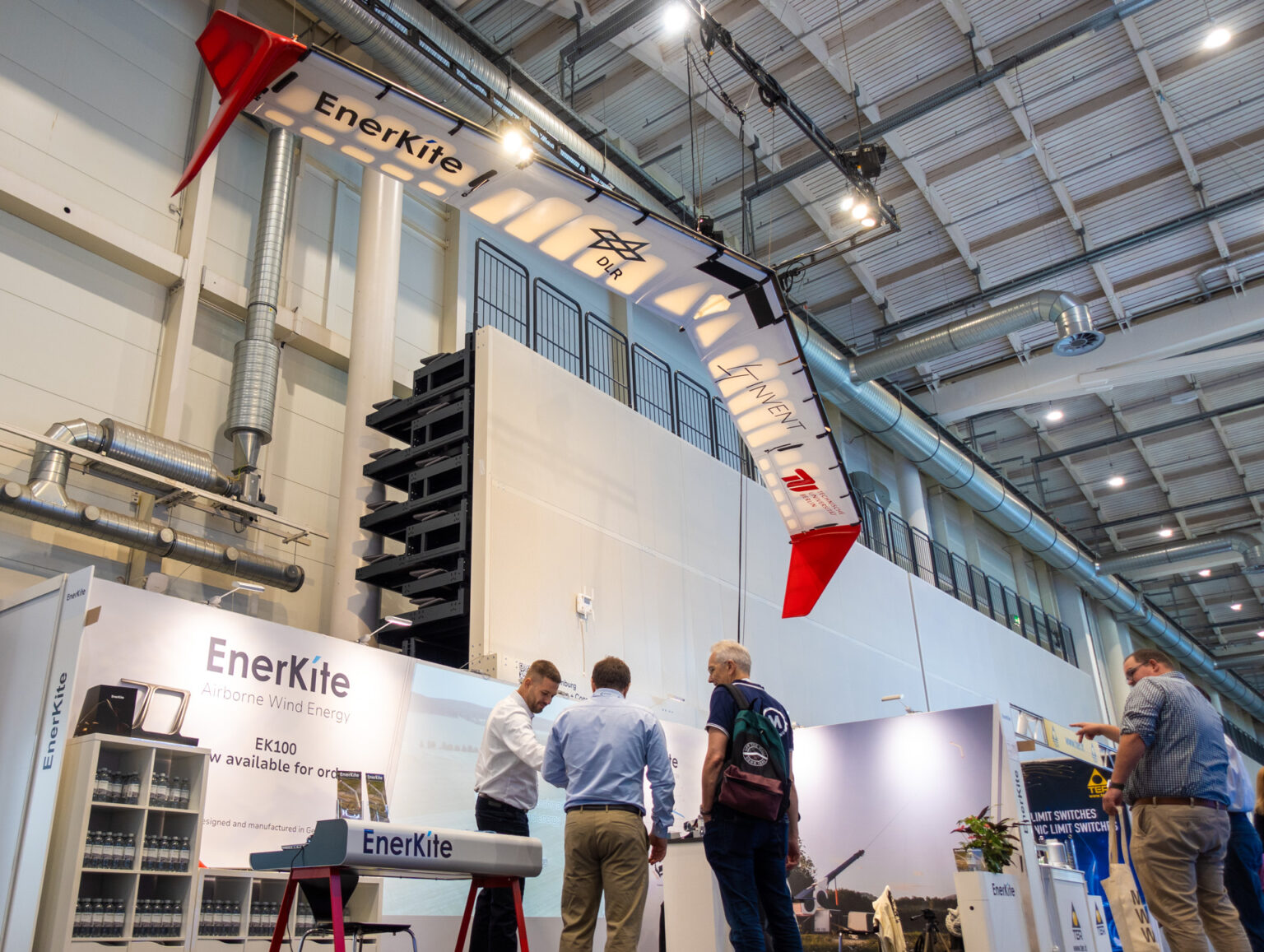
For WindEnergy Hamburg 2024 we designed the booth: a 1:20 model of the EK100 at its center, a real kite above it, video, flyers and social media. It became one of the most visited booths at the show.
-
05 Archetype
One image for an entire technology
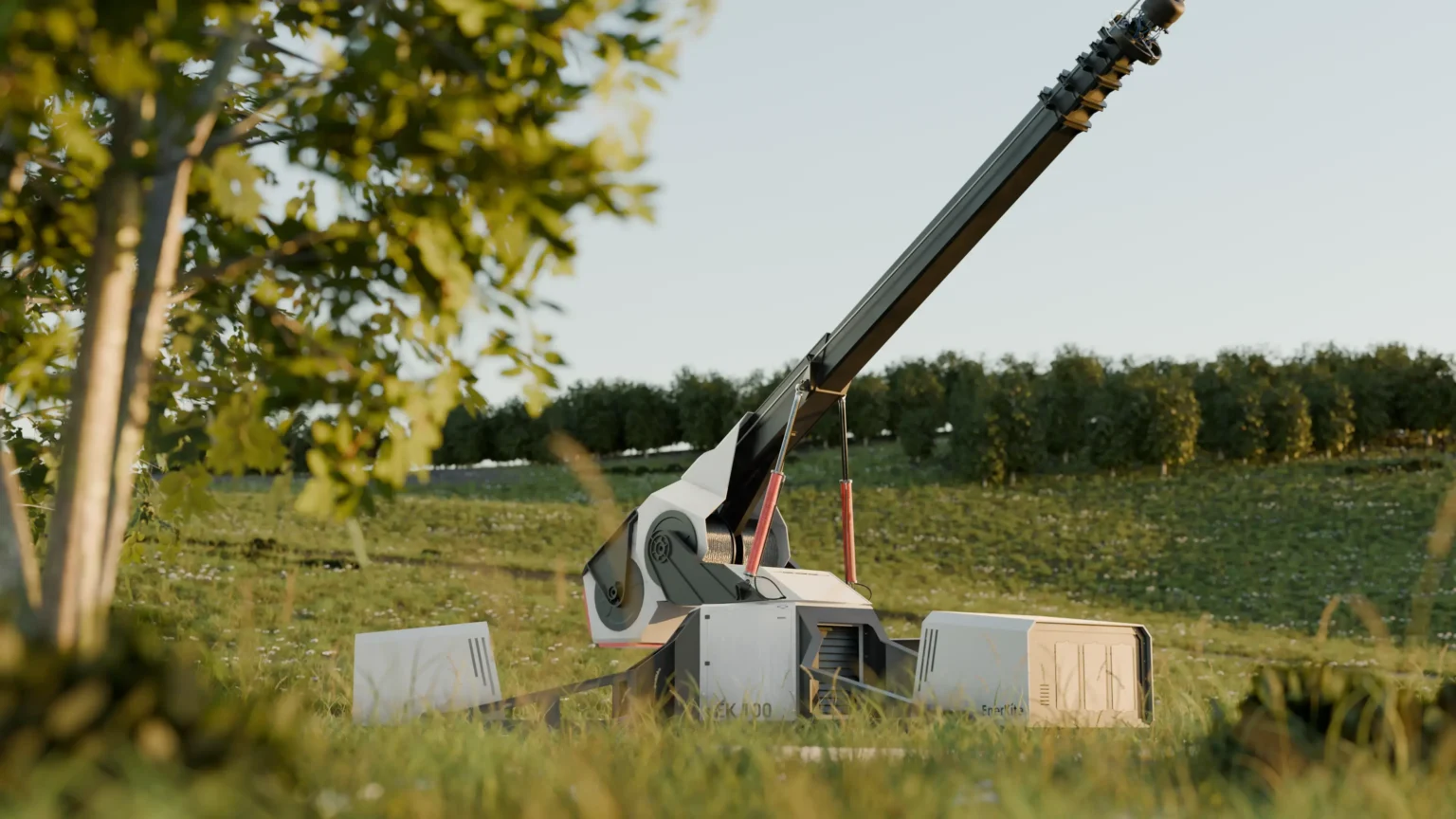
Photorealistic renderings place the station in real landscapes. Whenever EnerKíte explains airborne wind energy today, this is the image people see: the archetype of a new industry.
A technology without precedent gained a product, a brand presence and an archetype that makes airborne wind energy clear at a glance.