Labbox Reactor Rescue
Labbox, in partnership with Hape and Lippert Studios, developed an electronics learning board game that turns STEM learning into an engaging, hands on family experience. Reactor Rescue challenges players to take on the role of engineers racing to repair their spacecraft by building working electronic circuits using the Labbox magnetic blocks and components.
Lippert Studios was brought on by Labbox to help shape the visual and graphic communication. This included creating a clear instruction manual, production ready game components, over 270 cards, packaging and defining visual communication assets that make the electronics and gameplay accessible and exciting for both kids and adults.
The big strokes
Considering the target market, the art direction was defined early on as retro sci-fi cartoon inspired. We gave this aesthetic its own twist, aiming it at a younger learning audience while keeping it accessible and engaging for older players as well. The goal was to strike the balance that feels interesting and cool without leaning so heavily into sci-fi and avoid it becoming alienating or hard to relate to.

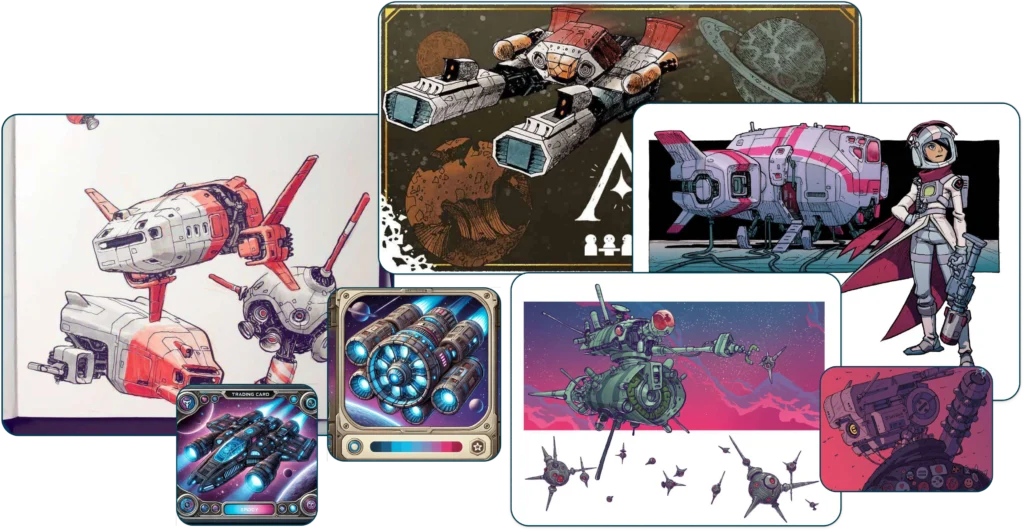
Early reference material.
Interaction ideation
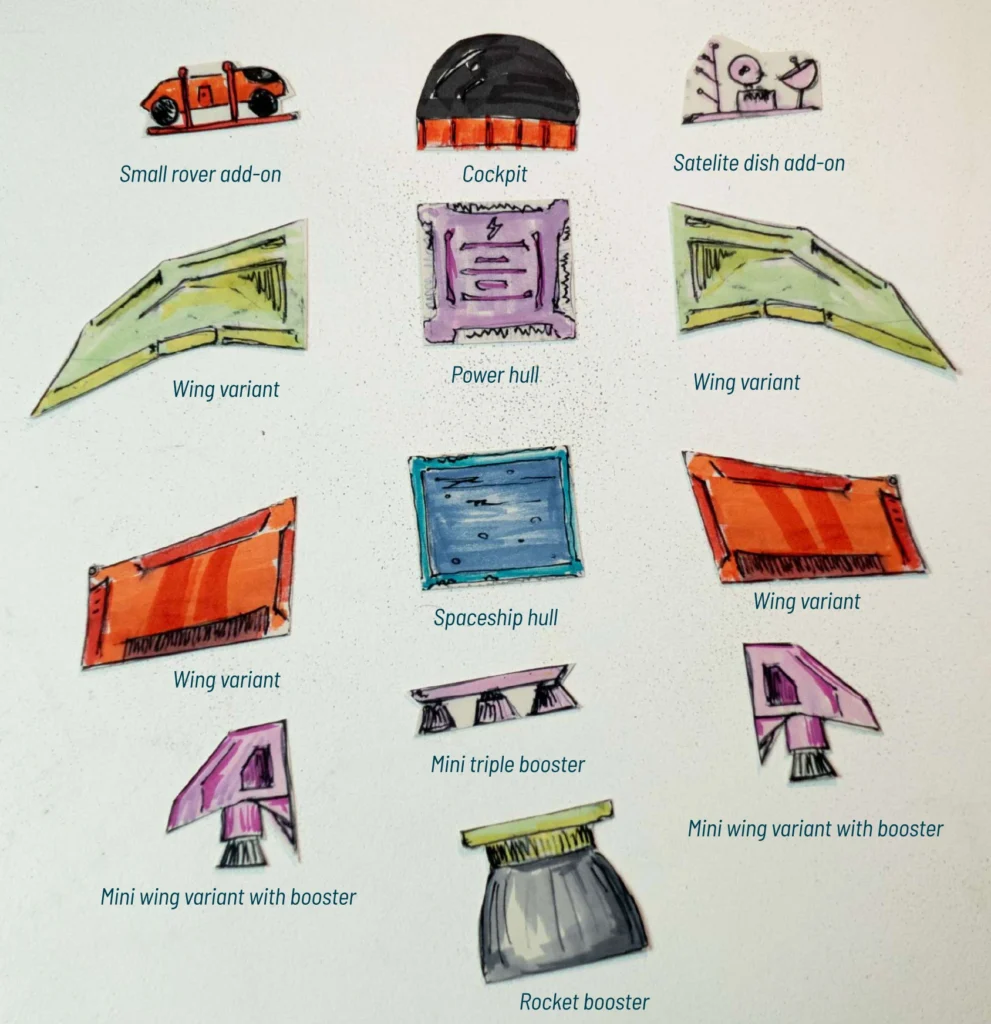
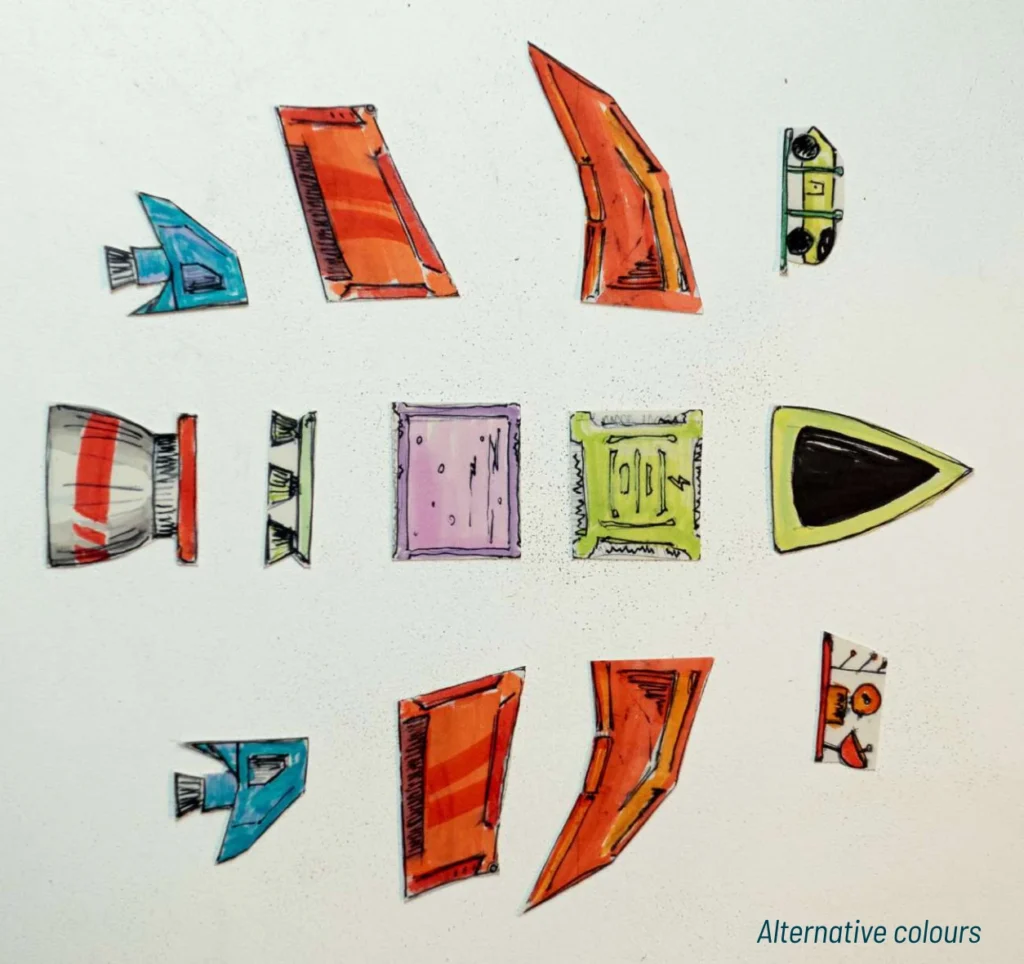
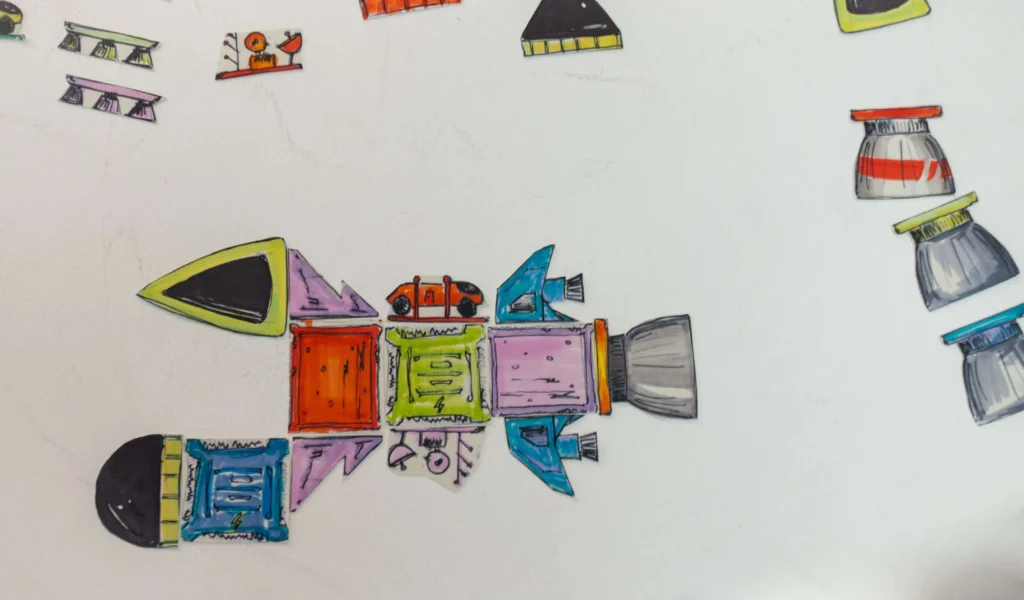
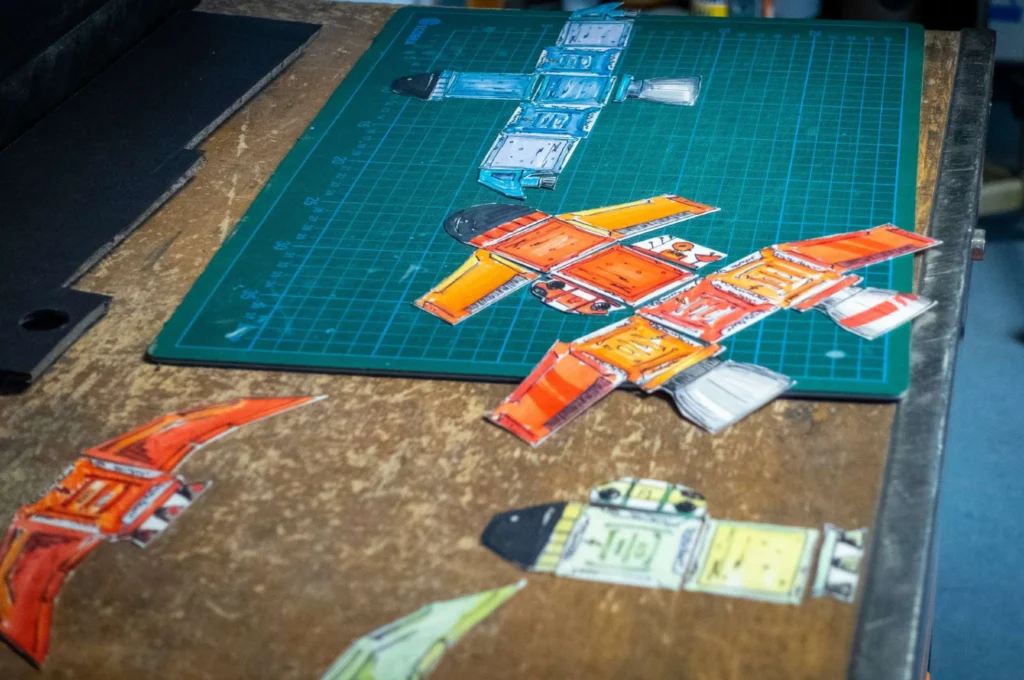
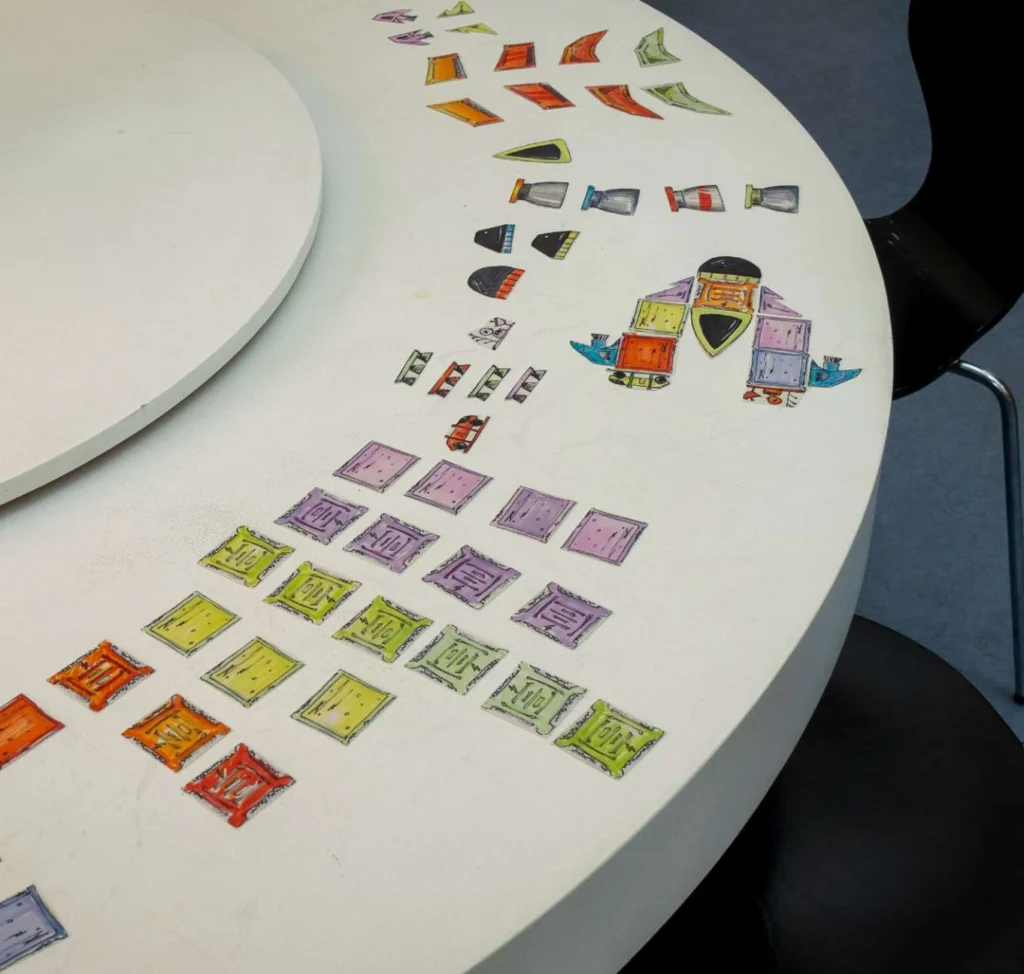
The world setting was given by Labbox, and initial ideas started with customization and spaceships in mind. The rough concept was to allow players to earn spaceship components from completing circuit challenges, and in turn create complex, fun and inspiring space explorers.


Even though the concept showed a lot of promise, it was concluded that the complexity of managing the suggested open ended system would result in wildly unpredictable results, and the only way to make the concept feasable would be with more play testing than could be afforded for the runtime of the project.


Style iterations
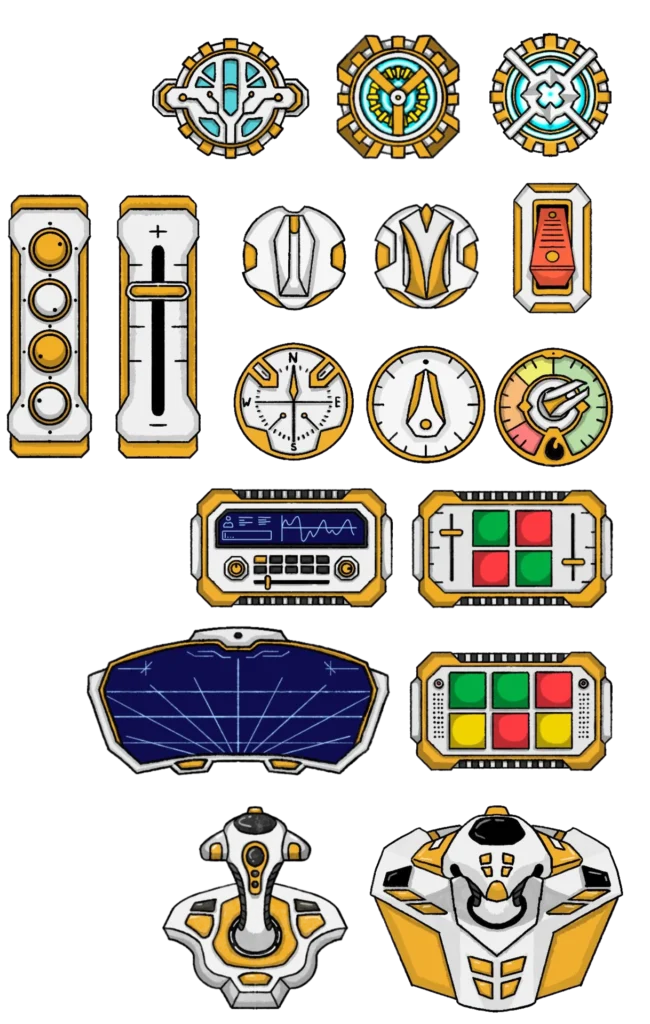
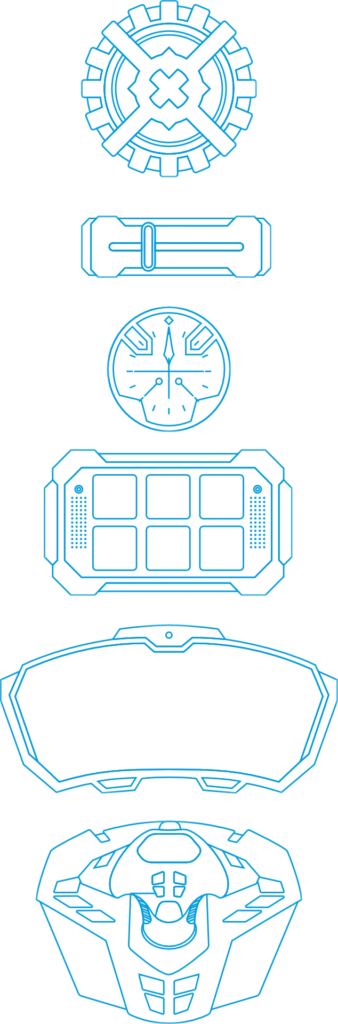
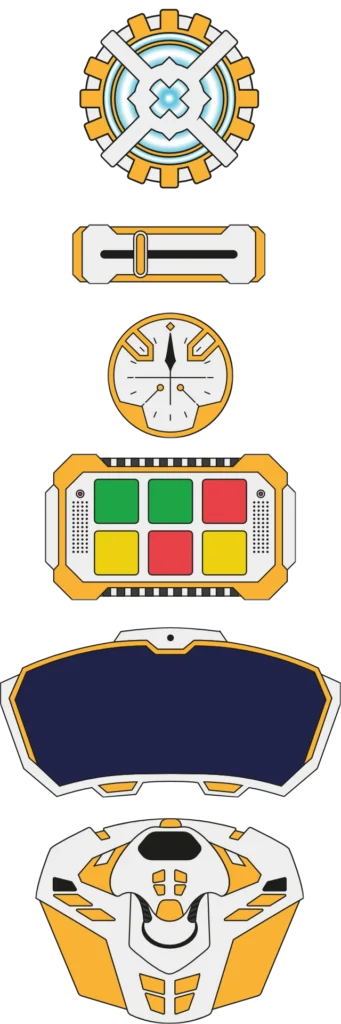
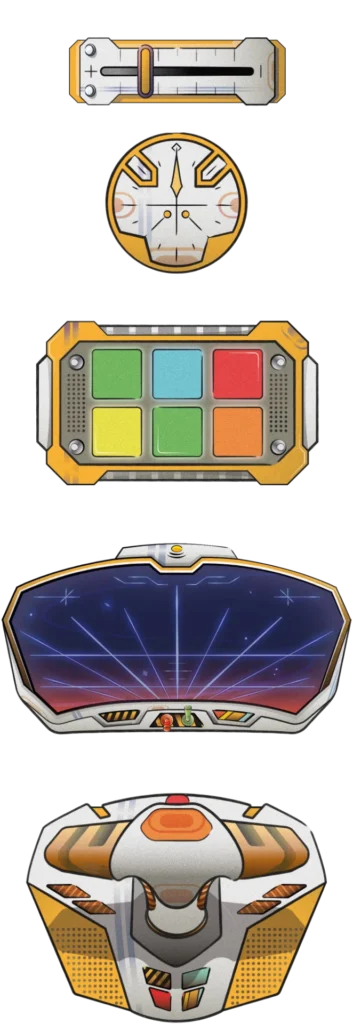
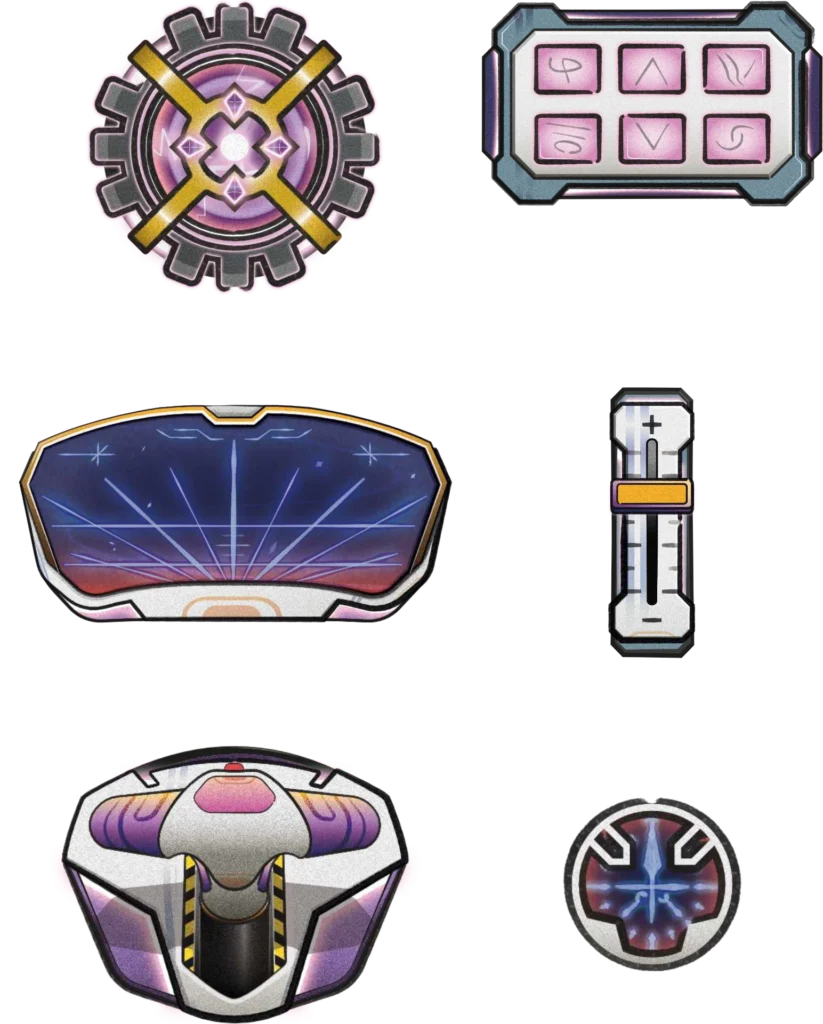
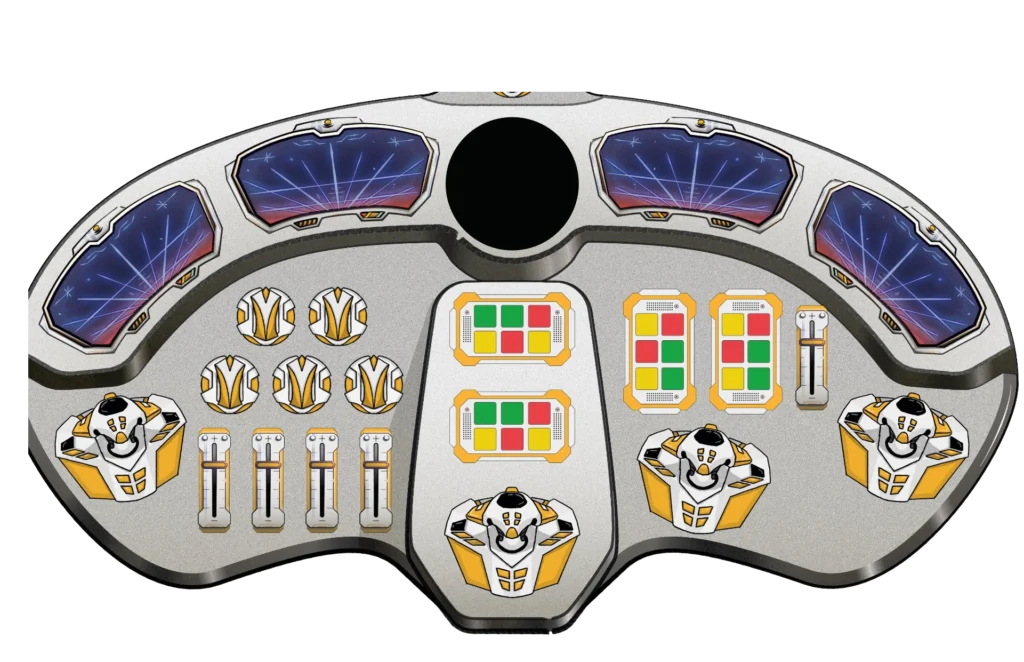
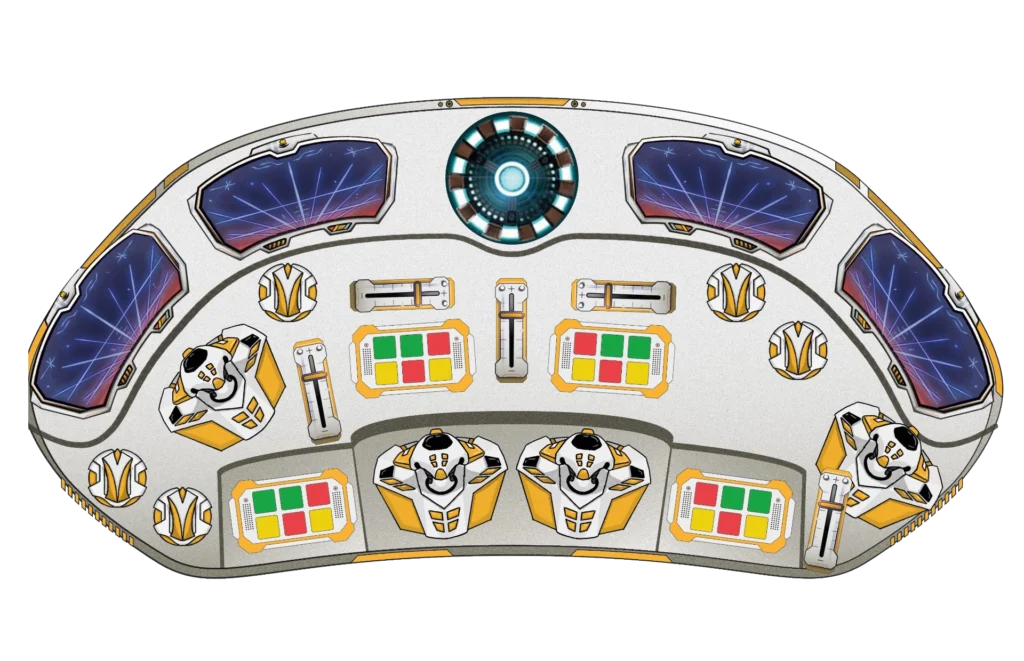
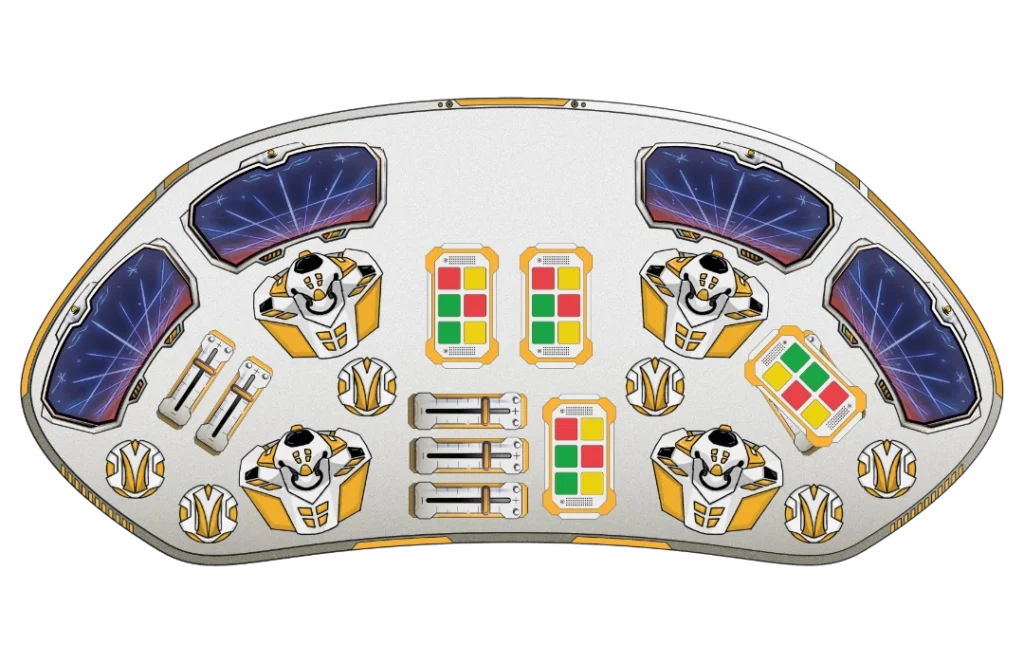
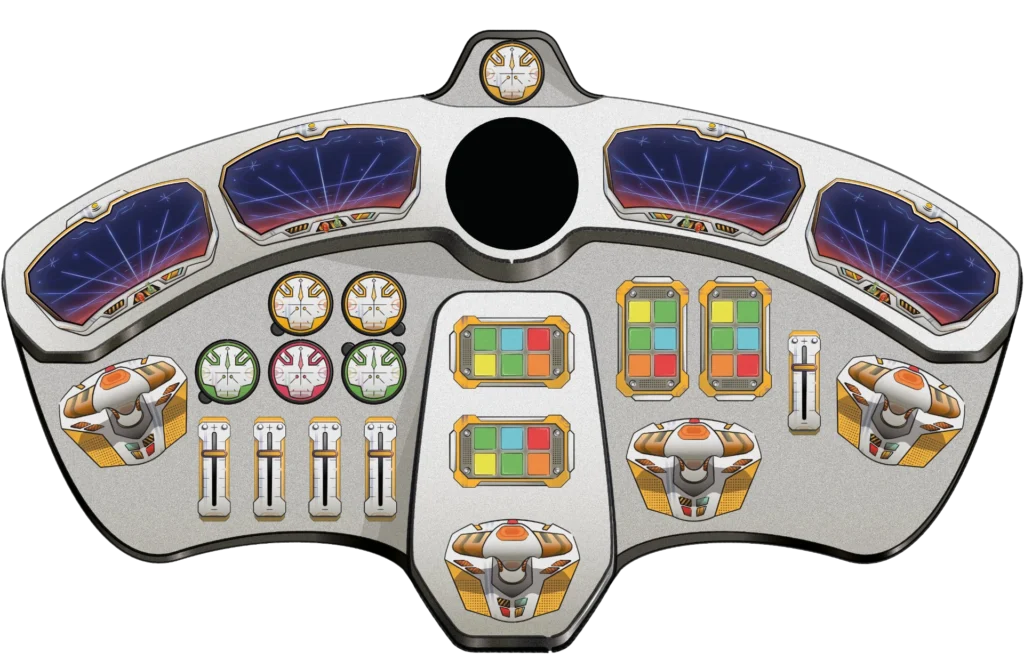
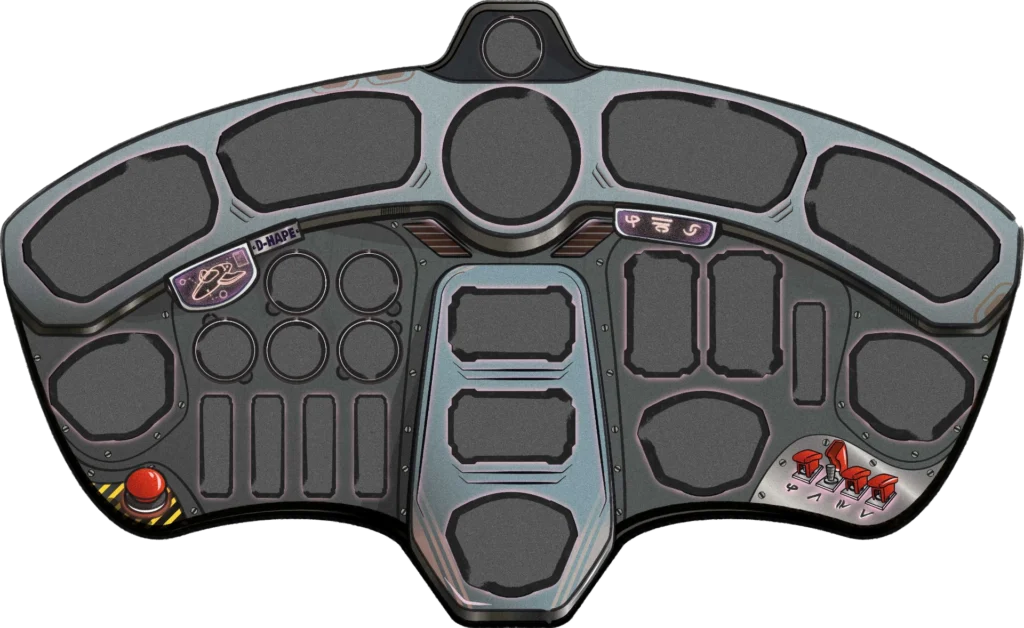
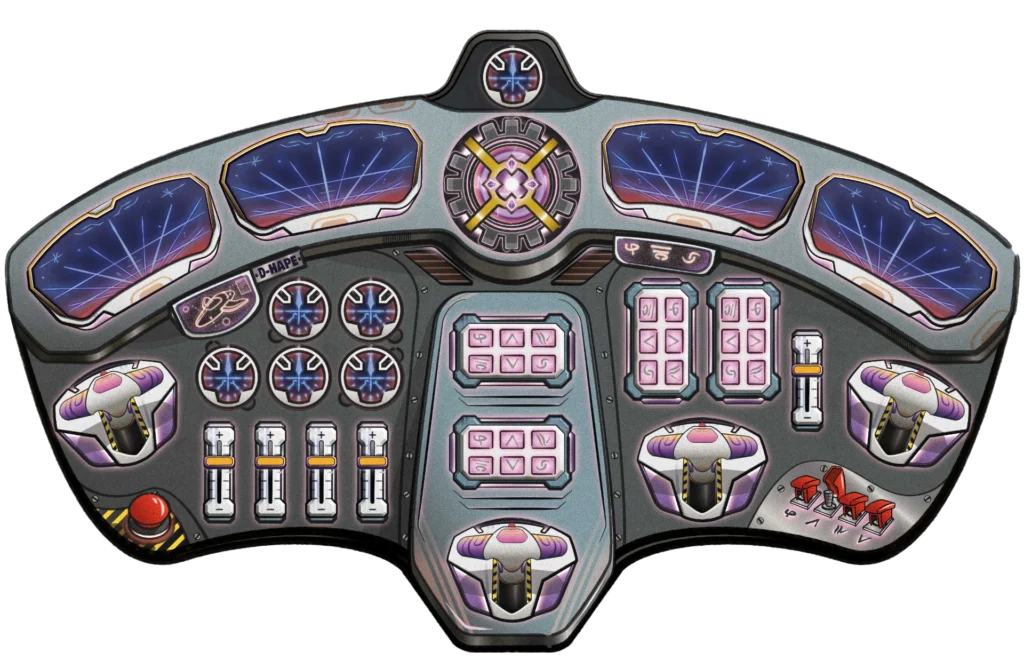
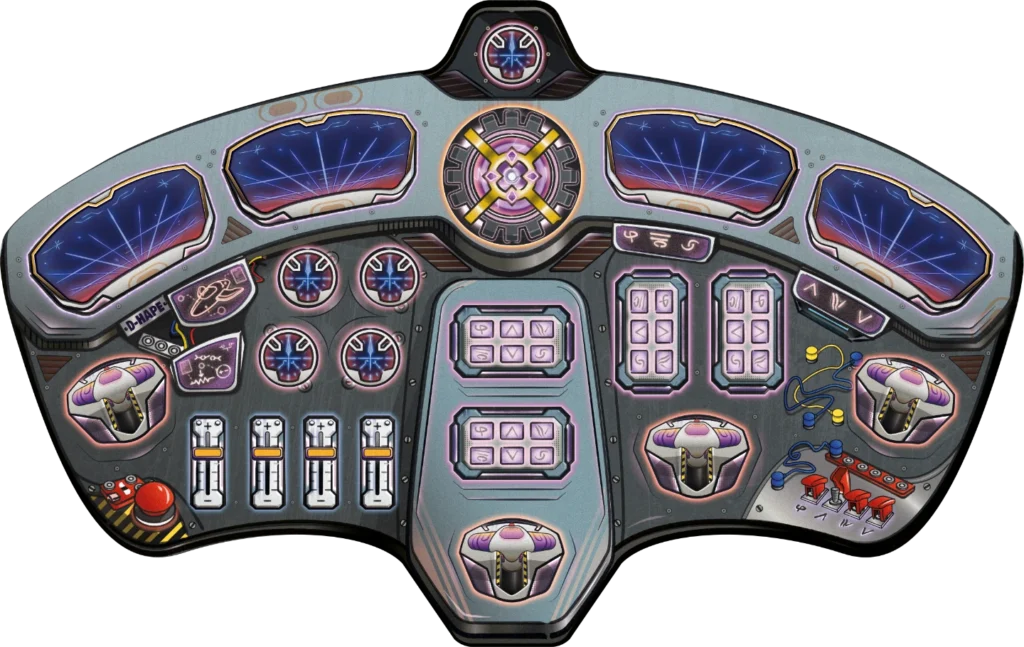
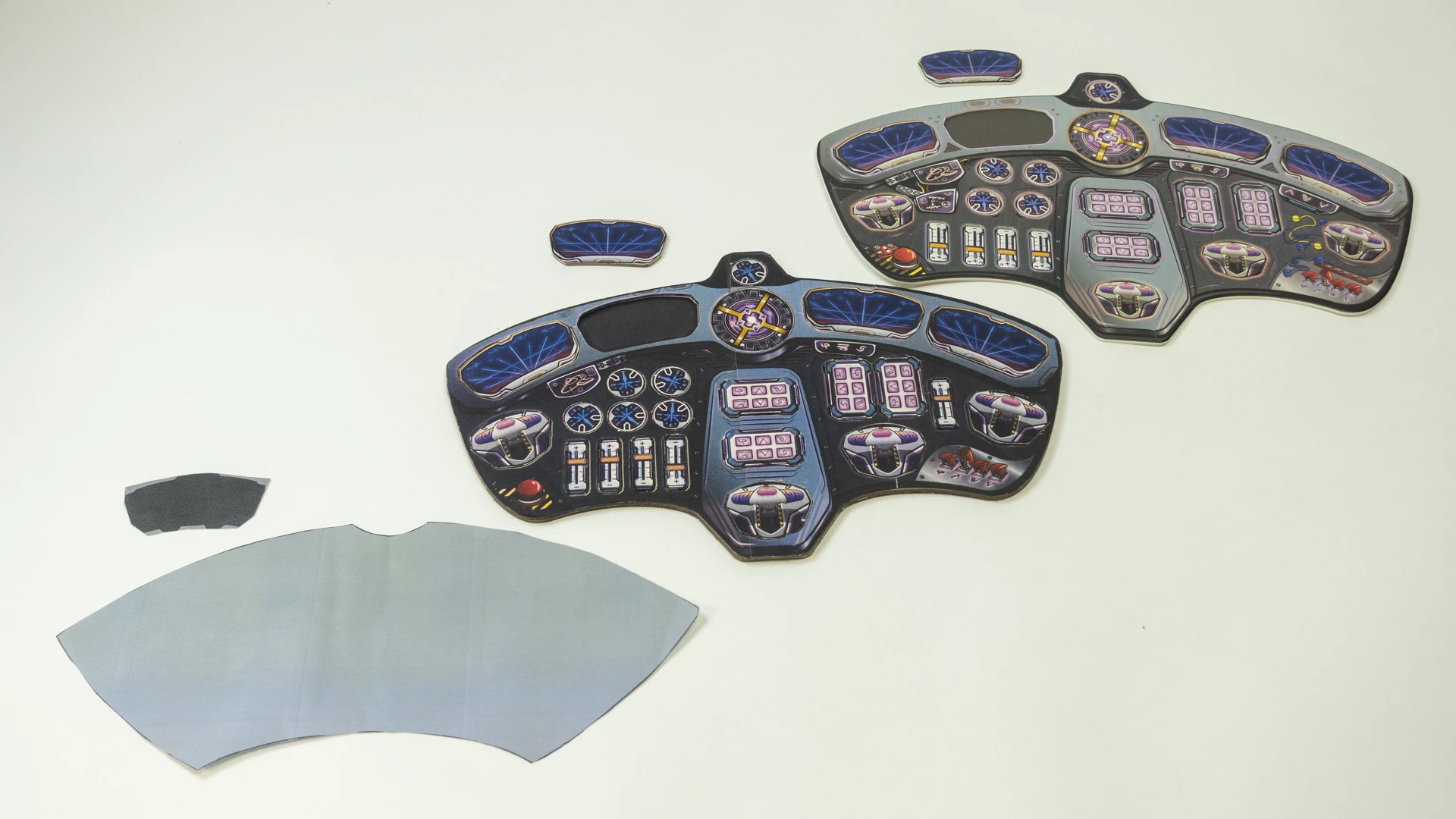
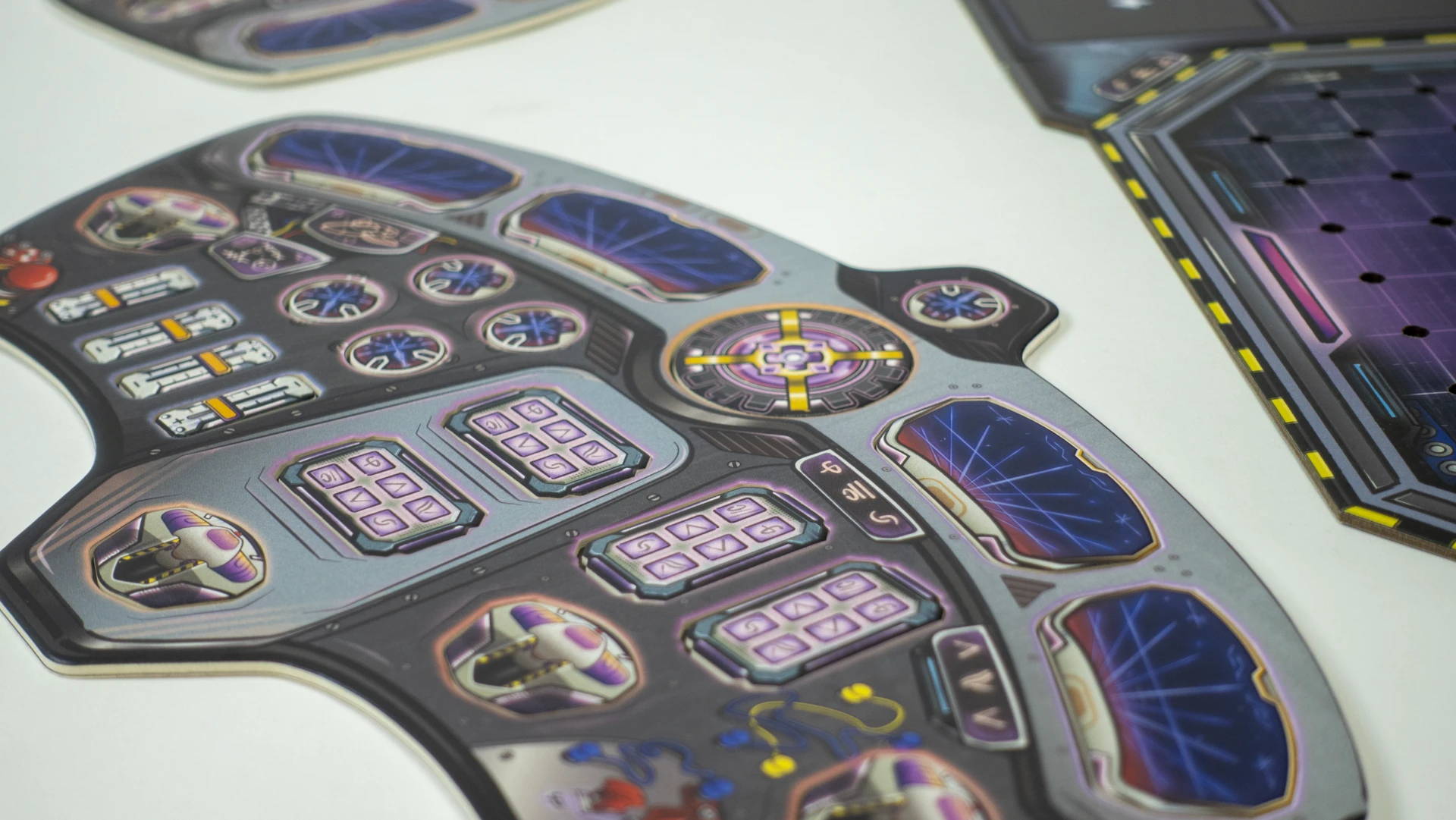
We moved to a system focused on repairing a single control panel, where players receive components to replace empty sockets on that panel. Throughout the design process, the game’s visual style was developed iteratively, refining characteristics that strengthen the world building, communication style, and overall look of the product. This phase was a critical part of the project, as committing to a clear and consistent style establishes the framework that all subsequent stylistic decisions are built upon.


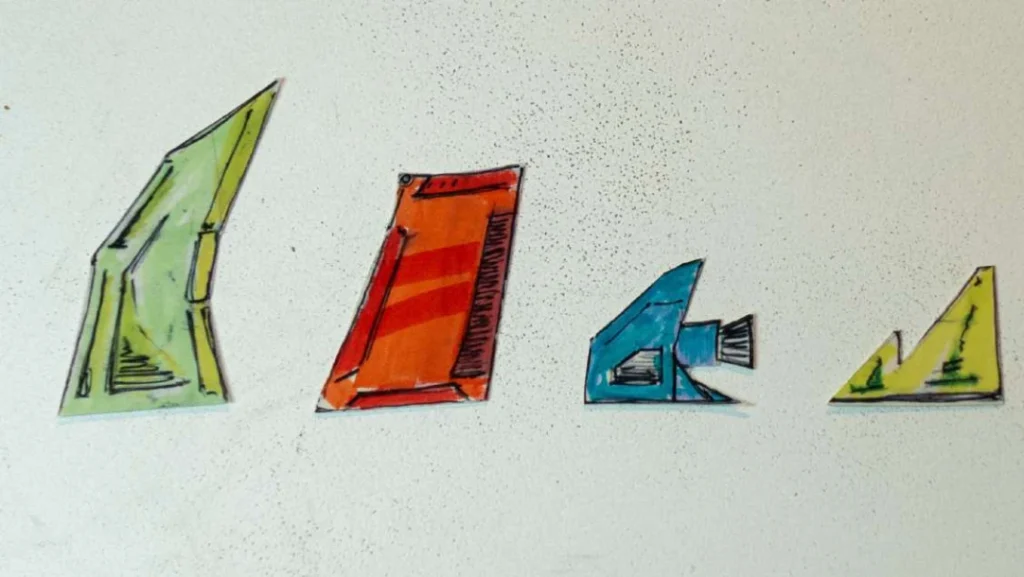
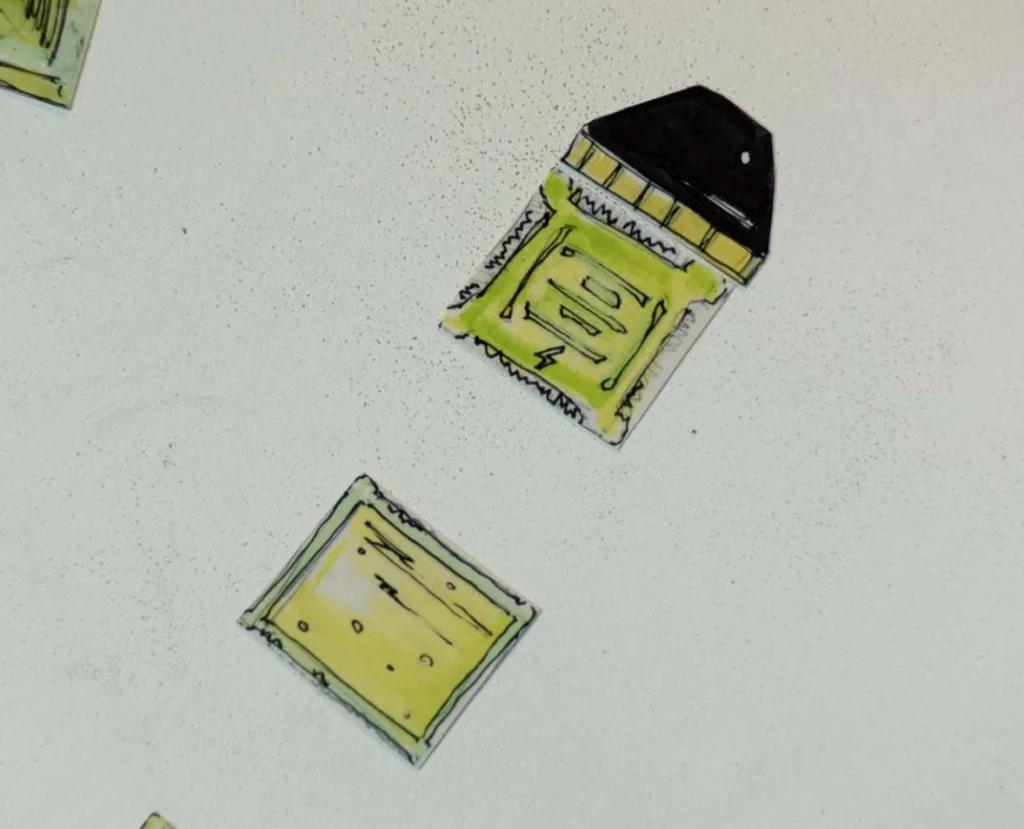
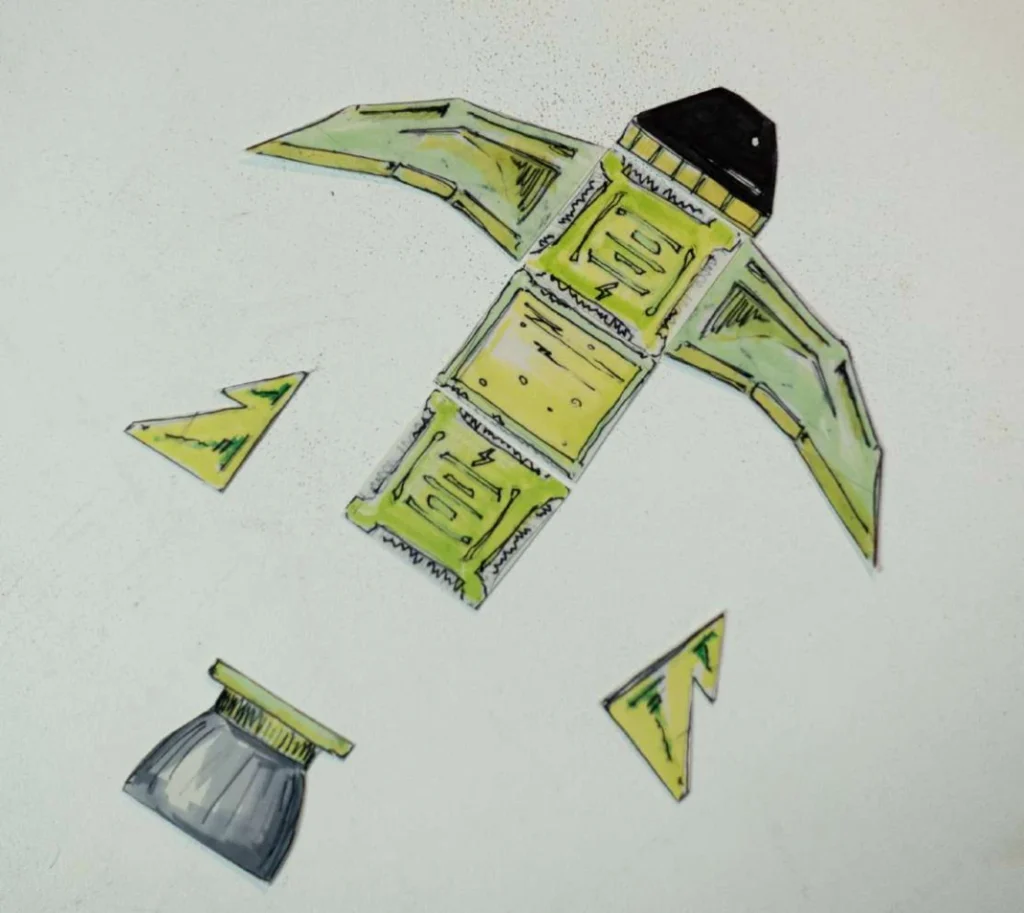
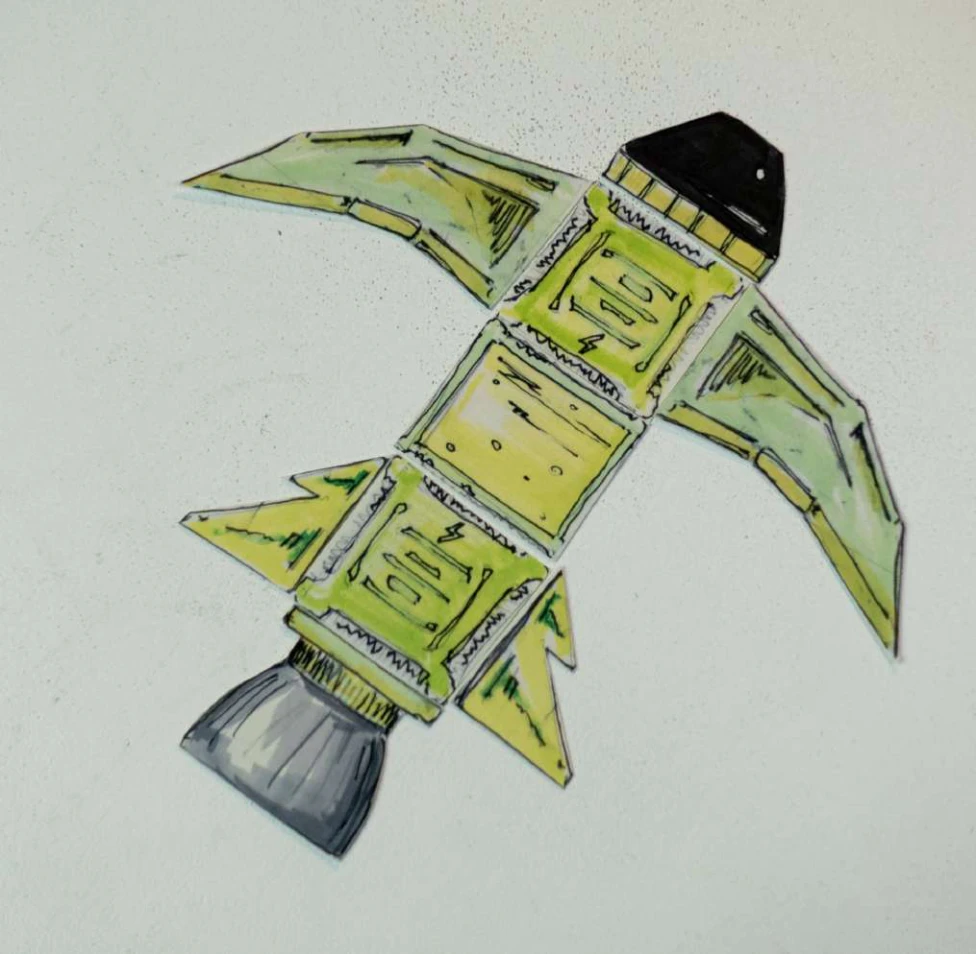
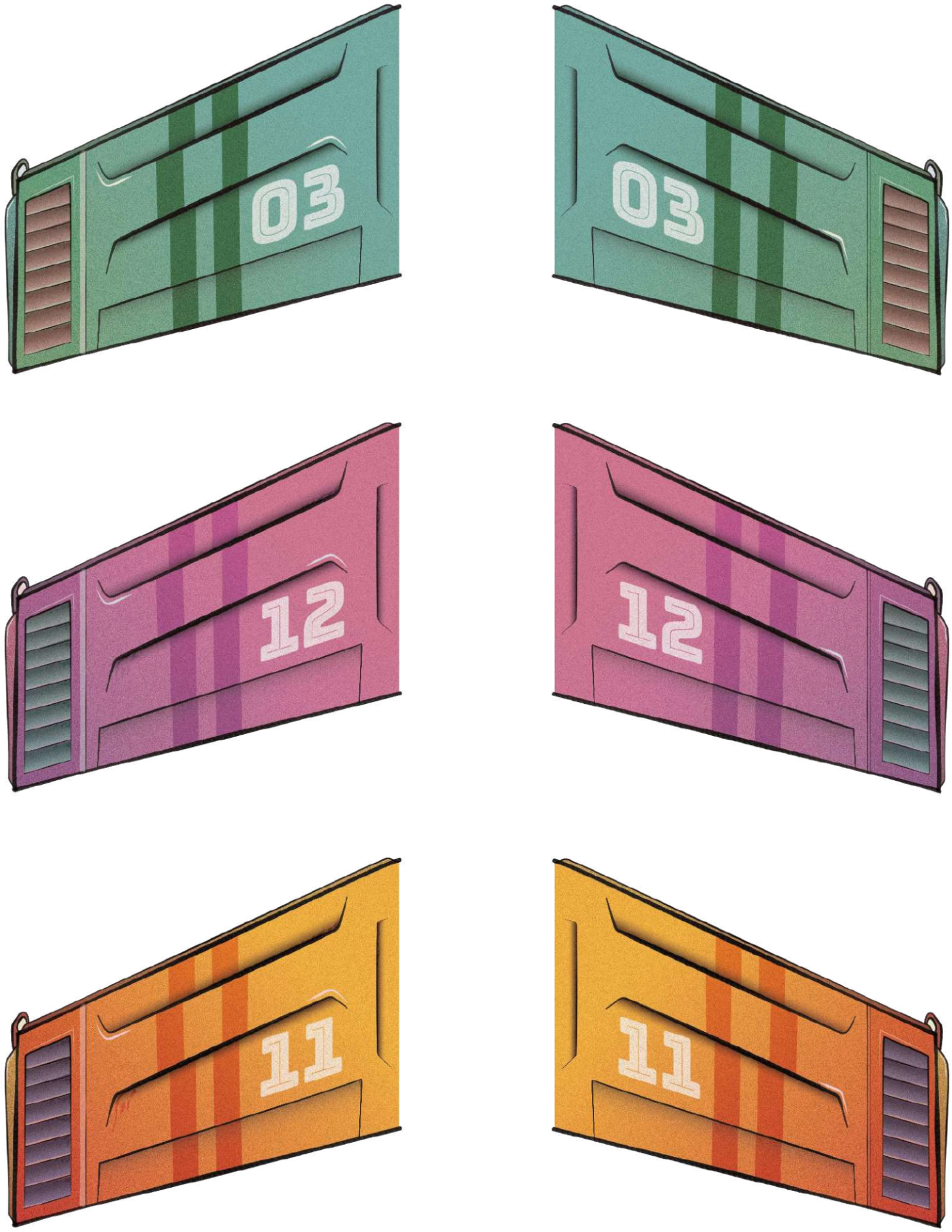
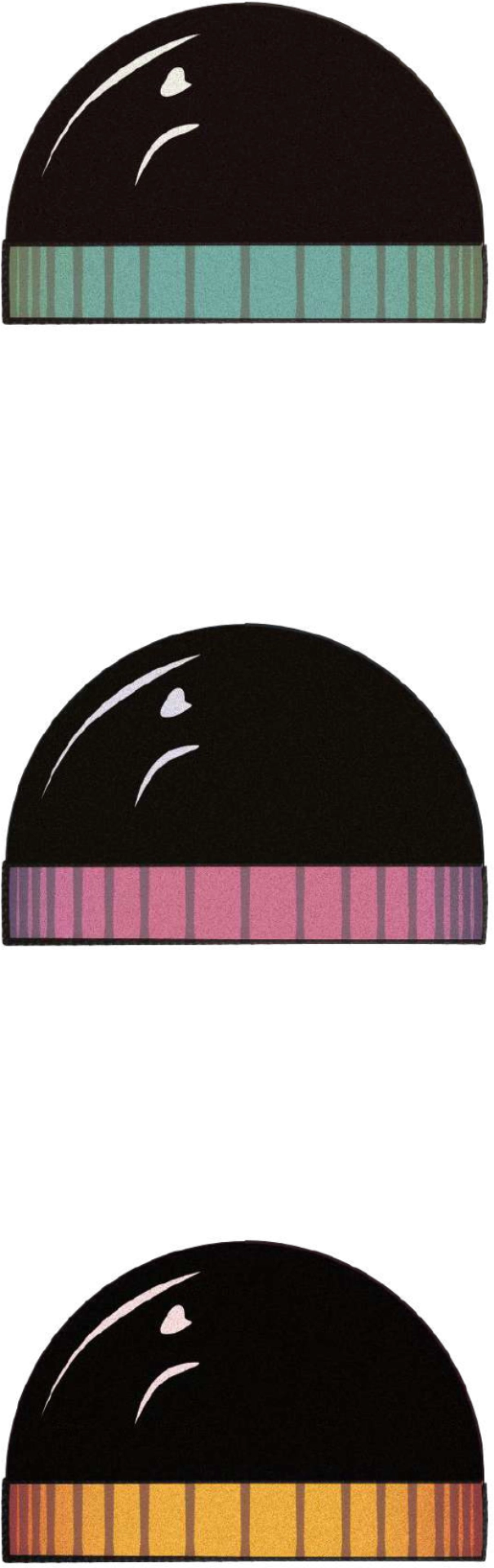
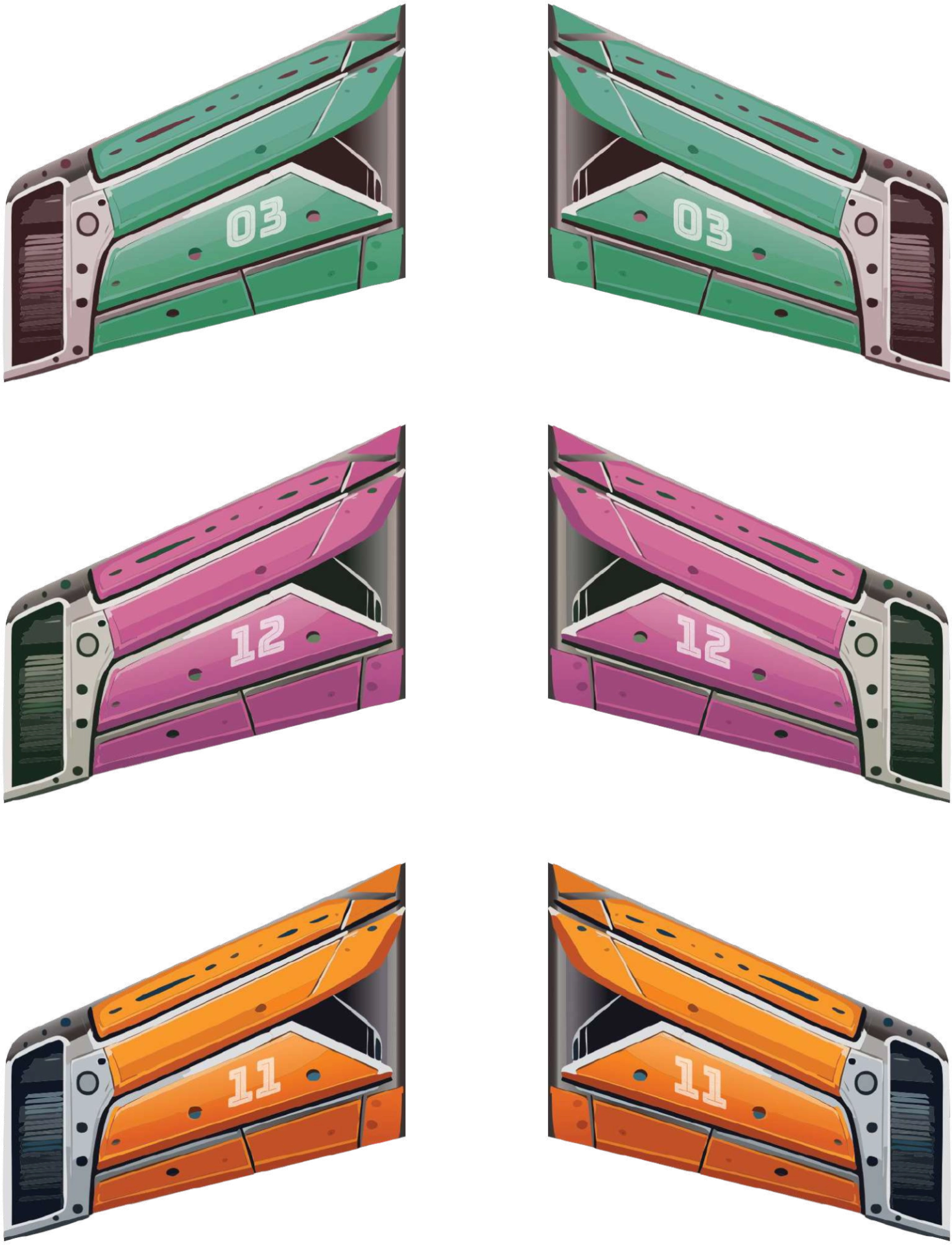
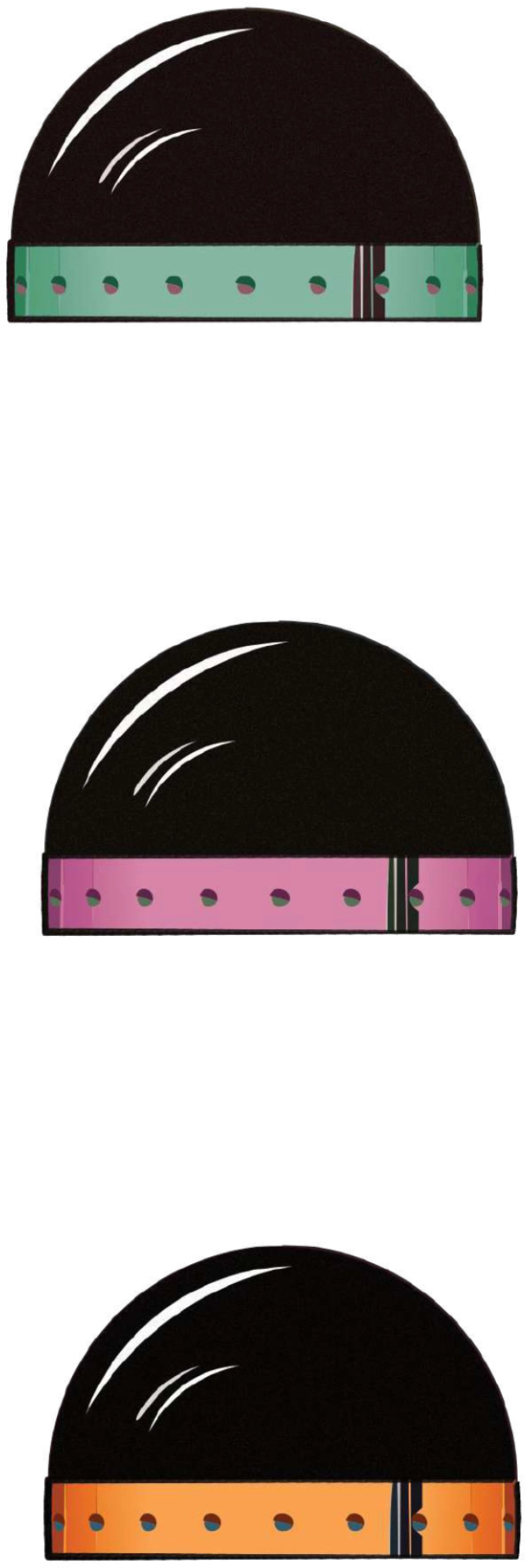
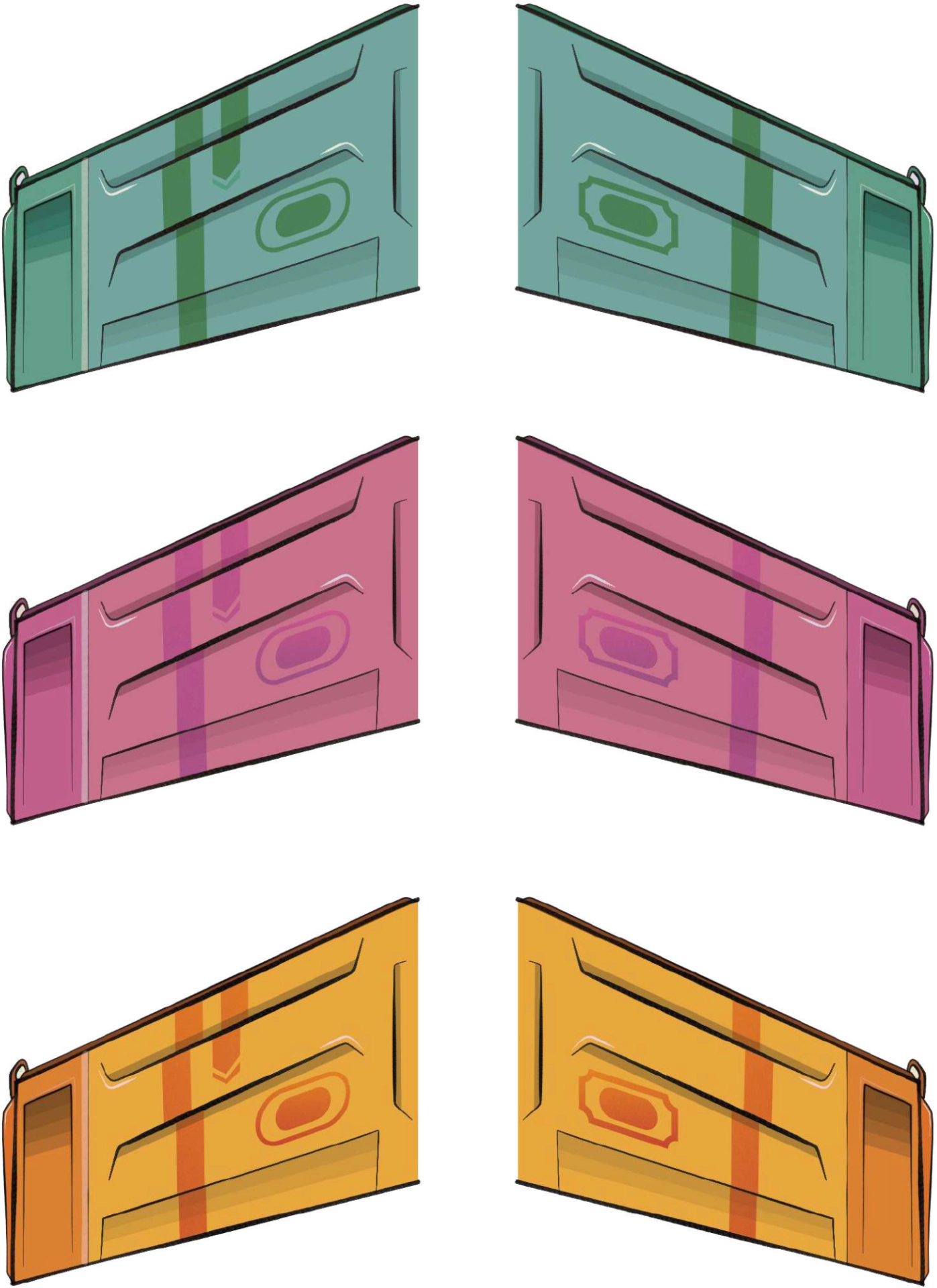
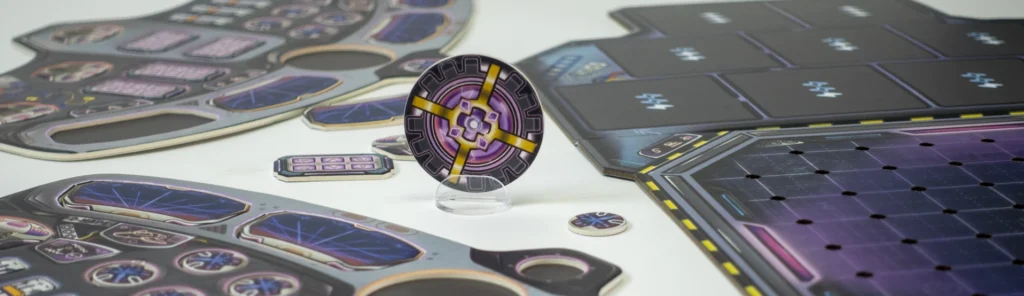
Iterations of the ‚Tokens‘ which players compete to collect and win the game.


Cards and Iconography
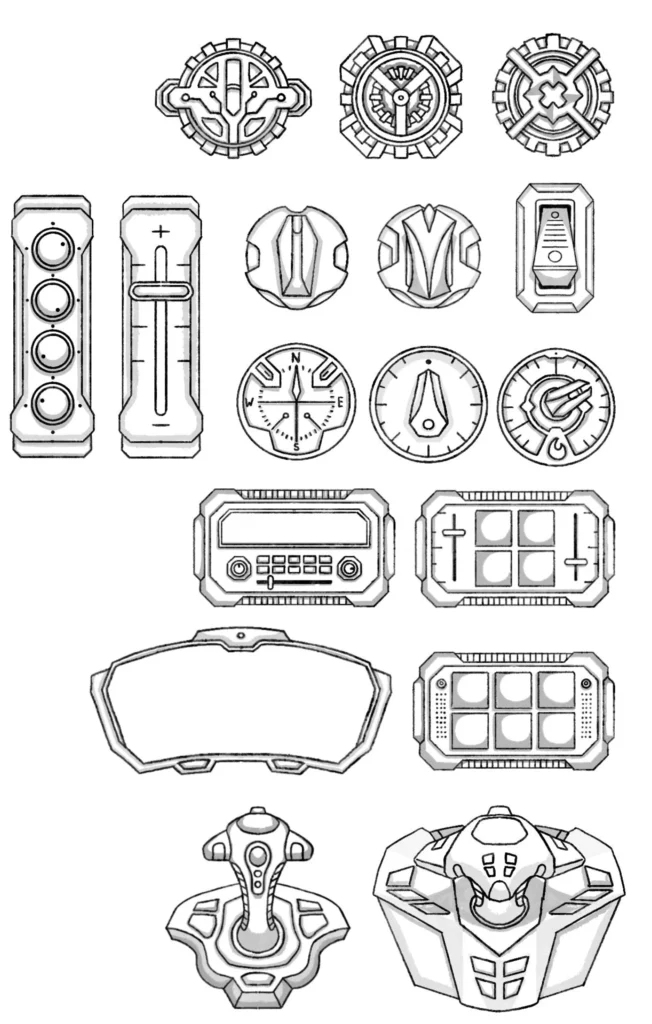
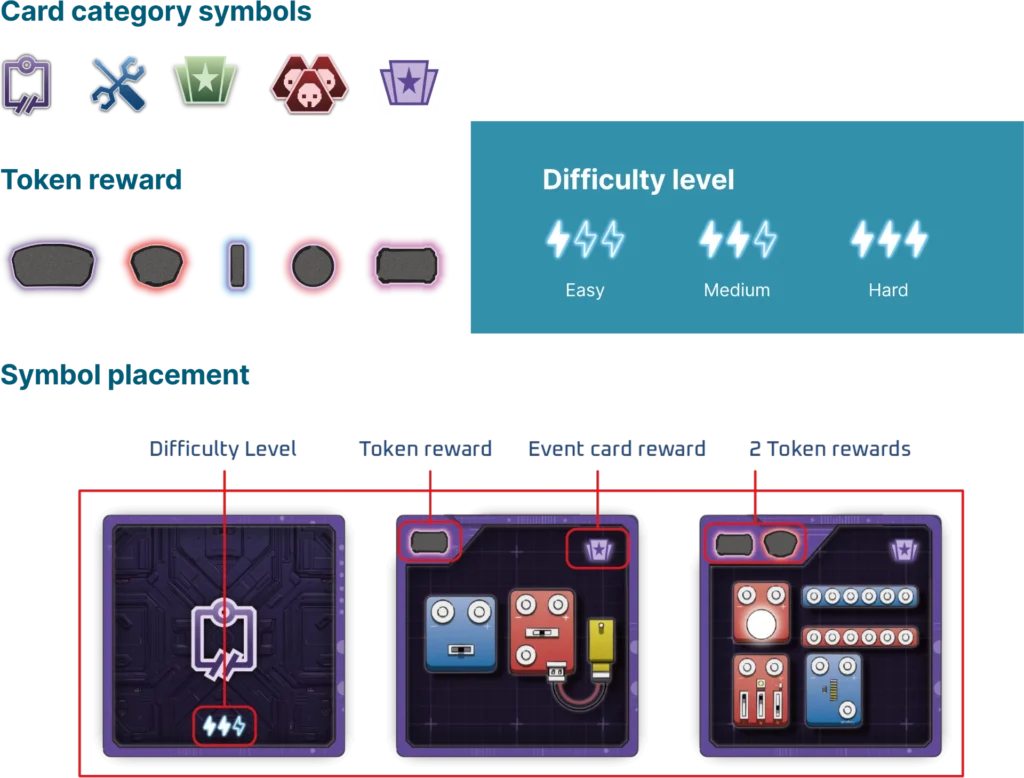
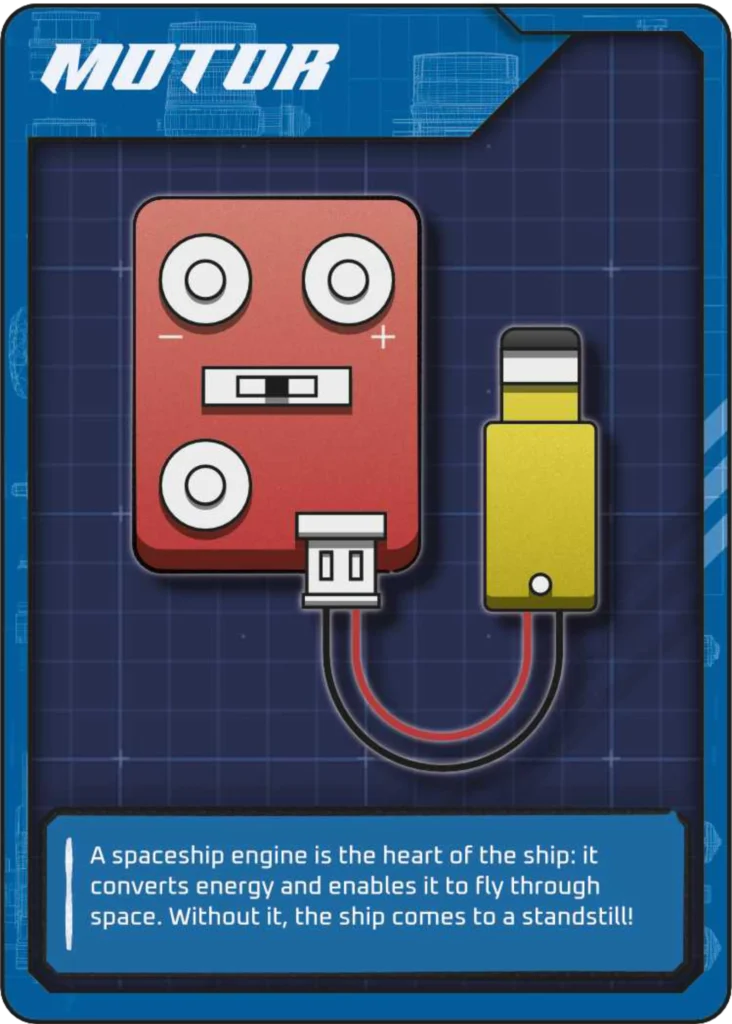
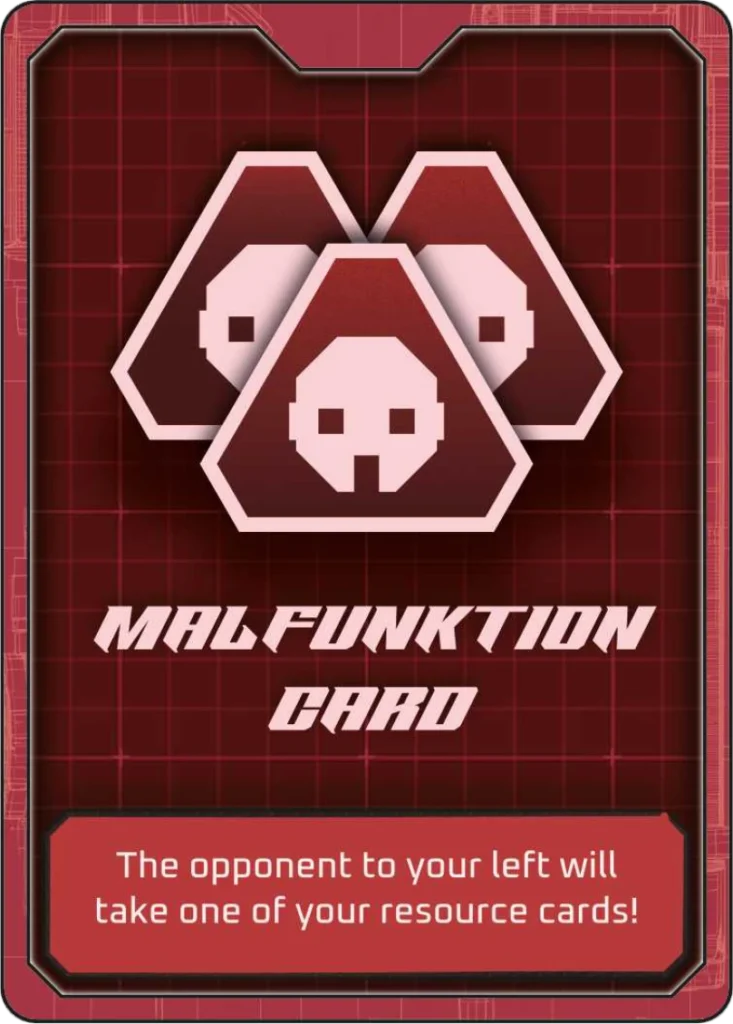
Reactor Rescue is a card-heavy game. The cards define your resources for trading, the challenges you face, as well as moments of luck and misfortune. Their look and visual communication needed to be distinctive, and the information they deliver had to be easy and logically structured. We developed an extensive iconography system that spans the entire game, with symbols cross-referencing one another. This makes sure that even when players encounter an icon the first time, they have a strong chance of intuitively understanding its meaning.


First iterations of the card types. Each card links the cartoon style to its physical Labbox block and showcases different circuit challenges for players. This is also where gameplay modifiers were developed, including Malfunction cards that introduce moments of misfortune and deepen the world’s story.

With 274 cards in total
Play Arena
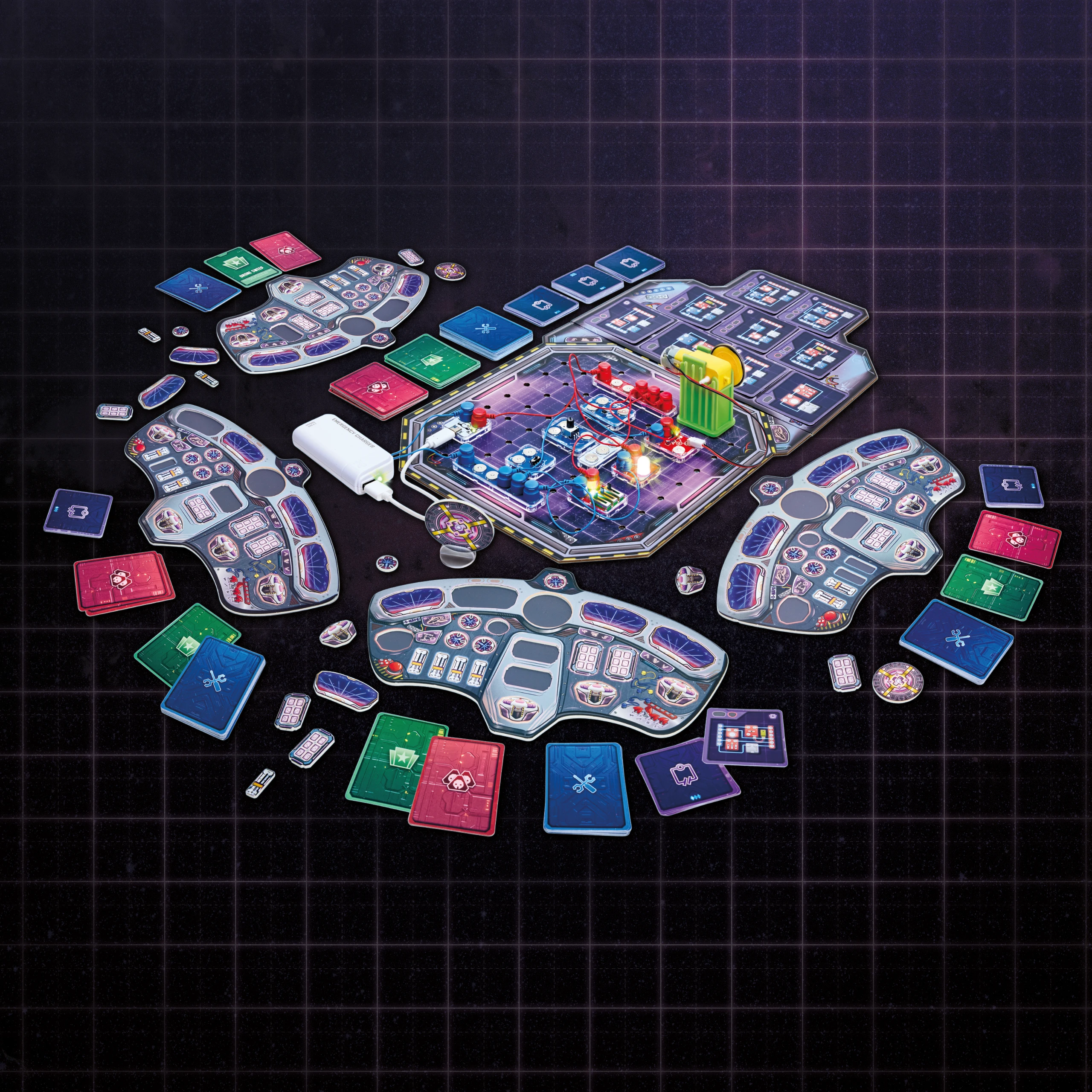
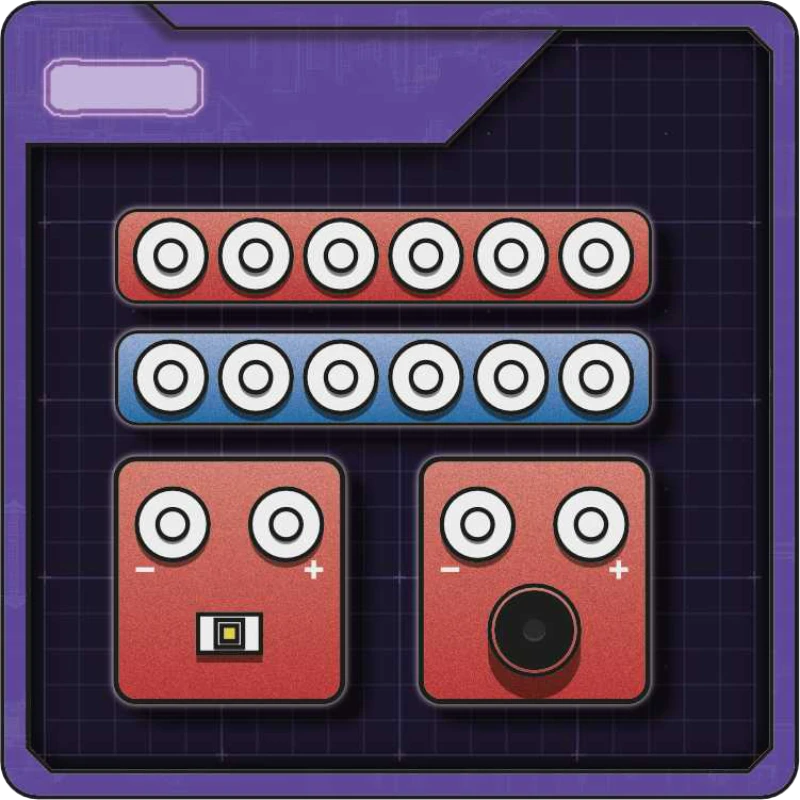
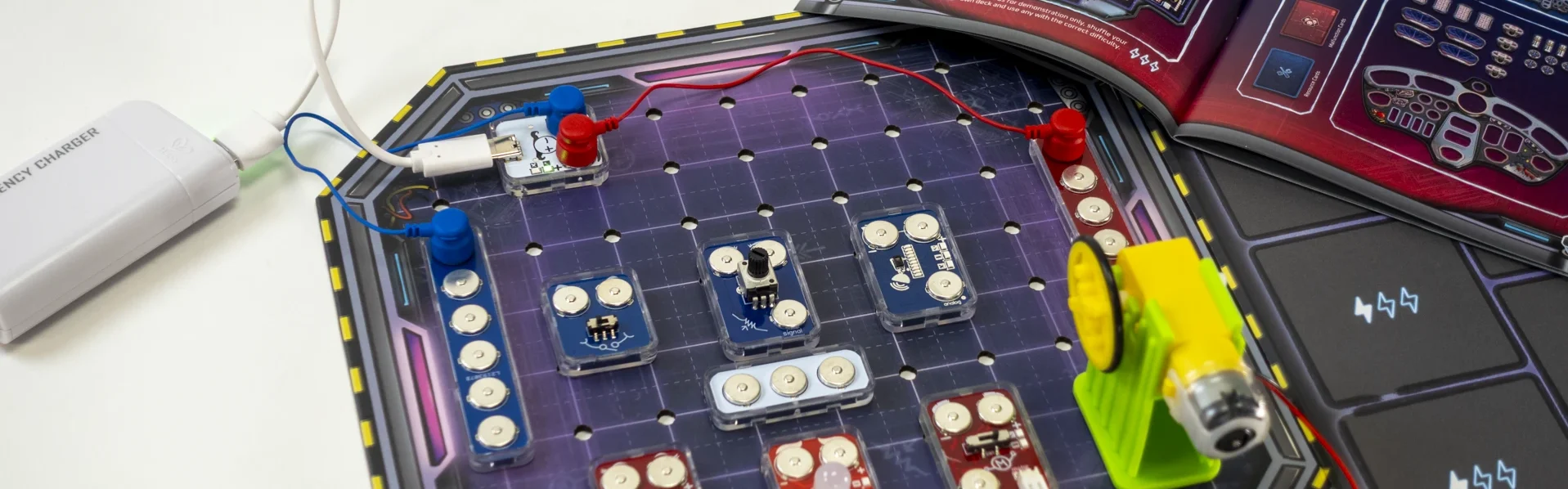
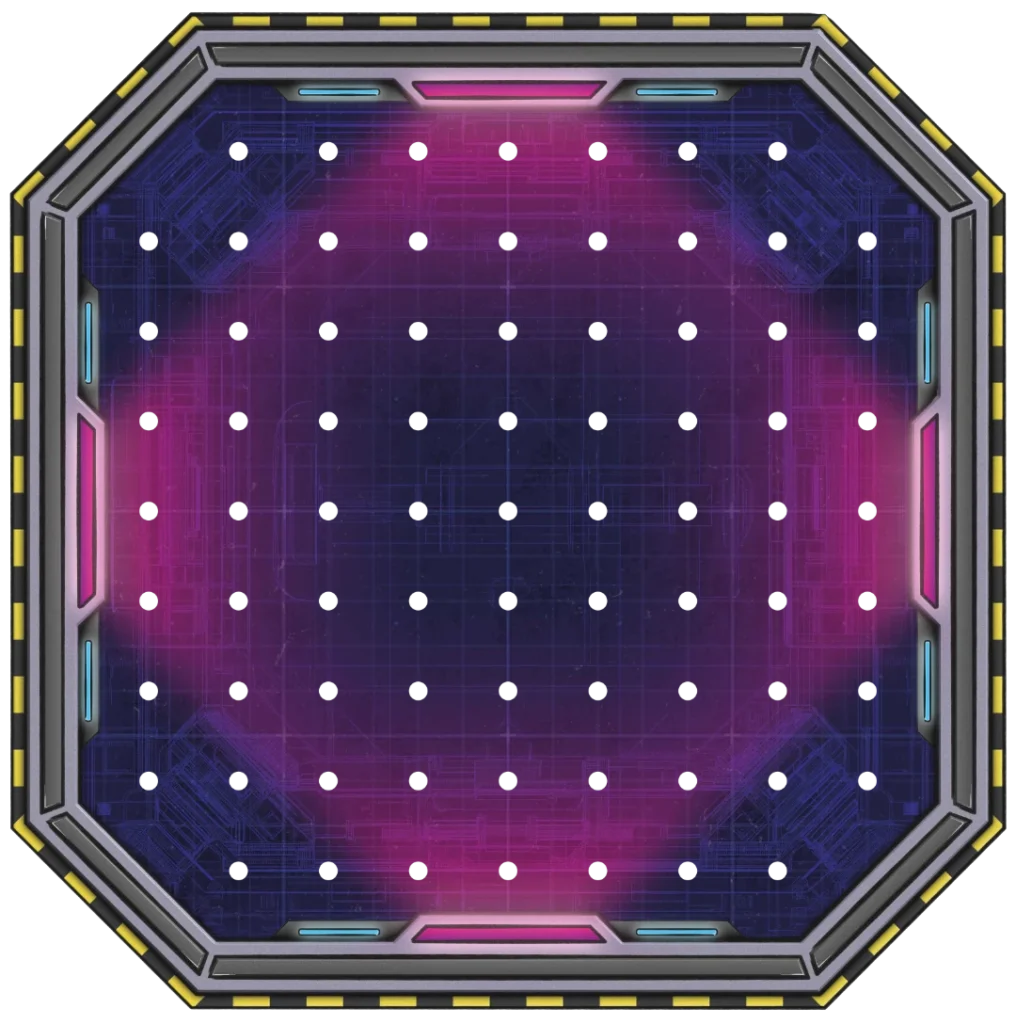
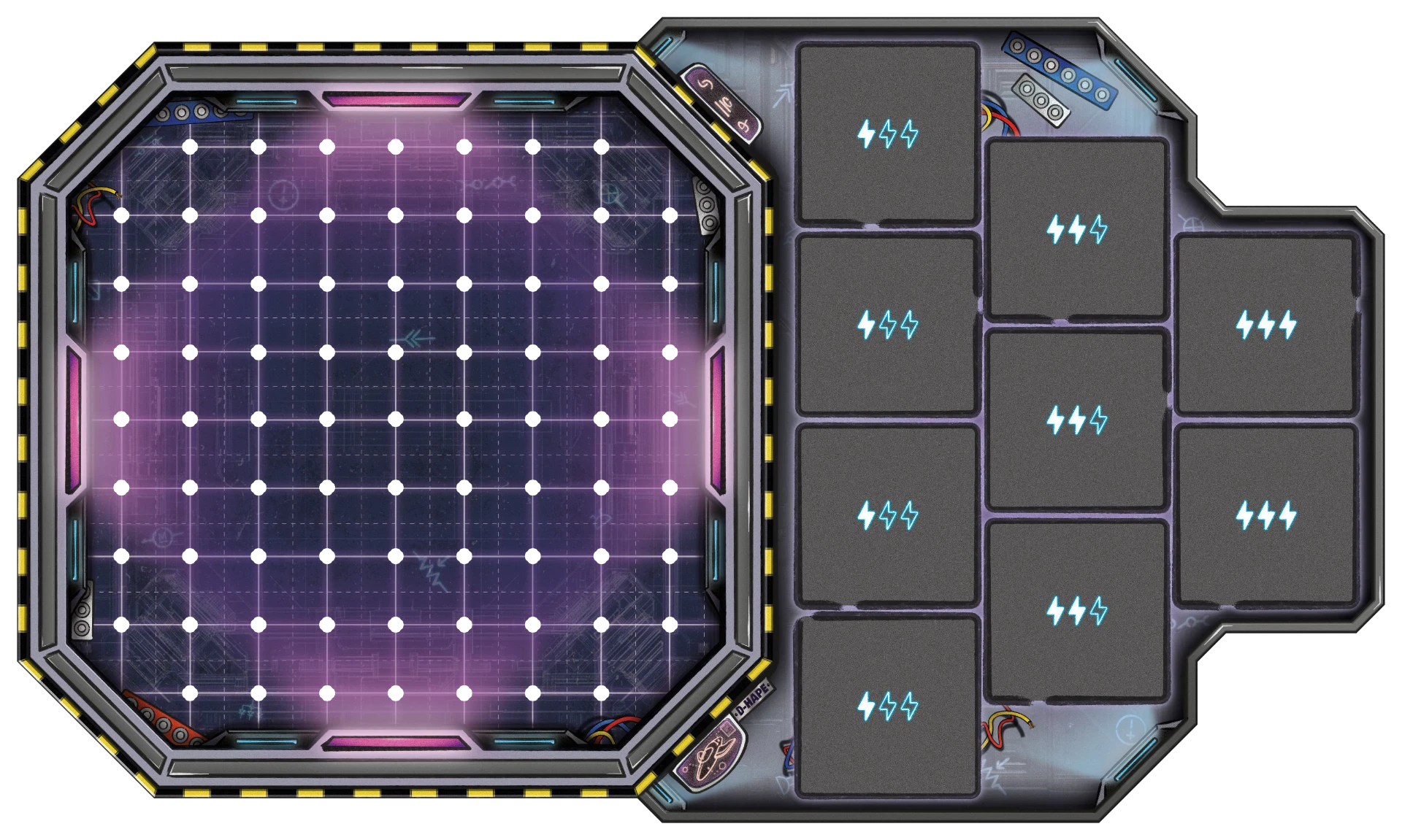
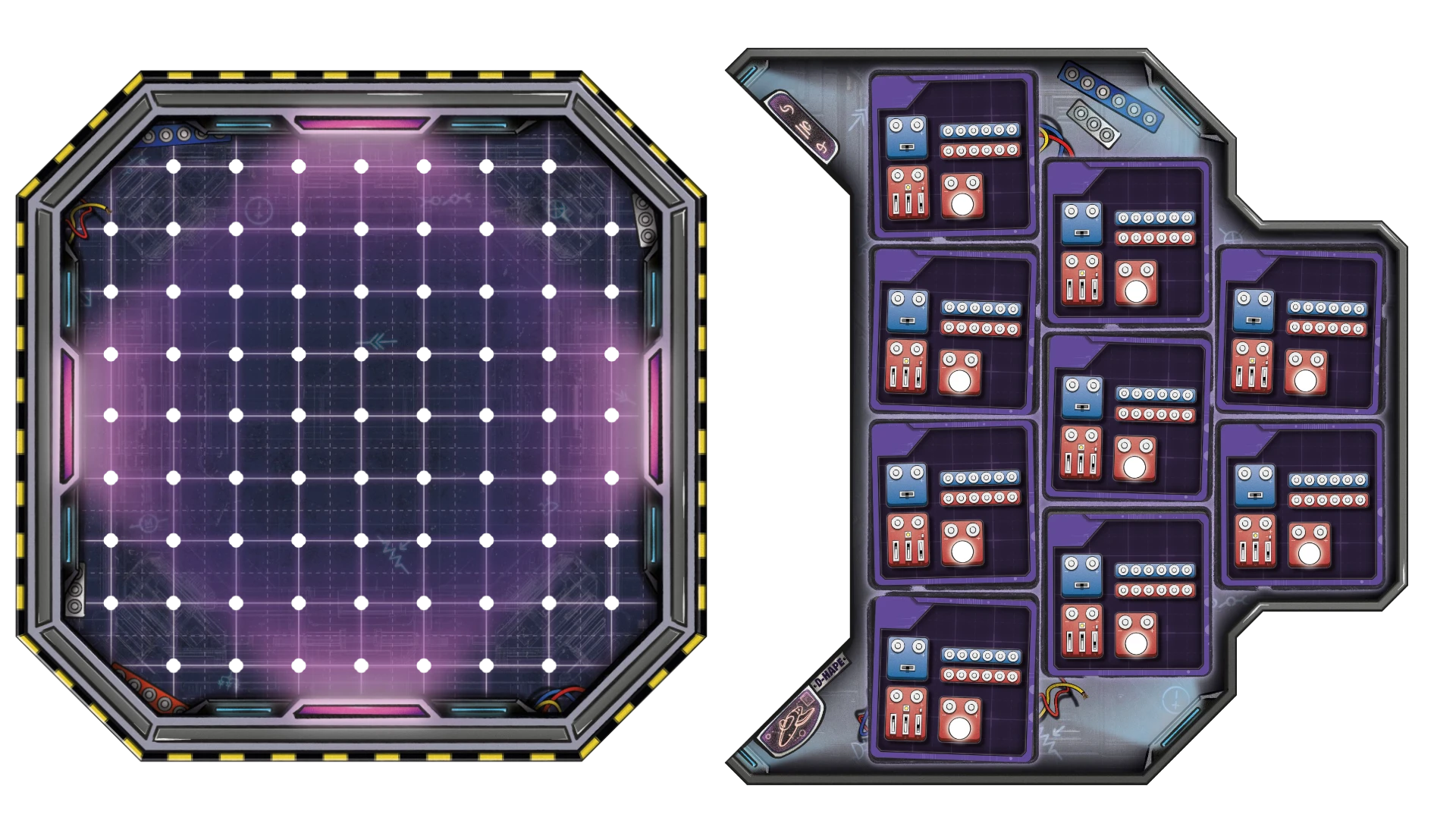
The game features electronic blocks that connect to one another using magnetic cable connectors. These are set in the middle of the play field where players are challenegd to create functional circuits using the blocks. Each block has pegs that alow them yto stick onto the central play area.


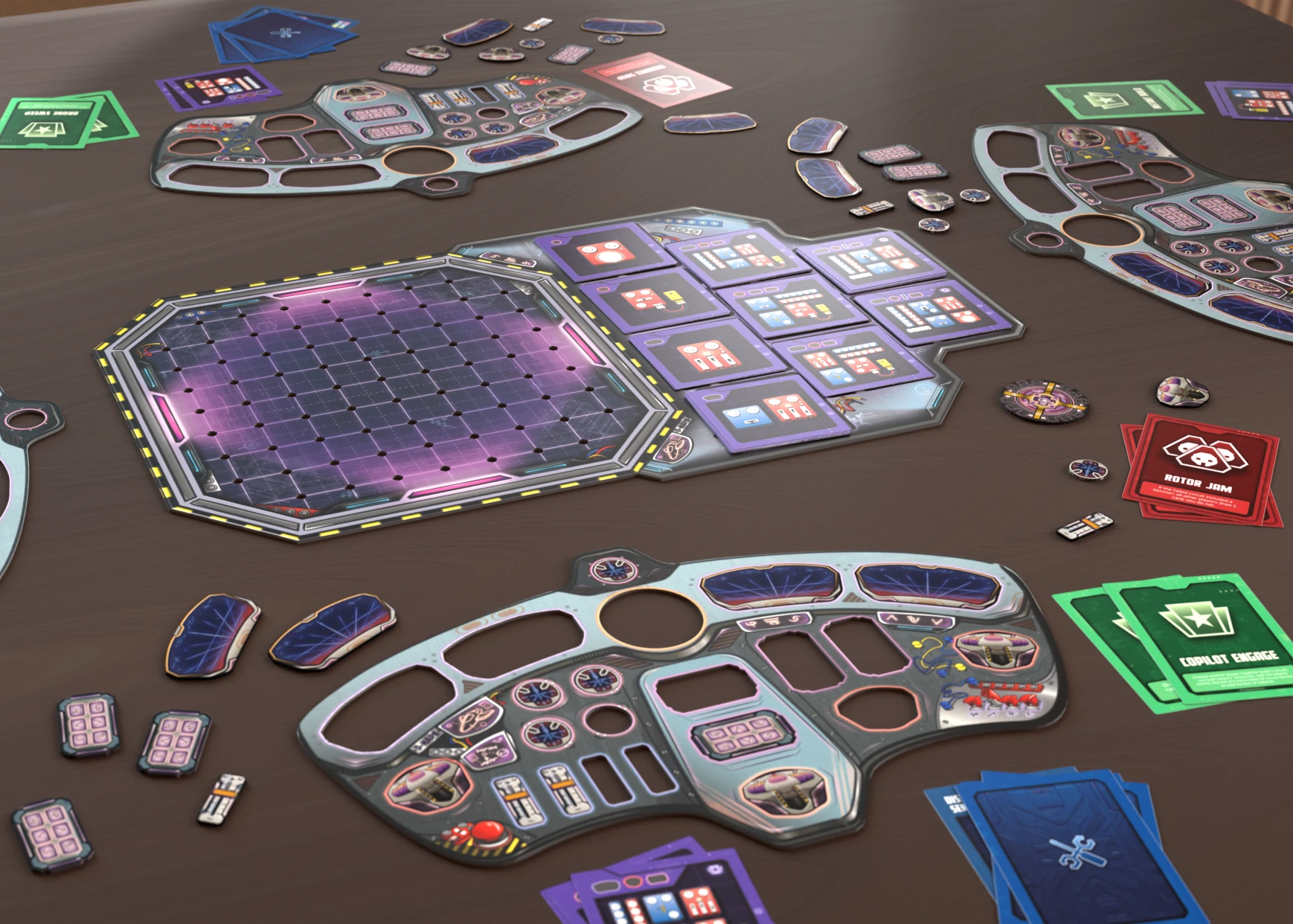
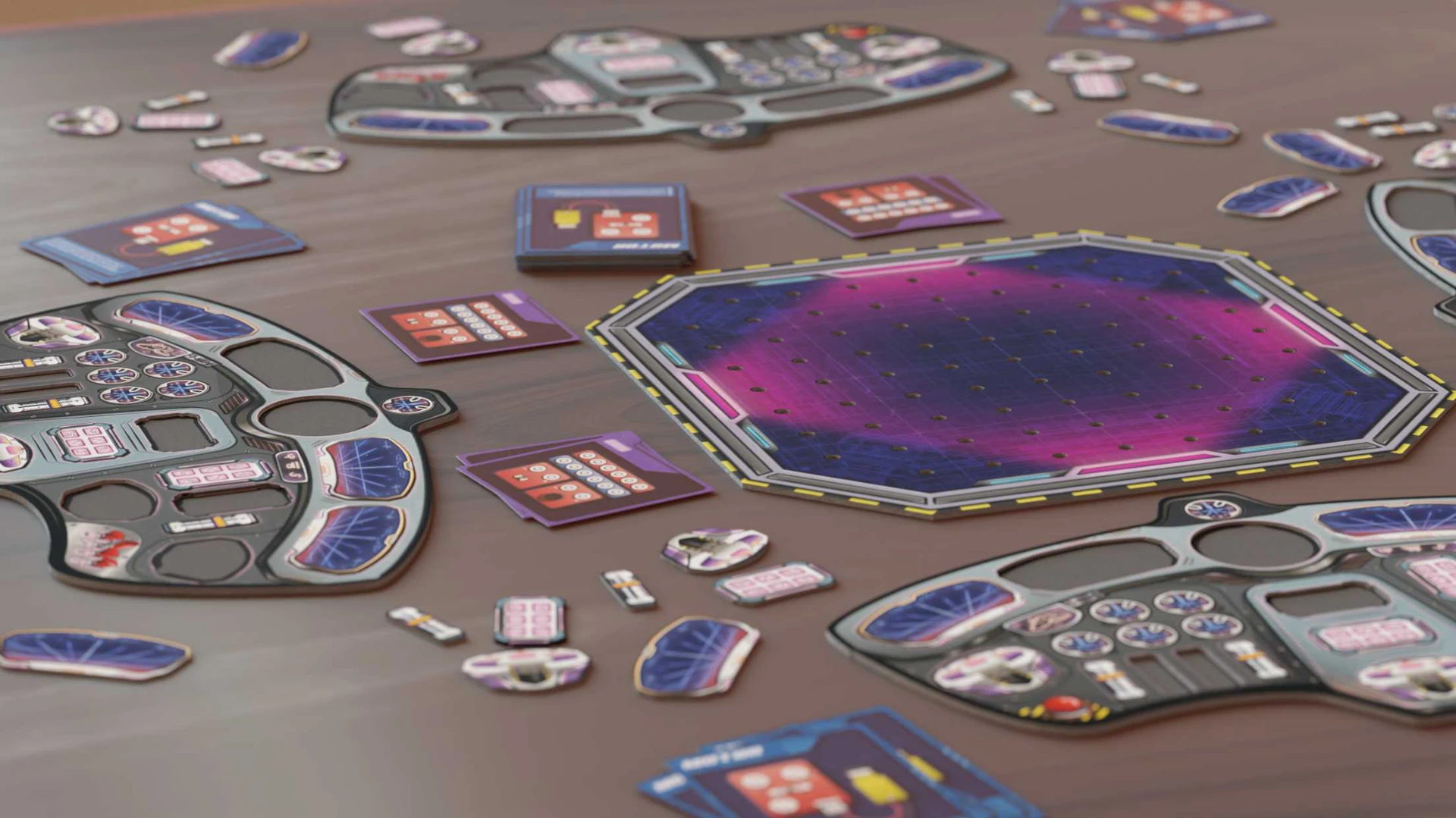
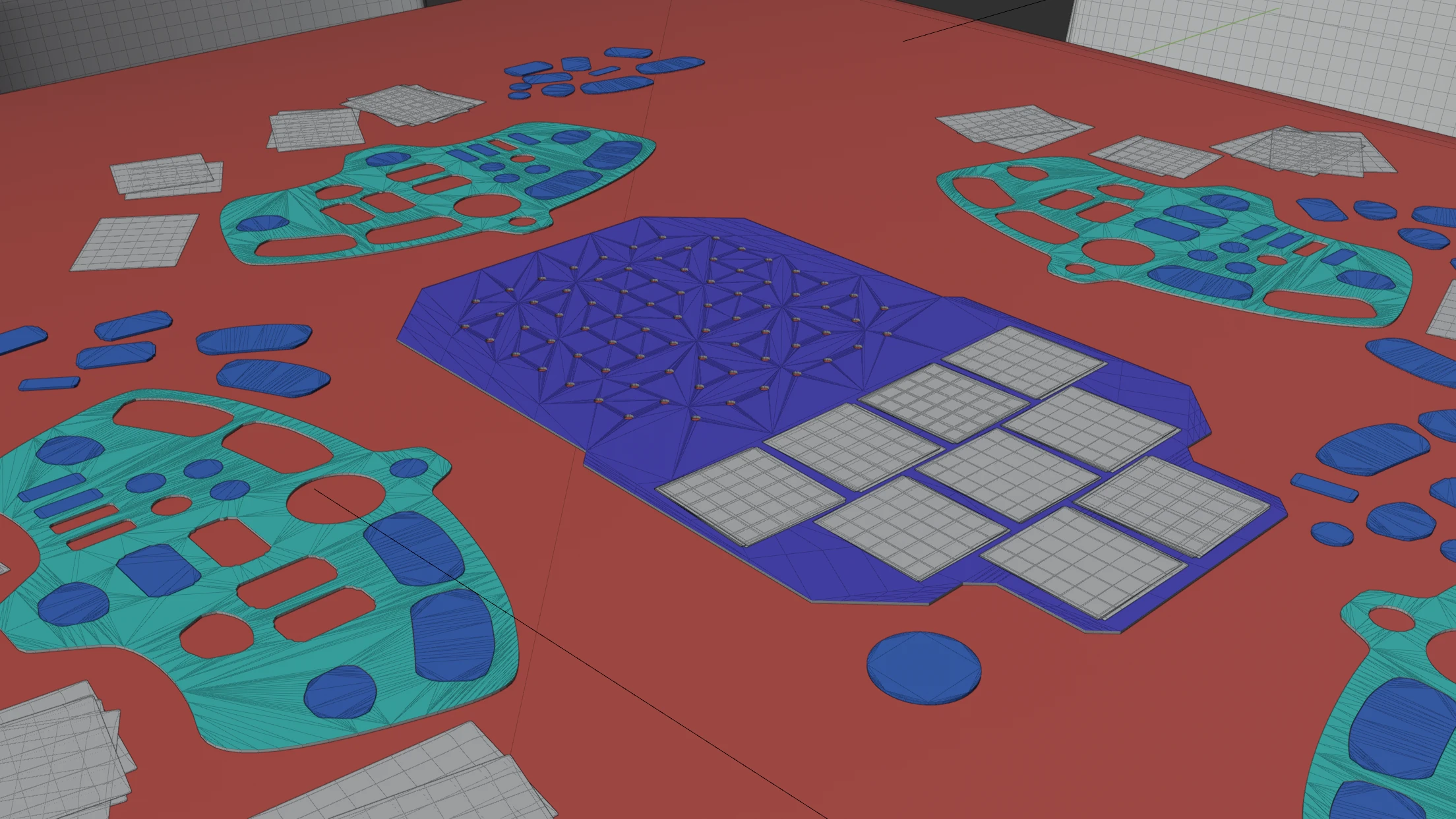
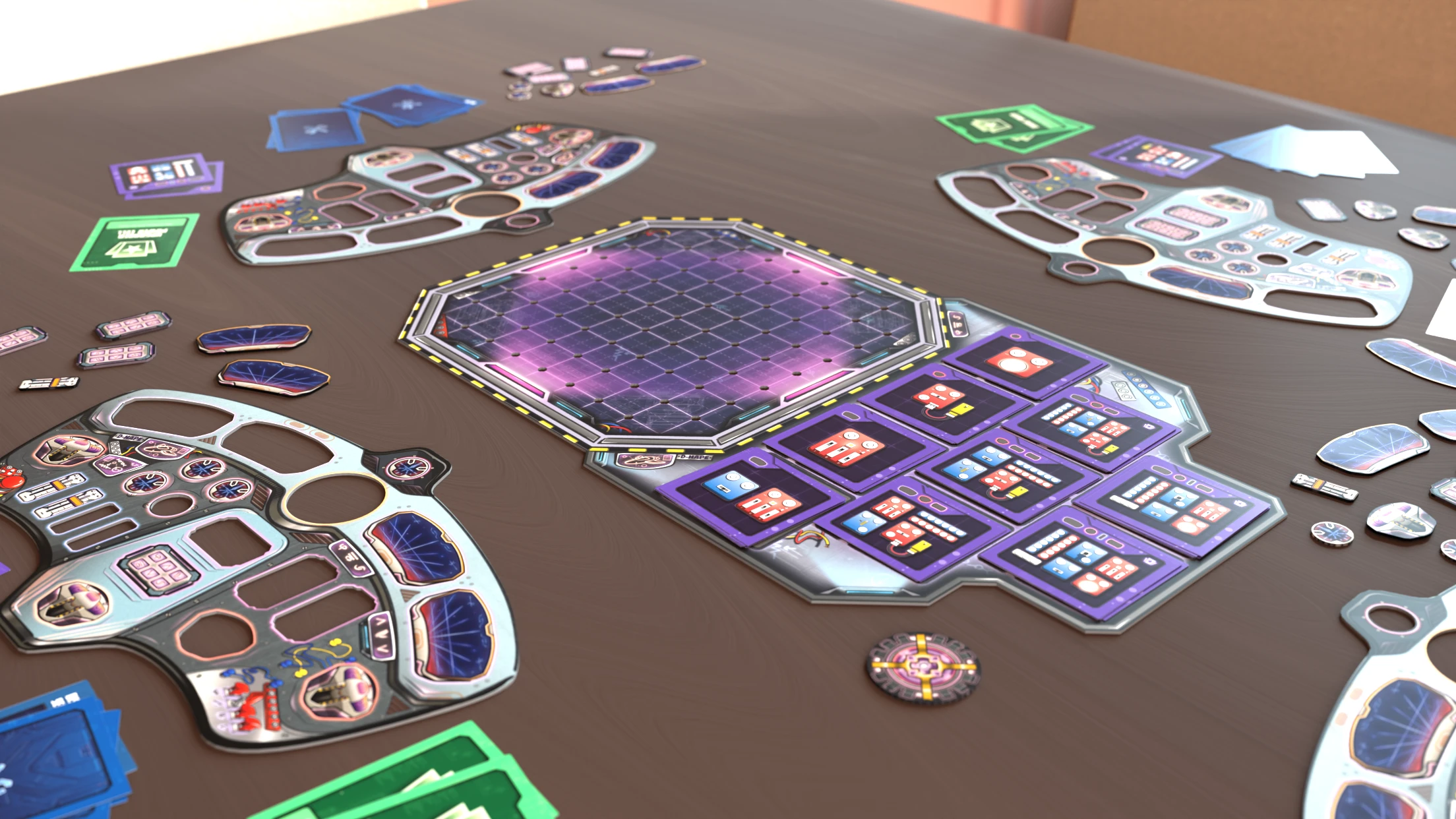
Preview 3D Renderings
Once elements are created digitally, rendering and previewing them becomes a quick and worthwhile process. This enables hyper realistic visualisations for later use in digital and print marketing, while also allowing design decisions to be made by simulating the product in a real world context.


Packaging iterations
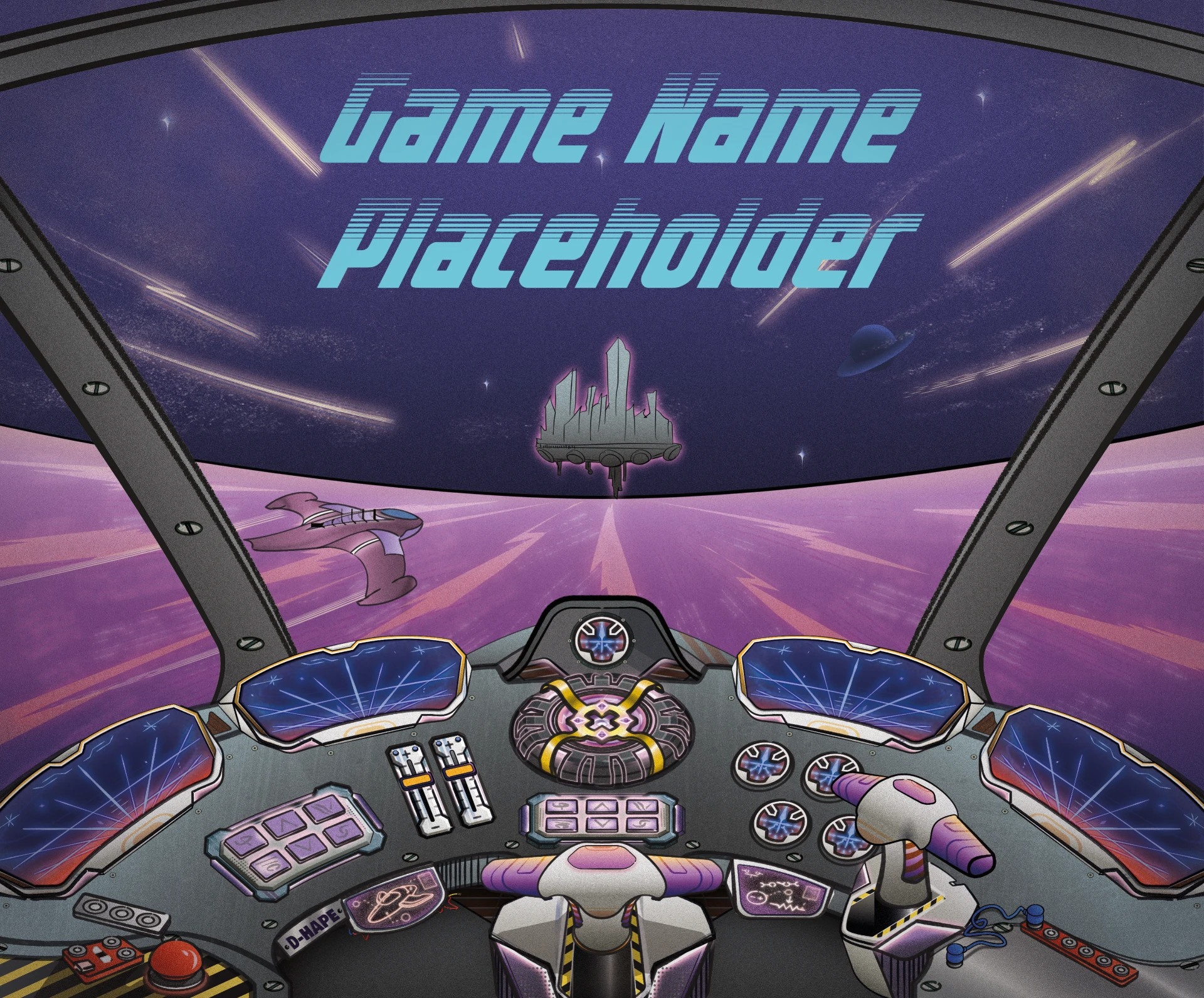
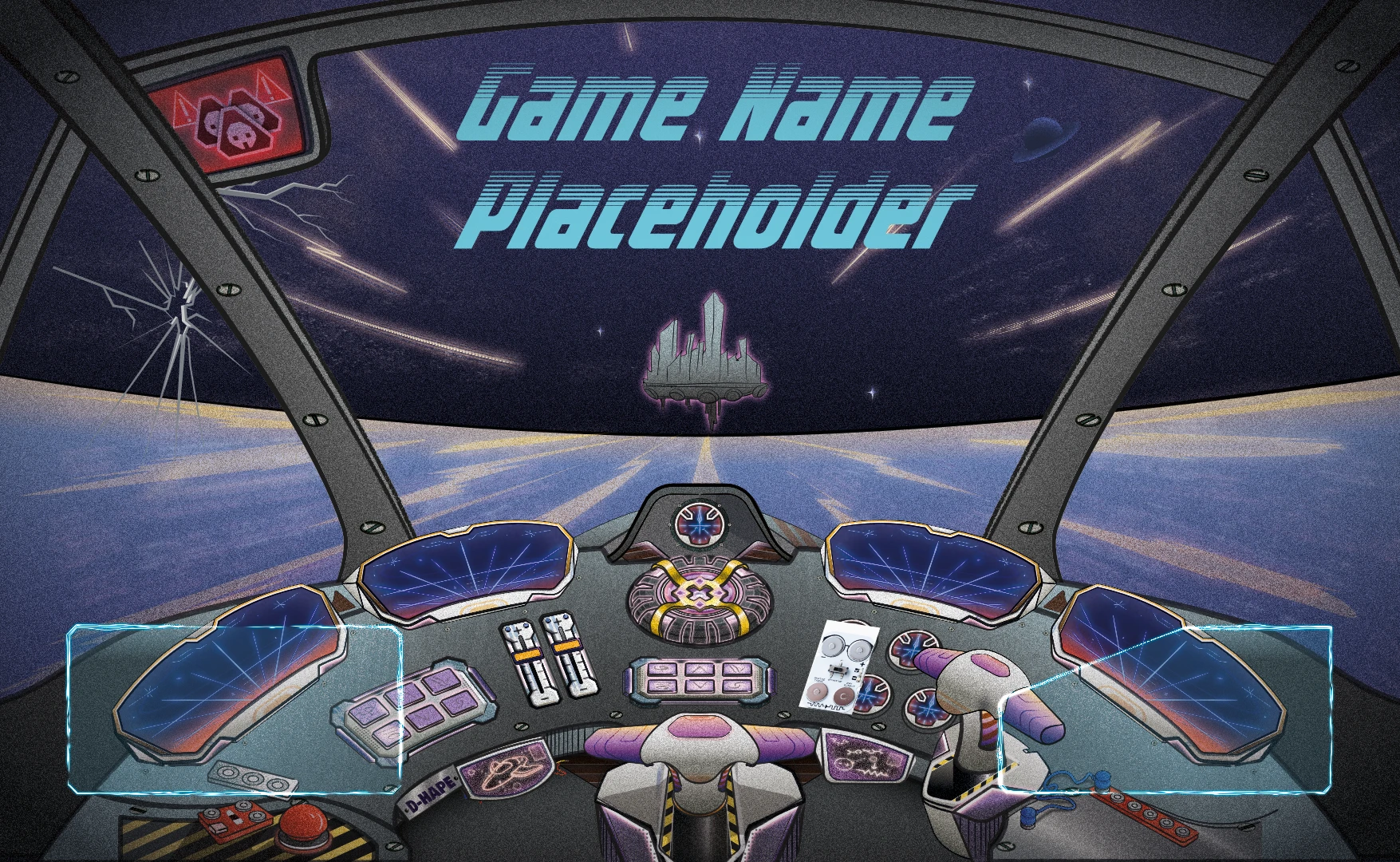
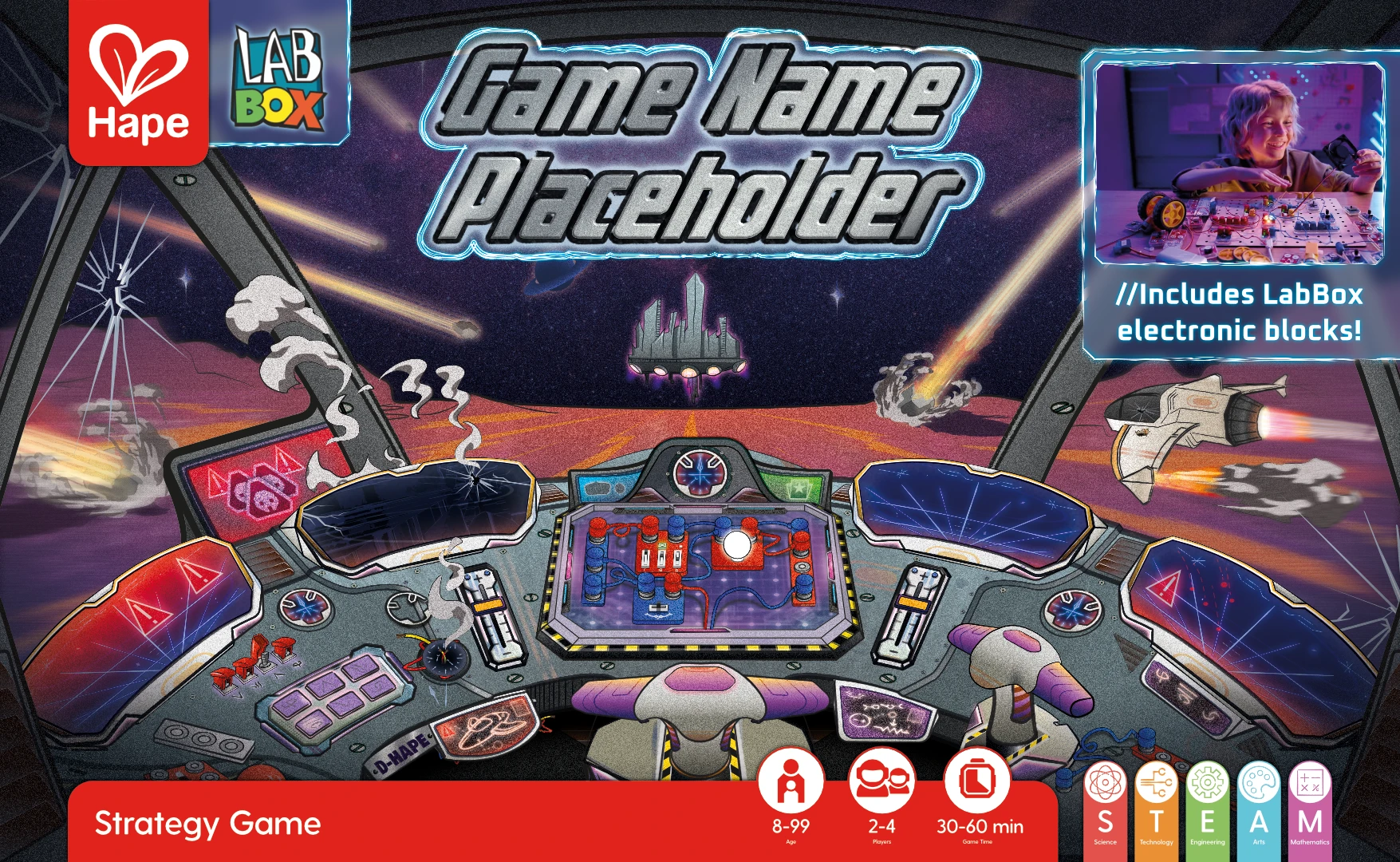
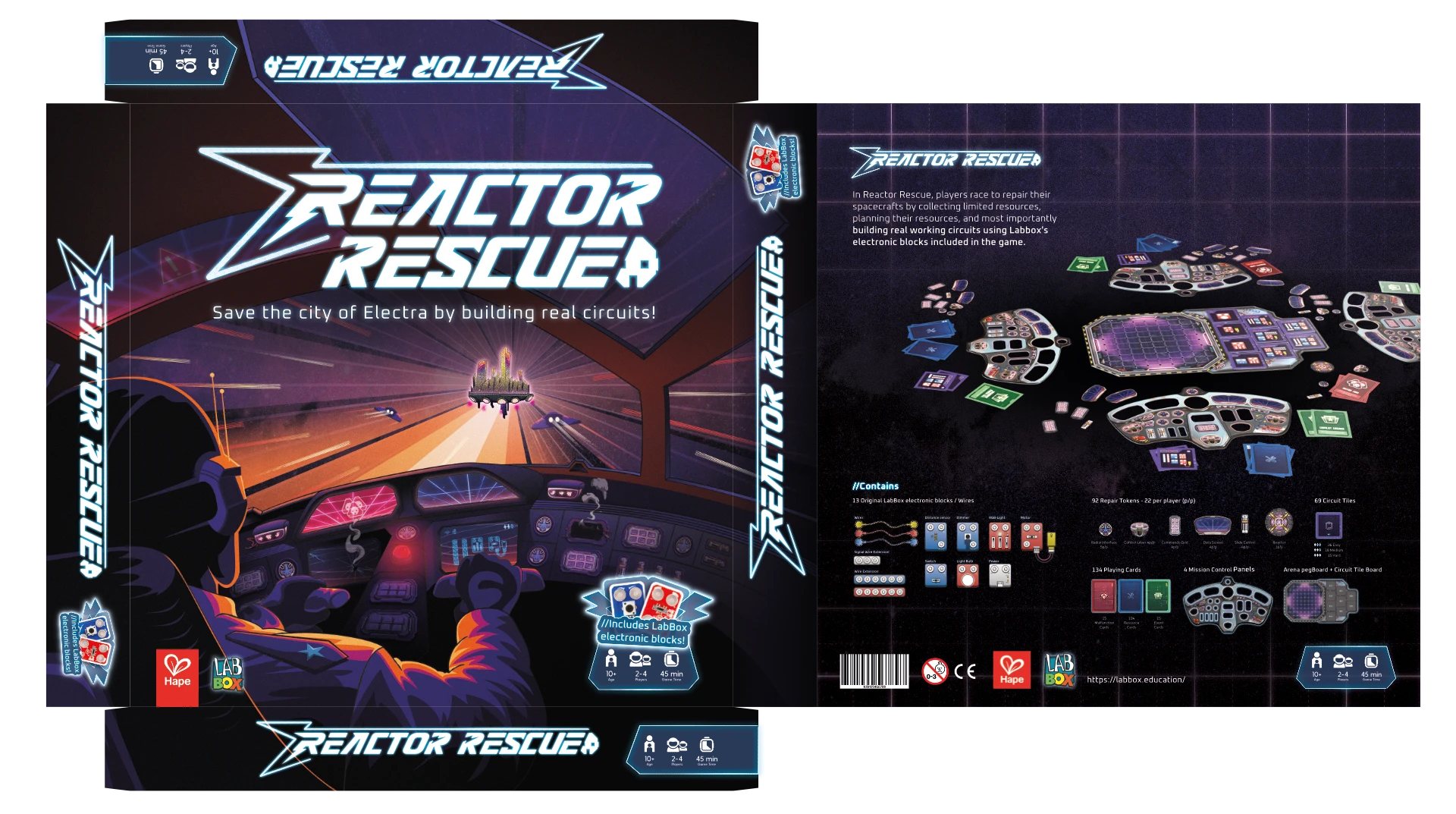
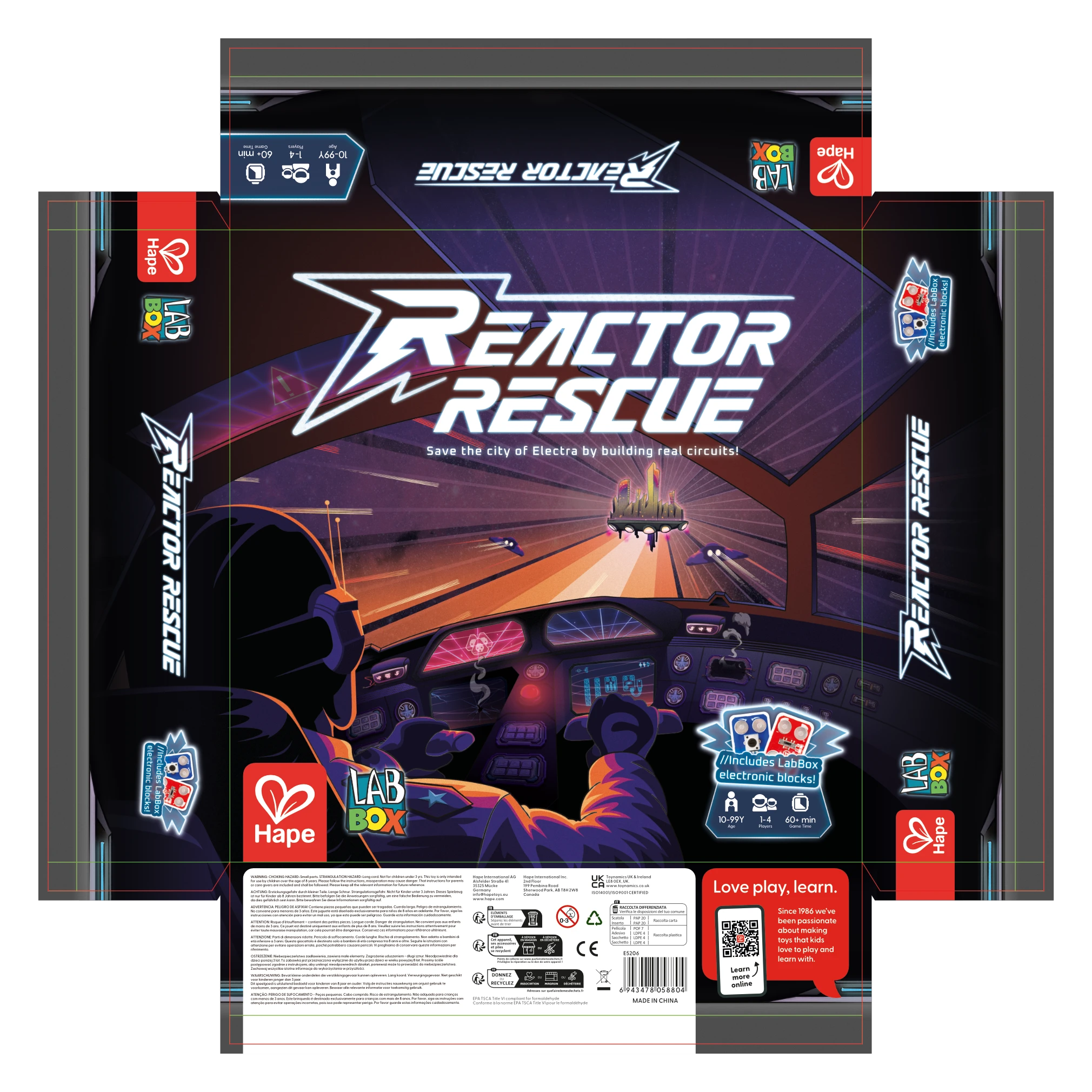
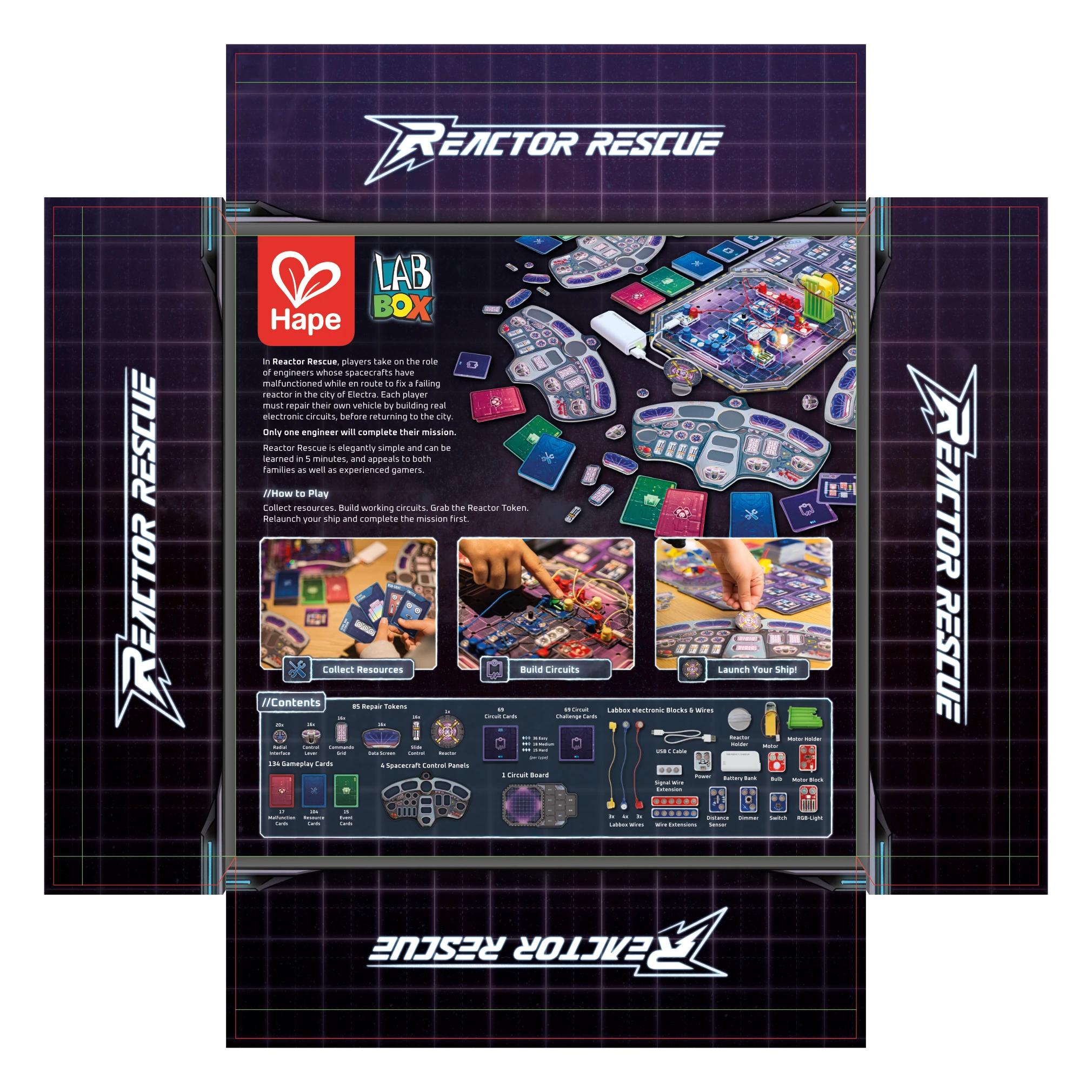
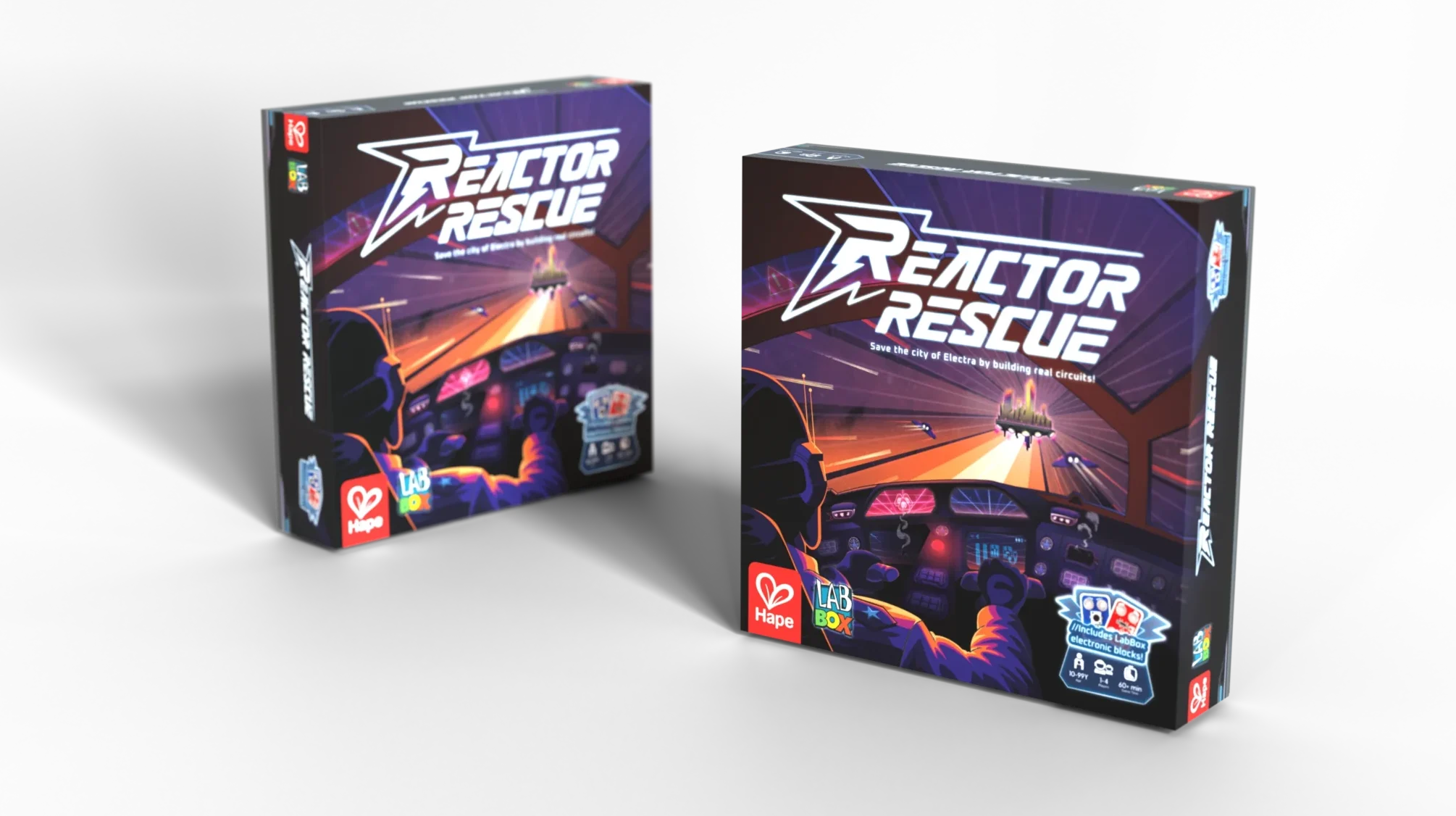
After defining the product’s visual style, we moved into packaging iterations. Because packaging is highly image-driven and relies on strong artwork, we focused on clearly understanding the client’s vision. For Reactor Rescue, we used AI image generation to quickly iterate on motifs that capture the world’s story. This fast process helped us and the client align on a clear direction, which we then refined into vector graphics, sketches, and logo elements, iterating until the right balance and tone for the game’s narrative emerged.
A leading motif is selected and carefully developed into the cover artwork. Throughout this process, key elements from the game’s world are referenced and woven into the visuals, painting a cohesive and interlinked body of work that clearly represents the product and strengthens its overall identity of the product as a brand.


The leading motif was later changed to a character based motif that players could more easily relate to. This decision was made to further emphasize the feeling of children stepping into the role of a space engineer, repairing their spaceship in order to successfully complete their mission.


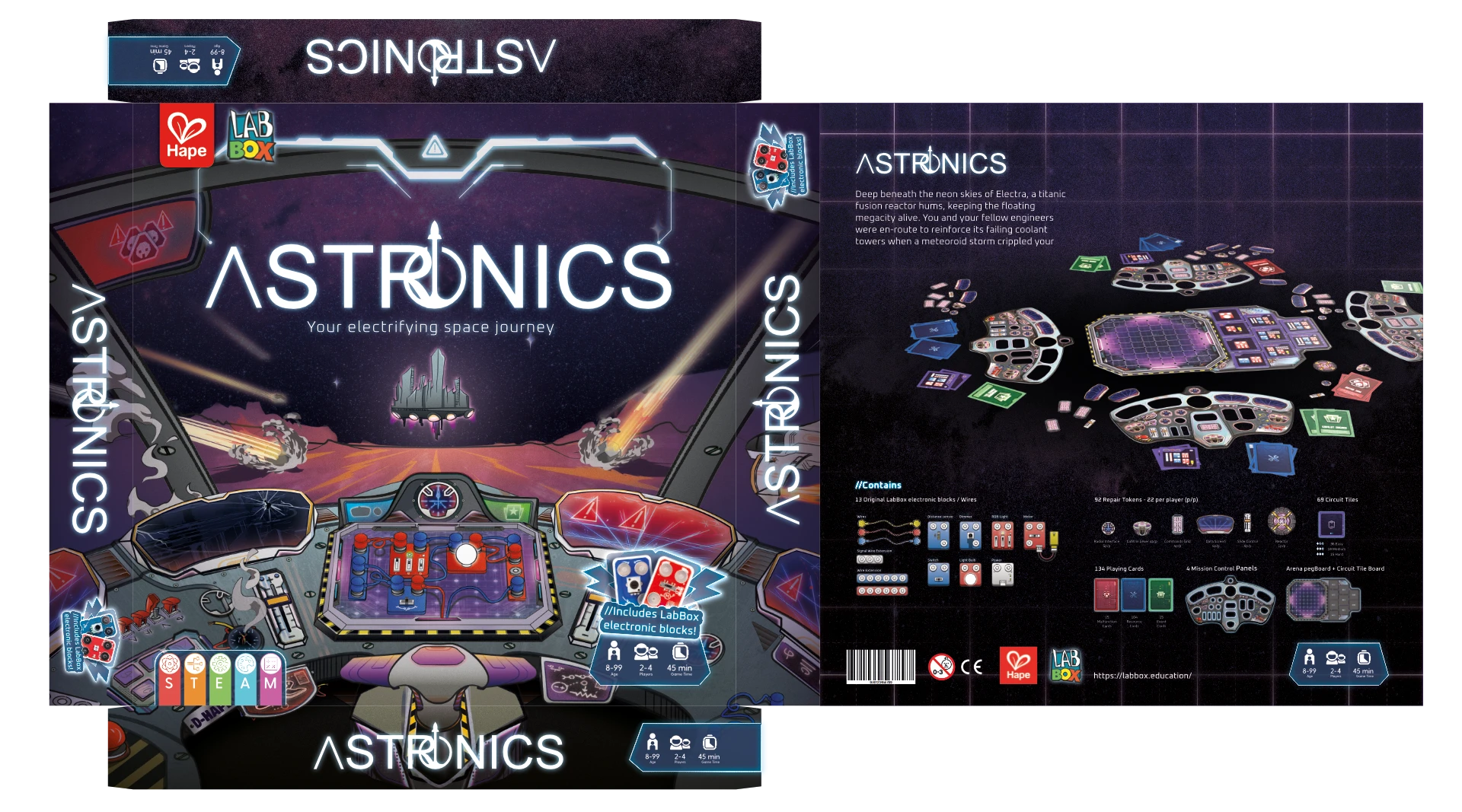
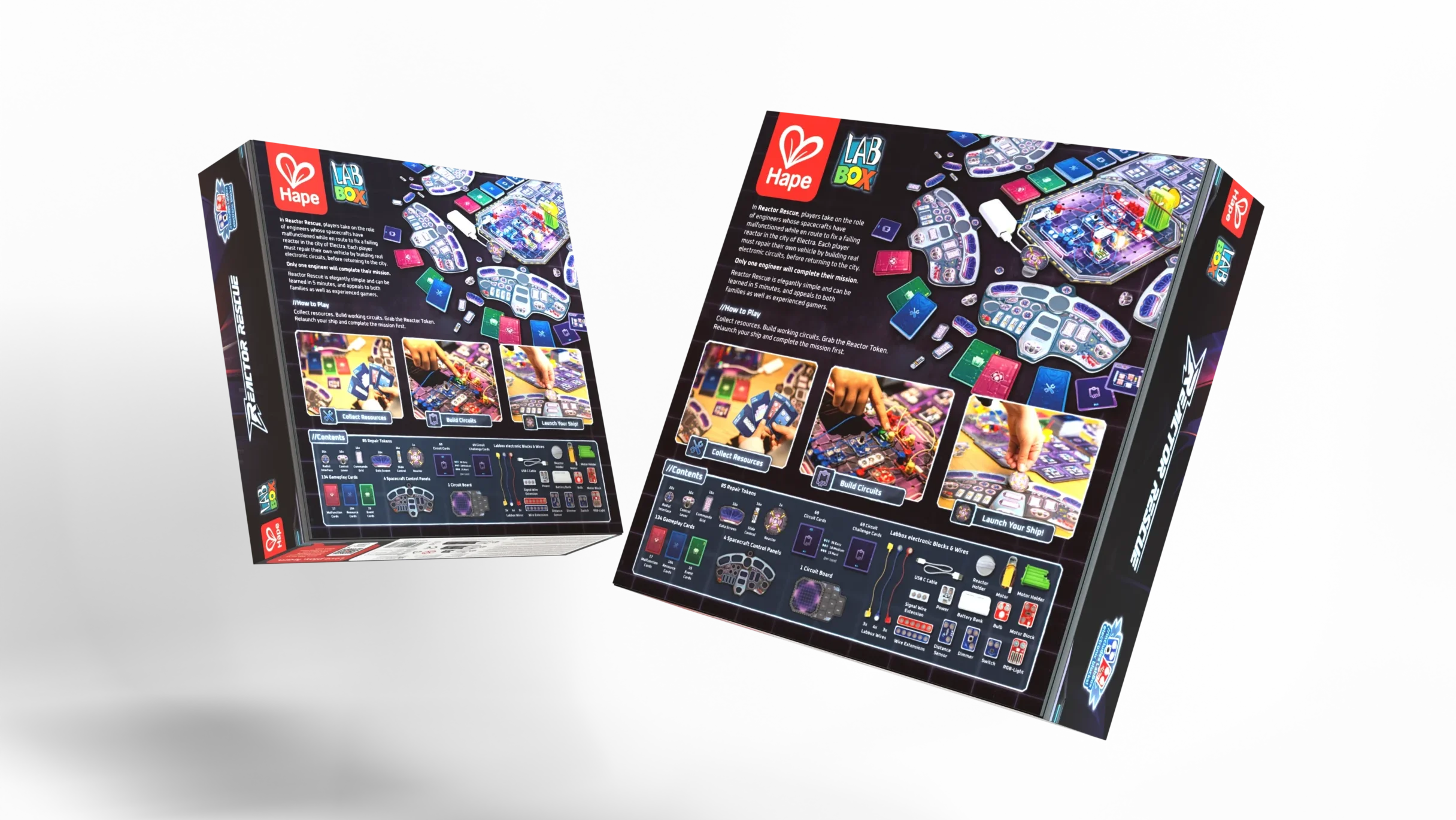
3D rendering of the packaging before commiting to production.

3D rendering of the packaging before commiting to production.